

Many students feel confused while learning present perfect continuous tense in hindi, especially when they see sentence endings like “से रहा है”, “से रही है” or “से रहे हैं”. Parents also often find it difficult to explain why this tense is used in some sentences and not in others. This confusion usually leads to small grammar mistakes that cost marks in school exams.
The present perfect continuous tense in hindi is used to describe an action that started in the past and is still continuing in the present. This tense is commonly asked in CBSE, ICSE, and state board English exams through sentence formation, identification, and Hindi-to-English translation questions. Understanding its meaning, structure, and usage clearly is more important than memorising formulas.
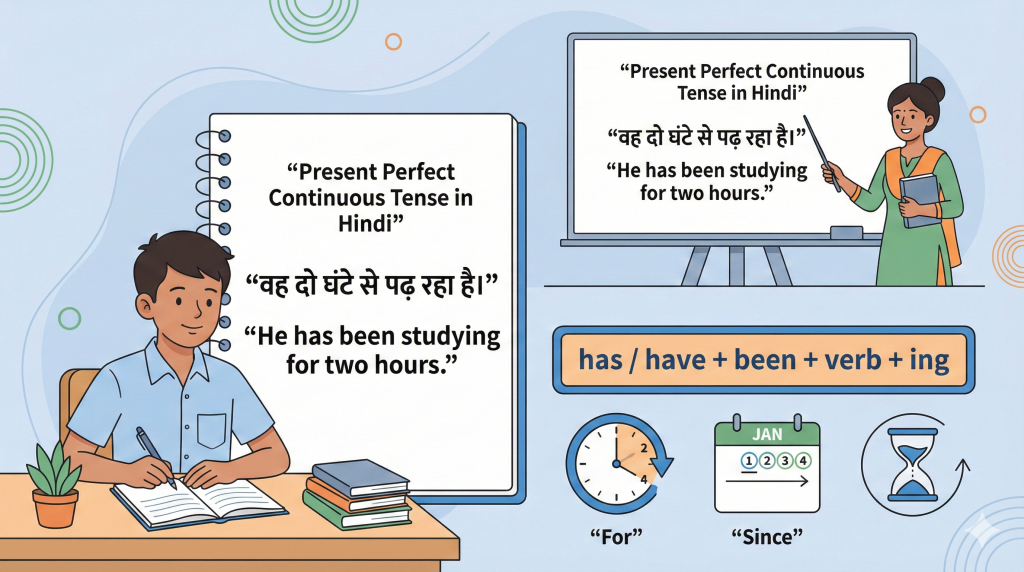
In this guide, Shiksha Nation explains the present perfect continuous tense in a clear and student-friendly way. You will learn its meaning in Hindi, how to identify it correctly, sentence rules, and common mistakes students make in exams. Parents can also use this explanation to support their child during daily grammar practice.
The focus here is not just learning the tense, but using it correctly and confidently in written answers and exams.

Present Perfect Continuous Tense का Meaning (Hindi में)
Simple definition (student-friendly)
Present perfect continuous tense in hindi meaning यह बताता है कि कोई काम पहले शुरू हुआ था और अब भी चल रहा है। इस tense में काम पूरा नहीं होता, बल्कि अभी जारी रहता है।
छात्रों के लिए एक आसान logic यह है कि वाक्य में समय की अवधि दी होती है।
Example:
वह दो घंटे से पढ़ रहा है।
(He has been studying for two hours.)
When this tense is used in daily sentences
इस tense का उपयोग हम रोज़मर्रा की ज़िंदगी और परीक्षा के सवालों में तब करते हैं, जब यह बताना हो कि कोई काम कब से चल रहा है। Parents बच्चों को यह समझा सकते हैं कि जहाँ since या for के साथ “से रहा है” आए, वहाँ यह tense लगता है।
Example:
मैं सुबह से बस का इंतज़ार कर रहा हूँ।
(I have been waiting for the bus since morning.)
यह समझ परीक्षा में सही tense चुनने में बहुत मदद करती है।
Present Perfect Continuous Tense की पहचान (Pehchan)
Sentence endings students should notice
Present perfect continuous tense ki pehchan समझने का सबसे आसान तरीका है वाक्य के अंत को देखना। अगर वाक्य के अंत में “से रहा है”, “से रही है” या “से रहे हैं” आता है, तो ज़्यादातर मामलों में यही tense लगता है।
छात्रों को ध्यान रखना चाहिए कि सिर्फ ending देखना काफी नहीं होता, समय का होना भी ज़रूरी है।
Example:
वह तीन दिनों से काम कर रहा है।
(He has been working for three days.)
Role of time words (since / for)
Identification of present perfect continuous tense in hindi में समय के शब्द बहुत important होते हैं। Since का उपयोग किसी निश्चित समय के लिए और for का उपयोग समय की अवधि के लिए किया जाता है। Parents बच्चों को “कब से” और “कितने समय से” का फर्क समझाकर यह tense आसानी से समझा सकते हैं।
Examples:
She has been living here since 2021.
He has been studying for three hours.
समय के बिना यह tense सही तरीके से नहीं बनता, इसलिए exams में यह point बहुत ध्यान से देखा जाता है।
Present Perfect Continuous Tense Rules (Hindi to English)
Sentence structure (Formula)
Present perfect continuous tense in hindi rules समझने के लिए सबसे पहले उसका basic structure जानना ज़रूरी है। इस tense में हम बताते हैं कि काम कब से चल रहा है और अभी भी जारी है।
Sentence बनाते समय verb के साथ has been / have been और verb + ing का प्रयोग होता है।
Formula:
Subject + has/have + been + verb + ing + since/for + time
Example:
वह सुबह से पढ़ रहा है।
He has been studying since morning.
Choosing has been / have been
Present perfect continuous tense in hindi to english बनाते समय यह समझना ज़रूरी है कि has been और have been कब लगाना है। अगर subject singular है (he, she, it या कोई एक व्यक्ति), तो has been आता है। अगर subject plural है (we, they या एक से ज़्यादा लोग), तो have been का प्रयोग होता है।
Examples:
He has been reading.
They have been playing.
Parents बच्चों को subject पहचानने की practice करवा सकते हैं, इससे tense लगाने में गलती नहीं होगी और exams में marks कटने से बचेंगे।
Present Perfect Continuous Tense Examples (Hindi & English)
इस section में present perfect continuous tense in hindi with examples को आसान भाषा में समझाया गया है ताकि students और parents दोनों को tense का सही use समझ में आए। नीचे दिए गए सभी वाक्य school exams और daily practice के अनुसार हैं।
Affirmative Sentence Examples
(साधारण वाक्य – काम चल रहा है)
- वह दो घंटे से पढ़ रहा है।
He has been studying for two hours. - मैं सुबह से तुम्हारा इंतज़ार कर रहा हूँ।
I have been waiting for you since morning. - वे पाँच सालों से इस शहर में रह रहे हैं।
They have been living in this city for five years. - वह कल से बारिश में काम कर रहा है।
He has been working in the rain since yesterday. - बच्चे दोपहर से खेल रहे हैं।
The children have been playing since afternoon. - वह कई दिनों से सच बोल रही है।
She has been speaking the truth for many days. - हम सुबह से परीक्षा की तैयारी कर रहे हैं।
We have been preparing for the exam since morning. - किसान सुबह से खेत में काम कर रहा है।
The farmer has been working in the field since morning. - वह कई महीनों से नौकरी की तलाश कर रहा है।
He has been looking for a job for many months. - मैं एक घंटे से यह सवाल हल कर रहा हूँ।
I have been solving this question for one hour. - वे पिछले हफ्ते से इस परियोजना पर काम कर रहे हैं।
They have been working on this project since last week. - वह देर रात से पढ़ रही है।
She has been studying since late night. - बच्चा सुबह से रो रहा है।
The child has been crying since morning. - हम लंबे समय से इस समस्या पर चर्चा कर रहे हैं।
We have been discussing this problem for a long time. - छात्र सुबह से प्रश्न पत्र हल कर रहे हैं।
The students have been solving the question paper since morning. - वह घंटों से बस का इंतज़ार कर रहा है।
He has been waiting for the bus for hours. - वे कई सालों से एक-दूसरे को जानते हैं।
They have been knowing each other for many years. - वह कुछ समय से अंग्रेज़ी सीख रही है।
She has been learning English for some time. - मैं सुबह से काम में लगा हुआ हूँ।
I have been working since morning. - वे देर से अभ्यास कर रहे हैं।
They have been practising till late.
Negative Sentence Examples
(नकारात्मक वाक्य – not का प्रयोग)
- वह दो दिन से स्कूल नहीं जा रहा है।
He has not been going to school for two days. - मैं सुबह से मोबाइल इस्तेमाल नहीं कर रहा हूँ।
I have not been using my phone since morning. - वे कई दिनों से अभ्यास नहीं कर रहे हैं।
They have not been practising for many days. - वह एक हफ्ते से पढ़ाई नहीं कर रही है।
She has not been studying for a week. - हम सुबह से टीवी नहीं देख रहे हैं।
We have not been watching TV since morning. - बच्चा देर से नहीं सो रहा है।
The child has not been sleeping late. - वह लंबे समय से सच नहीं बोल रहा है।
He has not been speaking the truth for a long time. - मैं कई घंटों से आराम नहीं कर रहा हूँ।
I have not been resting for many hours. - वे कल से काम नहीं कर रहे हैं।
They have not been working since yesterday. - वह कई दिनों से स्कूल नहीं आ रही है।
She has not been coming to school for many days. - किसान सुबह से खेत में काम नहीं कर रहा है।
The farmer has not been working in the field since morning. - हम पिछले हफ्ते से अभ्यास नहीं कर रहे हैं।
We have not been practising since last week. - वह लंबे समय से प्रयास नहीं कर रहा है।
He has not been trying for a long time. - मैं दो घंटे से यह किताब नहीं पढ़ रहा हूँ।
I have not been reading this book for two hours. - बच्चे सुबह से शोर नहीं मचा रहे हैं।
The children have not been making noise since morning. - वह कुछ समय से पढ़ नहीं रही है।
She has not been studying for some time. - वे कई महीनों से काम नहीं कर रहे हैं।
They have not been working for many months. - मैं आज से अभ्यास नहीं कर रहा हूँ।
I have not been practising since today. - वह देर रात से नहीं जाग रहा है।
He has not been staying awake since late night. - हम सुबह से बहस नहीं कर रहे हैं।
We have not been arguing since morning.
Interrogative Sentence Examples
(प्रश्नवाचक वाक्य)
- क्या वह सुबह से पढ़ रहा है?
Has he been studying since morning? - क्या तुम कई दिनों से इस विषय को समझने की कोशिश कर रहे हो?
Have you been trying to understand this topic for many days? - क्या वे लंबे समय से तैयारी कर रहे हैं?
Have they been preparing for a long time? - क्या वह दो घंटे से इंतज़ार कर रही है?
Has she been waiting for two hours? - क्या बच्चे सुबह से खेल रहे हैं?
Have the children been playing since morning? - क्या तुम कल से काम कर रहे हो?
Have you been working since yesterday? - क्या वह कई सालों से यहाँ रह रहा है?
Has he been living here for many years? - क्या हम सुबह से अभ्यास कर रहे हैं?
Have we been practising since morning? - क्या वह देर रात से पढ़ रही है?
Has she been studying since late night? - क्या वे पिछले हफ्ते से परियोजना पर काम कर रहे हैं?
Have they been working on the project since last week? - क्या किसान सुबह से खेत में काम कर रहा है?
Has the farmer been working in the field since morning? - क्या तुम एक घंटे से प्रश्न हल कर रहे हो?
Have you been solving questions for one hour? - क्या वह लंबे समय से सच बोल रहा है?
Has he been speaking the truth for a long time? - क्या छात्र सुबह से पढ़ाई कर रहे हैं?
Have the students been studying since morning? - क्या वह कई दिनों से स्कूल आ रही है?
Has she been coming to school for many days? - क्या हम सुबह से तैयारी कर रहे हैं?
Have we been preparing since morning? - क्या वह कुछ समय से कोशिश कर रहा है?
Has he been trying for some time? - क्या बच्चे दोपहर से खेल रहे हैं?
Have the children been playing since afternoon? - क्या तुम कई सालों से अंग्रेज़ी सीख रहे हो?
Have you been learning English for many years? - क्या वे देर से अभ्यास कर रहे हैं?
Have they been practising till late?
यह सभी present perfect continuous tense sentences in hindi exams और daily practice के लिए useful हैं। Parents बच्चों से इन वाक्यों का रोज़ practice करवा सकते हैं ताकि tense का use naturally समझ में आए।
Common Mistakes Students Make (With Examples)
Using since / for incorrectly
Many students get confused between since and for, which leads to small but important mistakes in exams. Since is used for a fixed point of time, while for is used for a time duration. Parents can help children remember this by linking since with “kab se” and for with “kitne time se”.
Wrong:
He has been studying for 2022.
Correct:
He has been studying since 2022.
Confusing with Present Perfect Tense
Another common mistake is using present perfect tense instead of present perfect continuous tense. Students often forget that continuous tense shows an action that is still going on. In board exams, this difference is checked carefully.
Comparison Example:
He has done homework for two hours.
He has been doing homework for two hours.
Understanding this difference helps students avoid losing marks in tense-based questions and translation exercises.
Practice Worksheet – Present Perfect Continuous Tense
This present perfect continuous tense in hindi exercise section is designed to help students practise what they have learned. Parents can use these questions for daily revision or exam preparation. Try to solve each exercise first, then check the answers given just after it.
Fill in the blanks
(Use has been / have been + verb + ing)
- He __________ (study) for two hours.
- They __________ (play) since morning.
- She __________ (prepare) for the exam for many days.
- We __________ (wait) for the bus since 8 a.m.
- The children __________ (watch) TV for a long time.
- I __________ (work) on this project since Monday.
- He __________ (learn) English for three years.
- They __________ (practice) cricket since afternoon.
- She __________ (cook) food for one hour.
Answer Key – Fill in the blanks
- has been studying
- have been playing
- has been preparing
- have been waiting
- have been watching
- have been working
- has been learning
- have been practising
- has been cooking
Hindi to English Translation
(Translate using present perfect continuous tense)
- वह सुबह से पढ़ रहा है।
- हम दो घंटे से तुम्हारा इंतज़ार कर रहे हैं।
- वह कई दिनों से काम कर रही है।
- बच्चे दोपहर से खेल रहे हैं।
- मैं एक हफ्ते से इस किताब को पढ़ रहा हूँ।
- वे पिछले साल से यहाँ रह रहे हैं।
Answer Key – Hindi to English
- He has been studying since morning.
- We have been waiting for you for two hours.
- She has been working for many days.
- The children have been playing since afternoon.
- I have been reading this book for one week.
- They have been living here since last year.
Error Correction
(Each sentence has one mistake. Correct it.)
- He has studying for two hours.
- She have been working since morning.
- They has been playing for a long time.
- I have been read this book since Monday.
- The boy have been crying for ten minutes.
Answer Key – Error Correction
- He has been studying for two hours.
- She has been working since morning.
- They have been playing for a long time.
- I have been reading this book since Monday.
- The boy has been crying for ten minutes.
Regular practice of such exercises helps students avoid common tense mistakes and improves confidence in exams. Parents can revise these questions with their child to ensure clear understanding.
Present perfect continuous tense (FAQs with Examples)
Q. Is “से रहा है” always present perfect continuous?
No, not always. “से रहा है” usually points to present perfect continuous tense, but only when time is clearly mentioned. Students should always check the time words in the sentence.
Example:
वह दो घंटे से पढ़ रहा है।
He has been studying for two hours.
Q. Is this tense important for school exams?
Yes, this tense is often asked in school exams through sentence formation and translation questions. Understanding the logic helps students avoid basic grammar mistakes.
Example:
मैं सुबह से अभ्यास कर रहा हूँ।
I have been practising since morning.
Q. What is the difference between since and for?
Students often confuse these two words. Since is used for a fixed time, while for is used for a time period. Parents can help children remember this difference during practice.
Example:
She has been living here since 2020.
He has been studying for three years.
Q. Can we use this tense without time words?
Usually no. This tense needs a time reference to show how long the action has been going on. Without time, the sentence becomes unclear in exams.
Example:
They have been working for two hours.
Q. How is this tense different from present perfect tense?
Present perfect tense shows a completed action, while present perfect continuous tense shows an action that is still continuing. This difference is checked in exams.
Example:
He has done his work.
He has been doing his work for two hours.
Q. Do board exams check tense rules strictly?
Yes, board exams check tense rules carefully, especially in grammar sections. A small mistake in tense form can reduce marks.
Example:
She has been reading since morning.
Q. How can parents help children practise this tense?
Parents can ask children to make daily sentences using time words like since and for. Regular practice improves accuracy and confidence.
Example:
The child has been studying for one hour.
These FAQs cover the most common doubts faced by students and parents and help in using the tense correctly in exams and daily practice.