Impetigo is a common bacterial skin infection caused by Staphylococcus aureus or Streptococcus bacteria. It spreads easily through contact and often appears as red sores with a honey-colored crust. With early treatment and proper hygiene, it usually clears within 7–10 days.

What is impetigo and why does it happen?
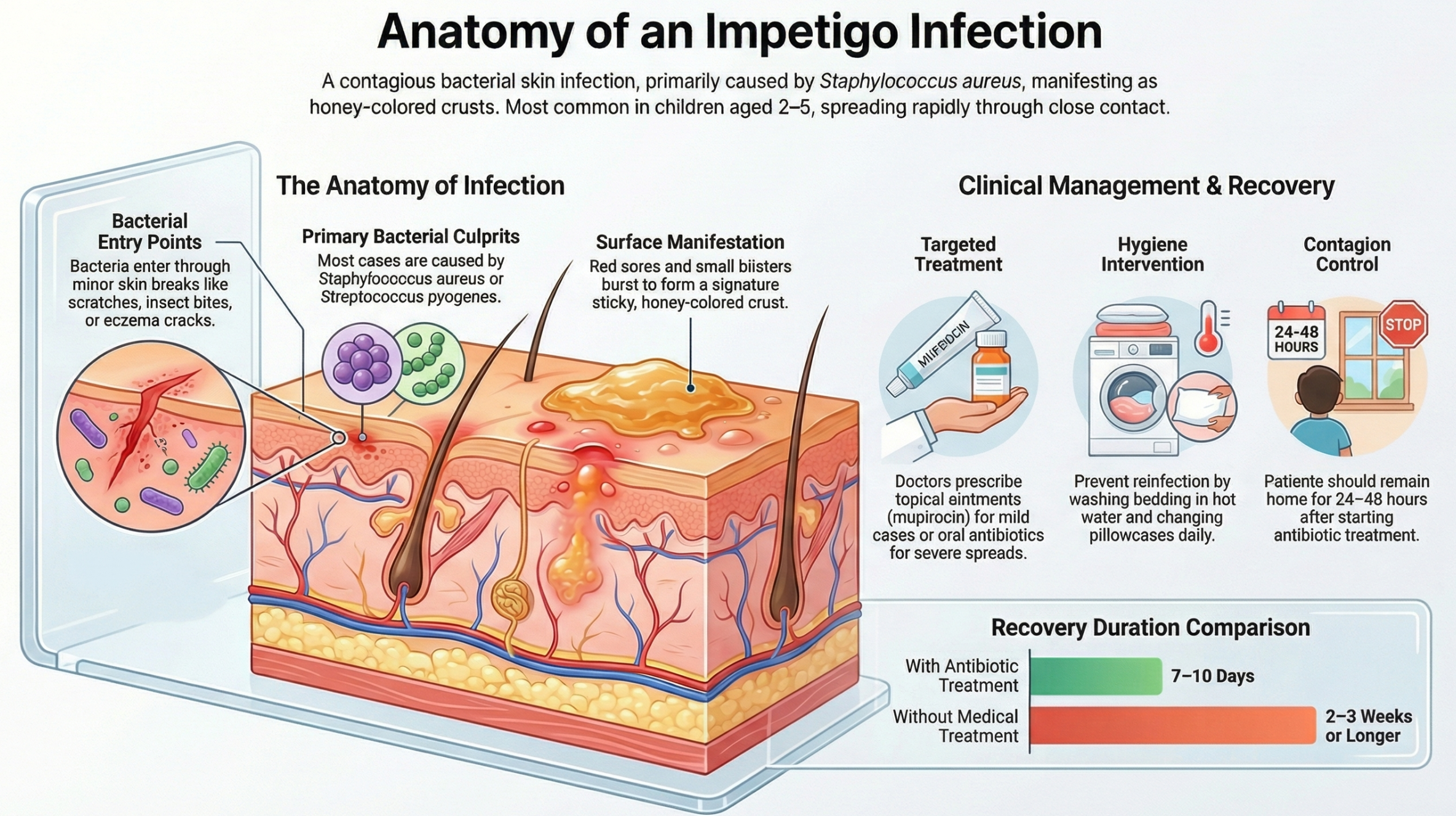
Impetigo is a superficial skin infection that develops when bacteria enter through small breaks in the skin. These breaks can be as minor as a scratch, insect bite, or dry skin crack.
In everyday settings, it often shows up in schools, gyms, or households where people share close contact. For example, a child with a scraped knee playing outside can unknowingly introduce bacteria, which then spreads if the area isn’t cleaned properly.
It’s not just about cleanliness. Even people who shower daily can get impetigo if their skin barrier is weakened. Conditions like eczema or frequent nose touching (which spreads bacteria from the nasal area) can increase the risk.
What are the early signs of impetigo?
Spotting impetigo early makes treatment much easier. The infection usually starts small and spreads quickly if ignored.
Common early signs:
- Red spots or sores around the nose, mouth, or limbs
- Itching or mild irritation
- Small blisters that burst easily
- Sticky, honey-colored crust forming over the sores
A practical example: many parents first notice impetigo as what looks like a “small rash” near a child’s nose. Within a day or two, it turns into crusty patches that spread outward.
What is the main cause of impetigo?
The main cause is bacteria entering broken skin. The two most common culprits are:
- Staphylococcus aureus (most common)
- Streptococcus pyogenes
These bacteria live on the skin or inside the nose without causing harm. Trouble starts when they find a way inside.
Warm weather, sweating, and close contact make things worse. That’s why outbreaks are more common during summer or in crowded environments like daycare centers.
Is impetigo a serious infection?
In most cases, impetigo is mild but highly contagious. It affects only the top layer of skin and usually heals quickly with treatment.
However, ignoring it can lead to problems. The infection can spread to larger areas or, in rare cases, go deeper into the skin (cellulitis). There’s also a small risk of kidney complications linked to certain bacterial strains.
For most people, the bigger issue is how fast it spreads not how dangerous it is.
What is the best treatment for impetigo?
Treatment depends on how widespread the infection is.
For mild cases:
- Apply topical antibiotics (like mupirocin)
- Clean the area gently with warm water
- Remove crusts carefully
For more severe cases:
- Oral antibiotics prescribed by a doctor
- Covering sores to prevent spreading
- Strict hygiene practices
A simple routine that works well:
- Wash hands before and after touching the area
- Use a clean cloth each time
- Avoid scratching
Most people start seeing improvement within 2–3 days of treatment.
Will impetigo go away without antibiotics?
It can, but it’s not ideal. Without treatment, impetigo may last 2–3 weeks or longer and is more likely to spread.
Antibiotics shorten recovery time and reduce the chance of passing it to others. In real-life scenarios, untreated cases often move from a small patch to multiple areas within days.
What naturally helps fight impetigo?
Natural remedies can support healing, but they shouldn’t replace medical treatment in moderate cases.
Common supportive options:
- Diluted tea tree oil (antibacterial)
- Medical-grade honey
- Gentle saltwater cleansing
For example, some parents use honey dressings alongside prescribed ointments to keep the area moist and clean.
Still, antibiotics remain the most reliable way to clear the infection.
Can impetigo spread through daily contact?
Yes, very easily.
It spreads through:
- Direct skin contact (touching sores)
- Sharing towels, pillows, or clothes
- Scratching and touching other areas
That’s why even something as simple as using the same pillowcase can pass the infection.
Can impetigo live on pillows and clothes?
Yes, the bacteria can survive on fabrics for short periods.
To reduce risk:
- Wash bedding in hot water
- Change pillowcases daily during infection
- Avoid sharing personal items
This step alone often prevents reinfection within families.
Is impetigo linked to poor hygiene?
Not directly. Impetigo is caused by bacteria, not just dirt.
That said, hygiene still plays a role. Regular handwashing and keeping wounds clean reduce the chances of infection.
Think of it this way: it’s more about skin protection than cleanliness alone.
How long does impetigo last?
- With treatment: 7–10 days
- Without treatment: 2–3 weeks or longer
Healing time depends on how early treatment starts and how well hygiene is maintained.
What age group gets impetigo the most?
Impetigo is most common in children aged 2 to 5 years.
This happens because:
- Kids have frequent skin injuries
- They play in close contact
- Their immune systems are still developing
However, adults can also get it, especially in crowded environments or contact sports.
What skincare products help with impetigo?
Use gentle, non-irritating cleansers.
Look for:
- Mild antibacterial face washes
- Fragrance-free formulas
- Products designed for sensitive skin
Avoid harsh scrubs or strong chemicals they can worsen irritation and slow healing.