

Who Was Carol Channing?
Carol Channing was an American stage and film performer best known for her work in Broadway musicals. For students and parents trying to understand who is Carol Channing, she is remembered as a leading figure of musical theatre in the 20th century. Her career lasted for several decades and influenced how musical roles were performed on stage.
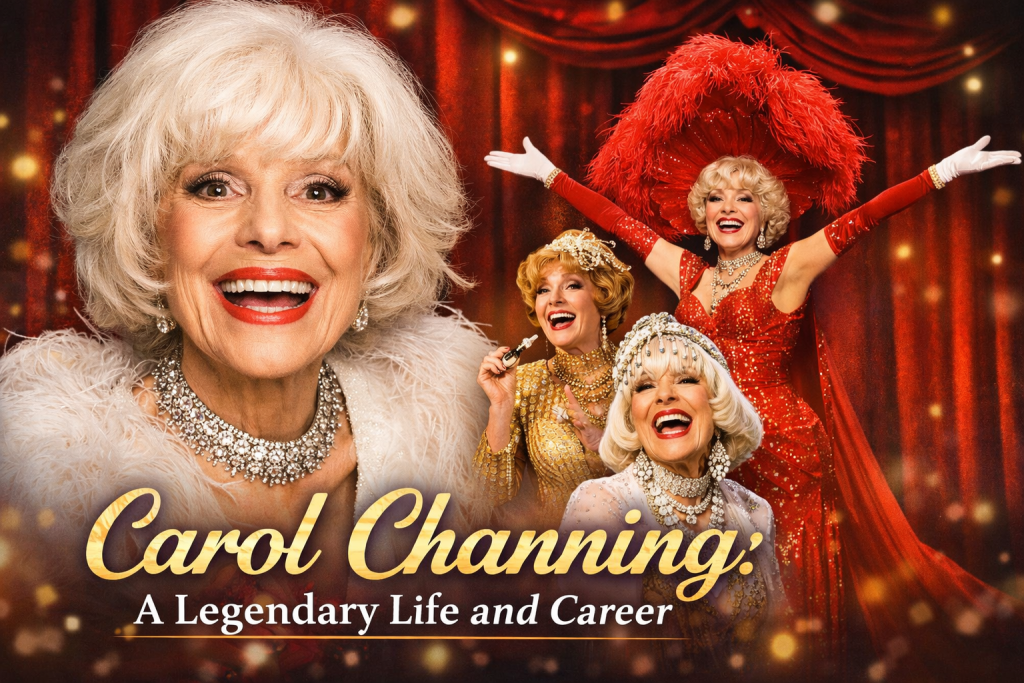
As an actress Carol Channing became especially important in theatre history because she helped popularise Broadway musicals across the United States. Her performances made theatre more accessible and enjoyable for common audiences, not just trained critics. Many theatre students still study her work to understand stage presence and character delivery.
What made Carol Channing different was her highly expressive style. She had a strong, recognisable voice, bold facial expressions, and confident body language. These qualities helped her connect with live audiences and made her performances memorable even from the back rows of large theatres.
Early Life and Background
Birth, Family, and Education
Carol Channing was born on 31 January 1921 in Seattle, Washington, USA. She was the only child in her family. At a very young age, her family moved to California, where she spent most of her childhood. For students, this shows how early surroundings can play an important role in shaping interests and confidence.
When learning about Carol Channing parents, it is important to understand her background with care and respect. Her mother came from a Jewish family, while her father had a mixed heritage that included African-American and European roots. Carol Channing spoke openly about her ancestry later in life and felt proud of it. Her story helps students understand the value of identity and self-acceptance.
Religion also influenced her upbringing. She was raised in a Christian Science household, which shaped her discipline and outlook. Her parents supported education and encouraged her to speak confidently, which later helped her on stage and in public performances.
Carol completed her schooling in San Francisco, where she studied at junior and senior high schools. The city had a rich theatre culture, and school students were often allowed to watch stage shows at low cost. This gave her early exposure to live performances, an experience many students today may relate to through school trips or cultural programs.
During her school years, she enjoyed speaking in front of classmates and entertaining others. She took part in school activities that involved reading aloud and performing small acts. For parents and teachers, this highlights how simple classroom activities can help children build confidence and communication skills from a young age.
After finishing school, she joined Bennington College, where she studied drama and dance. This formal training helped her turn her interest into a serious career path. Her early life clearly shows how family support, education, and exposure to arts can guide students toward their future goals.
Carol Channing’s Early Interest in Performing
Carol Channing showed an interest in performing from a very young age. As a school student, she felt strongly drawn to the stage after watching live performers. This early exposure helped Carol Channing young develop confidence and curiosity about acting and singing.
During her college years, she studied drama and dance seriously. She performed regularly in front of small audiences and began to understand how stage work required discipline, practice, and emotional expression. For students, this stage highlights how hobbies can slowly turn into skills with the right guidance.
After receiving positive feedback for her performances, she made a difficult but clear decision. She chose to leave college and focus fully on acting. For parents and students, her choice shows that career paths are not always straight, but informed decisions based on talent and effort can lead to long-term success.
Broadway Career and Major Stage Roles
Breakthrough on Broadway
Carol Channing’s Broadway journey began with small stage roles, but her major breakthrough came with the musical Gentlemen Prefer Blondes. In this production, she played the character of Lorelei Lee, which brought her wide recognition in the theatre world. This role helped audiences and critics notice her unique stage presence.
Her performance stood out because it was bold and expressive. She used clear voice modulation, strong facial expressions, and confident movements. For theatre students, this phase of Carol Channing’s career shows how understanding a character deeply can make a performance memorable, even in large stage productions.
What made her different from others was her ability to mix humour with emotion. She did not follow a standard acting style but created her own identity on stage. This approach later became a key part of her success in musical theatre.
Hello, Dolly! and Career Peak
The most important role in Carol Channing’s career came with the musical Hello, Dolly!. She played Dolly Levi, a lively and confident character who became closely linked with her name. The success of Carol Channing Hello Dolly made her one of the most recognised faces on Broadway.
Her performance in this musical earned her the Tony Award for Best Actress in a Musical, which is one of the highest honours in theatre. For students, this shows how dedication to one role can define an entire career and create long-lasting recognition.
She returned to play Dolly Levi many times over the years in different Broadway revivals and stage tours. These repeated performances proved her lasting appeal and strong connection with audiences. For parents and learners, her journey highlights the value of consistency, discipline, and love for one’s craft over a long period of time.
Film and Television Career
Popular Movies
Along with stage work, Carol Channing also built a strong presence in films. Her most well-known movie role was in Thoroughly Modern Millie, where she played a lively supporting character. This performance brought her wider public attention beyond theatre audiences.
The role was appreciated for its comic timing and expressive acting. She received major film awards and nominations for this performance, showing that stage actors can also succeed on screen. For students, this is a good example of how skills learned in theatre can be applied to films.
She appeared in several other movies during her career. These included comedy and musical films, as well as voice roles in animated movies. Her film choices often matched her energetic personality rather than following commercial trends.
Television Appearances
Carol Channing was a regular face on television, especially during the era of variety shows. She appeared as a guest performer, singing, acting, and interacting with live audiences. These shows helped her connect with families watching from home.
She also worked in children’s television programs, where her expressive style made learning and entertainment enjoyable. Parents may recognise her from educational or family-friendly shows that focused on music and storytelling.
In later years, she did voice acting for animated series and films. Her distinct voice made her easy to recognise, even without seeing her on screen. Overall, Carol Channing movies and TV shows reflect her ability to adapt her talent across different formats while staying true to her performance style.
Awards, Honors, and Recognition
Carol Channing received many major awards during her long career, especially for her work in musical theatre. Her most important achievement was winning the Tony Award for Best Actress in a Musical for her role in Hello, Dolly!. This award confirmed her position as a leading stage performer.
She was also honoured in the film industry. Her supporting role in Thoroughly Modern Millie earned her a Golden Globe Award and an Academy Award nomination. For students, this shows how strong performances can be recognised across different art forms.
As her career progressed, she received several Lifetime Achievement awards. These honours were given to celebrate her long-term contribution to theatre and entertainment, not just one performance. Such awards highlight consistency and dedication over many years.
She was inducted into the American Theatre Hall of Fame, which is one of the highest recognitions for theatre artists. For parents and learners, these achievements underline how discipline, passion, and continuous learning can lead to lasting respect and recognition in any professional field.
Personal Life
Marriages and Family
Carol Channing’s personal life included several marriages over different stages of her life. She was married more than once, and each relationship reflected a different phase of her personal and professional journey. These details are usually discussed at a high level, as she preferred to keep her private life dignified and respectful.
She had one son, who remained an important part of her life. When people search about Carol Channing children, it usually relates to understanding her role as a mother alongside her demanding career. For parents, her story shows the challenge of balancing family responsibilities with professional commitments.
Despite a busy schedule, she spoke warmly about family values and emotional support. Her experiences highlight that personal relationships often evolve alongside career growth.
Beliefs and Health
Carol Channing followed Christian Science, which influenced her lifestyle and outlook. Her faith played a role in how she approached work, discipline, and personal challenges. For students, this shows how personal beliefs can shape decision-making and resilience.
She was also a survivor of ovarian cancer. After recovery, she openly spoke about her experience, helping raise awareness about health issues, especially for women. Parents may find this part of her life inspiring, as it reflects strength and hope during difficult times.
Later in life, she publicly shared information about her ancestry and expressed pride in her roots. Her openness encouraged conversations around identity and self-acceptance, making her personal story meaningful beyond the stage.
Is Carol Channing Still Alive?
Many readers ask is Carol Channing still alive, especially students who come across her name while studying theatre or film history. The clear answer is no. Carol Channing passed away in January 2019.
She died on 15 January 2019 at her home in Rancho Mirage, California, at the age of 97. Her death was due to natural causes. She remained active and connected with the performing arts even in her later years.
For students and parents, this information helps place her work in historical context. Although she is no longer alive, her performances and contributions continue to be studied and remembered in theatre education.
Death and Tributes
Carol Channing passed away in January 2019 at the age of 97. The Carol Channing cause of death was natural, as she died peacefully at her home after a long and active life. She had continued making public appearances and supporting the arts even in her later years.
After her passing, Broadway paid a special tribute to honour her contribution to theatre. Theatre lights across Broadway were dimmed as a mark of respect. Many performers and audiences gathered outside famous theatres to remember her iconic stage presence.
The entertainment industry responded with deep respect and admiration. Fellow actors, theatre professionals, and cultural institutions shared messages recognising her influence on musical theatre. For students and parents, these tributes show how lasting contributions to any field are remembered long after a person’s lifetime.
Legacy and Cultural Impact
Carol Channing left a lasting mark on musical theatre through her bold and expressive performance style. She showed that a strong personality, clear voice, and confident body language could bring stage characters to life. Many performers who came after her learned how to hold audience attention by studying her work.
She is still studied today because her performances go beyond entertainment. Theatre students analyse how Carol Channing used timing, facial expressions, and movement to communicate emotion on stage. Her work helps learners understand how performance is not only about dialogue but also about presence and energy.
In education, her career is often used as an example in theatre and performance arts courses. Teachers refer to her journey to explain stage confidence, character building, and long-term dedication to a craft. For parents and students, her legacy shows how creative skills, when developed with discipline, can lead to meaningful and respected careers in the arts.
Frequently Asked Questions About Carol Channing
Q. Who was Carol Channing famous for playing?
Carol Channing was most famous for playing Dolly Levi in the Broadway musical Hello, Dolly!. This role became strongly connected with her name because she performed it many times over several years. For students, this shows how one well-performed role can shape an entire career.
Q. What made Carol Channing’s voice unique?
Her voice was instantly recognisable because it was strong, clear, and slightly raspy. She used her voice to add humour and emotion to her characters. Theatre students often study her vocal style to learn how voice control can enhance stage performance.
Q. Was Carol Channing related to Stockard Channing?
No, Carol Channing and Stockard Channing were not related. They shared the same last name, which often causes confusion. This is a common question among learners and readers researching theatre and film personalities.
Q. Why is Hello, Dolly! closely linked to Carol Channing?
Hello, Dolly! is closely linked to Carol Channing because her performance made the character of Dolly Levi iconic. Audiences strongly associated the energy and personality of the role with her acting style. For parents and students, this example highlights how dedication to a role can leave a lasting cultural impact.