
Bankim Chandra Chatterjee: When discussing the pioneers of modern Indian literature, the name of Bankim Chandra Chatterjee stands among the most respected and influential figures. Known as one of the greatest writers in Bengali literature, he played a major role in shaping modern Indian thought through his novels, essays, and patriotic writings. His literary works not only entertained readers but also inspired social awareness, cultural pride, and national consciousness.
Bankim Chandra Chatterjee, also known as Bankim Chandra Chattopadhyay, is remembered across India as the creator of “Vande Mataram,” the song that became a powerful symbol during India’s freedom struggle. His writings reflected the social, political, and cultural realities of nineteenth-century India and encouraged people to think about their identity, traditions, and future.
As someone who has studied Indian literary history closely, I have often noticed that many students know Bankim Chandra Chatterjee mainly because of Vande Mataram. However, his contribution goes far beyond a single song. Through novels such as Anandamath, Durgeshnandini, Kapalkundala, and Devi Chaudhurani, he laid the foundation of modern Bengali fiction and influenced generations of writers.
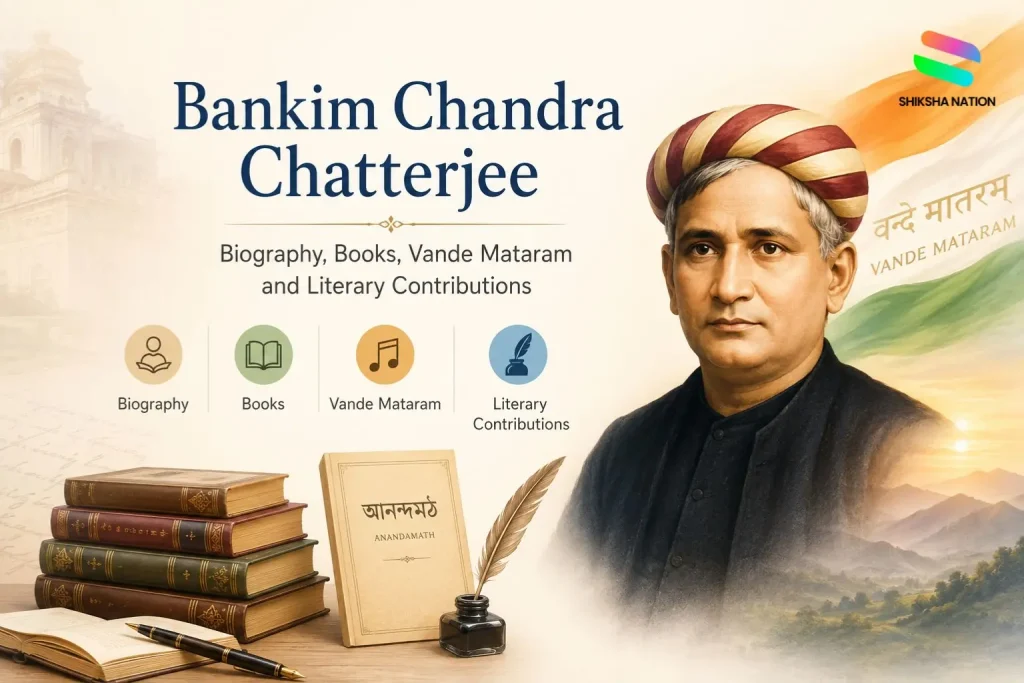
Who was Bankim Chandra Chatterjee?
Bankim Chandra Chatterjee was an Indian novelist, poet, essayist, journalist, and civil servant. He is widely regarded as one of the founding figures of modern Bengali literature. His writings brought a new style of storytelling that combined history, culture, romance, and patriotism.
At a time when India was under British rule, Bankim Chandra used literature as a tool to inspire pride in Indian heritage and values. His works reflected the challenges faced by society while also promoting moral strength and national unity.
Bankim Chandra Chatterjee Overview
| Particulars | Details |
|---|---|
| Full Name | Bankim Chandra Chattopadhyay (Bankim Chandra Chatterjee) |
| Known As | Father of the Modern Bengali Novel |
| Date of Birth | 27 June 1838 |
| Place of Birth | Kanthalpara, Naihati, Bengal Presidency, British India (present-day West Bengal, India) |
| Date of Death | 8 April 1894 |
| Age at Death | 55 Years |
| Nationality | Indian |
| Profession | Novelist, Poet, Essayist, Journalist, Civil Servant |
| Education | Hooghly Mohsin College and Presidency College, Calcutta |
| University | University of Calcutta |
| Notable Achievement | Among the first graduates of the University of Calcutta |
| Government Position | Deputy Magistrate and Deputy Collector |
| Literary Language | Bengali and English |
| Literary Period | Bengal Renaissance |
| Famous For | Writing Vande Mataram and pioneering modern Bengali literature |
| National Contribution | Inspired Indian nationalism through literature |
| Most Famous Novel | Anandamath (1882) |
| National Song Connection | Author of Vande Mataram, India’s National Song |
| Major Literary Genres | Historical Fiction, Social Fiction, Essays, Religious Literature |
| Popular Books | Durgeshnandini, Kapalkundala, Anandamath, Devi Chaudhurani, Krishna Charitra |
| First Major Bengali Novel | Durgeshnandini (1865) |
| Famous Patriotic Work | Anandamath |
| Literary Contribution | Established the foundation of modern Bengali prose fiction |
| Influence | Inspired writers, scholars, and freedom fighters across India |
| Legacy | One of the most influential figures in Indian literature and nationalism |
Bankim Chandra Chatterjee Biography
- Date of Birth and Early Life
Bankim Chandra Chatterjee was born on 27 June 1838 in Kanthalpara, Naihati, in present-day West Bengal, India. He belonged to a well-educated Bengali Brahmin family that valued learning and culture.
From a young age, he showed a strong interest in reading and academics. His family encouraged education, which helped him develop a deep understanding of literature, philosophy, and history.
- Education
Bankim Chandra Chatterjee received his early education in local schools before joining Hooghly Mohsin College. Later, he studied at Presidency College in Kolkata.
One of the most remarkable achievements of his academic life was becoming among the first graduates of the University of Calcutta. This was a significant milestone during a period when higher education opportunities in India were limited.
His education exposed him to both Indian and Western literary traditions, which later influenced his writing style.
- Career as a Civil Servant
After completing his education, Bankim Chandra joined government service as a Deputy Magistrate and Deputy Collector under the British administration.
He served in various districts of Bengal for more than three decades. Despite his demanding administrative responsibilities, he continued writing and publishing literary works.
His experience as a civil servant gave him a close understanding of social conditions, which became an important theme in many of his novels.
Literary Journey of Bankim Chandra Chatterjee
Beginning of His Writing Career
Bankim Chandra initially wrote poetry but later turned to fiction. His first novel, Rajmohan’s Wife, was written in English. Although it received attention, he soon realized the importance of writing in his native language.
His decision to write in Bengali transformed regional literature and made literary works more accessible to common readers.
Influence on Bengali Literature
Before Bankim Chandra, Bengali prose fiction was still developing. He introduced structured storytelling, complex characters, and engaging plots.
His novels demonstrated that Indian languages could produce literature equal in quality to Western literary works. Because of this contribution, he is often called the father of the modern Bengali novel.
Bankim Chandra Chatterjee Famous Books
Bankim Chandra Chatterjee wrote numerous novels that continue to be studied and appreciated today.
| Book Name | Publication Year | Significance |
|---|---|---|
| Durgeshnandini | 1865 | First major Bengali historical novel |
| Kapalkundala | 1866 | Popular romantic and social novel |
| Mrinalini | 1869 | Historical and patriotic themes |
| Vishabriksha | 1873 | Social issues and family relationships |
| Krishnakanter Will | 1878 | Psychological and social realism |
| Anandamath | 1882 | Nationalist novel featuring Vande Mataram |
| Devi Chaudhurani | 1884 | Strong female protagonist and social justice |
| Sitaram | 1887 | Historical fiction based on Bengal’s past |
| Krishna Charitra | 1886 | Philosophical study of Lord Krishna |
- Durgeshnandini
This novel established Bankim Chandra’s reputation as a talented storyteller. It combined romance, history, and adventure in a way that was new to Bengali readers.
- Kapalkundala
Kapalkundala remains one of his most popular novels. The story explores love, human emotions, and cultural differences.
- Devi Chaudhurani
The novel presents a strong female character who challenges social expectations and emerges as a leader.
- Krishna Charitra
This work reflects Bankim Chandra’s interest in religion and philosophy. It provides an analytical interpretation of Lord Krishna’s life and teachings.
Anandamath and Its Historical Importance
Among all the books of Bankim Chandra Chatterjee, Anandamath holds a special place in Indian history.
Published in 1882, the novel is set during the Bengal famine and depicts a group of ascetic warriors fighting against oppression.
Story Overview
The story revolves around a revolutionary group known as the Santans. These individuals dedicate themselves to serving the motherland and protecting society.
Main Characters
Important characters include:
- Mahendra
- Kalyani
- Satyananda
- Bhavananda
Each character represents different aspects of sacrifice, duty, and patriotism.
Role in Nationalism
Anandamath introduced powerful nationalist ideas that inspired readers during the colonial period. The novel encouraged people to think of India as a mother deserving love and protection.
Impact on the Freedom Movement
Many leaders of India’s independence movement drew inspiration from the patriotic message of Anandamath. The novel became a source of motivation for those working toward national freedom.
Bankim Chandra Chatterjee and Vande Mataram
The association between Bankim Chandra Chatterjee and Vande Mataram is one of the most important aspects of Indian cultural history.
How Vande Mataram Was Written
Vande Mataram first appeared in Anandamath. The song praises the motherland and celebrates India’s natural beauty, strength, and spirit.
The words created a deep emotional connection among readers and later among freedom fighters.
Meaning of the Song
The phrase “Vande Mataram” means “I bow to thee, Mother.”
In the song, the mother represents India itself. Through poetic imagery, Bankim Chandra expressed love, respect, and devotion toward the nation.
National Song of India
Vande Mataram was later recognized as the National Song of India. It occupies a special place in India’s cultural and political history.
Role During the Independence Movement
Throughout the freedom struggle, Vande Mataram became a rallying cry for national unity. People sang it during public meetings, protests, and political movements.
Its influence extended far beyond literature and became part of India’s national identity.
Major Contributions to Indian Society and Literature
Bankim Chandra Chatterjee’s contribution can be understood in several areas.
- Promotion of Nationalism
His writings encouraged Indians to develop pride in their culture and heritage. Long before organized political movements became widespread, his novels introduced nationalist ideas.
- Development of Bengali Literature
He transformed Bengali prose fiction and established standards that influenced future writers.
- Social Awareness
Many of his novels addressed:
- Social customs
- Family relationships
- Women’s rights
- Moral responsibility
- Cultural Revival
During a period of significant social change, his writings helped preserve and promote Indian traditions while encouraging progress.
- Inspiration for Future Generations
Writers, scholars, and political leaders have continued to draw inspiration from his works.
Bankim Chandra Chatterjee Awards, Recognition and Legacy
Although modern literary awards were not common during his lifetime, Bankim Chandra received widespread respect and recognition for his contributions.
Influence on Future Writers
Many famous Indian writers admired his work, including:
- Rabindranath Tagore
- Sri Aurobindo
- Bipin Chandra Pal
His literary innovations influenced the development of modern Indian literature across different languages.
Memorials and Institutions
Several educational institutions, roads, cultural organizations, and academic programs have been named in his honor.
Why He Is Remembered Today
Even after more than a century, his works continue to be:
- Studied in schools and universities
- Translated into multiple languages
- Discussed by literary scholars
- Appreciated by readers interested in Indian history
Bankim Chandra Chatterjee Birth and Death Timeline
| Event | Year |
|---|---|
| Birth | 1838 |
| Graduation from University of Calcutta | 1858 |
| Joined Civil Service | 1858 |
| Durgeshnandini Published | 1865 |
| Anandamath Published | 1882 |
| Vande Mataram Popularized | 1882 |
| Death | 1894 |
Interesting Facts About Bankim Chandra Chatterjee
- His full name was Bankim Chandra Chattopadhyay.
- He was among the first graduates of the University of Calcutta.
- He served as a Deputy Magistrate for more than thirty years.
- He is known as the father of the modern Bengali novel.
- Vande Mataram was first published in Anandamath.
- His works have been translated into many Indian and foreign languages.
- He successfully balanced a government career and literary life.
- His writings influenced both literature and nationalism.