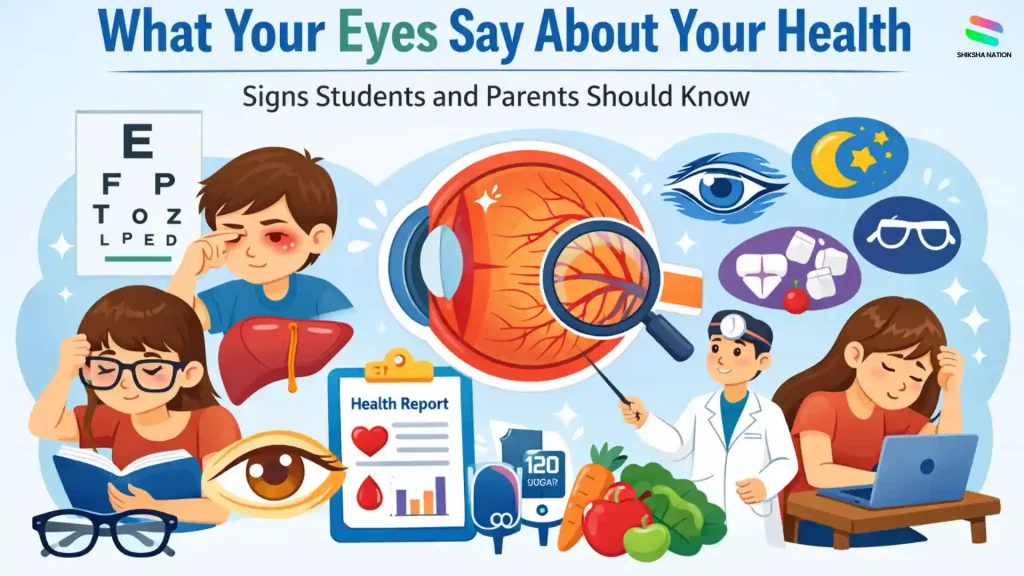
Why Your Eyes Can Reveal Important Health Signals
The eyes are closely connected to many important systems in the body. Inside the eyes are tiny blood vessels, nerves, and tissues that respond quickly to health changes. Because of this, doctors often study the eyes to understand what may be happening inside the body.
These internal connections are one reason how your eyes can tell your health is taken seriously in medical checkups. Small changes in the eyes can sometimes signal issues related to nutrition, blood circulation, or general health.
Connection Between Eyes, Blood Vessels, and Nerves
The eyes contain a network of very fine blood vessels. These vessels carry oxygen and nutrients to the eye and also reflect changes happening in the body.
Doctors can observe these vessels during an eye examination. In some cases, changes in their appearance act as vision health indicators that help doctors understand if the body is under stress, fatigue, or other health conditions.
The eye is also connected to the brain through the optic nerve. This nerve carries visual signals from the eye to the brain, which is why eye health is closely related to overall neurological function.
Why Doctors Examine Eyes During Routine Checkups
Eye examinations are not only for checking eyesight. Doctors also look for early signals that may indicate broader health conditions.
During routine tests, doctors check the retina, pupil reaction, and eye movement. This process supports eye exam health detection, helping professionals identify possible concerns early.
For students, regular eye exams are helpful because long study hours, screen exposure, and poor lighting can strain the eyes. Parents should consider eye checkups if children complain about headaches, blurry vision, or difficulty reading from the board.
10 Signs Your Eyes Reveal About Your Health
Our eyes can show small changes when the body is tired, stressed, or facing health problems. Many people ignore these changes, thinking they are temporary. However, some warning signs in eyes may indicate that the body needs attention.
Students and parents should be aware of these signals because early awareness can prevent bigger vision problems later. These health signs in eyes do not always mean a serious disease, but they can suggest that the eyes or body need care.
Red or Irritated Eyes
Red eyes are one of the most common eye problems.
- It may happen due to lack of sleep, dust, or long screen use.
- Students who study on phones or laptops for many hours may notice redness.
- If redness stays for many days, it is better to consult an eye doctor.
Yellowing of the Eyes
The white part of the eye should normally look clear and bright.
- A yellow tint may sometimes be linked to liver-related issues such as jaundice.
- Parents should pay attention if a child’s eyes suddenly appear yellowish.
- A doctor can check the exact cause through proper tests.
Blurry Vision
Blurry vision means objects look unclear or out of focus.
- Students may struggle to read the board or books.
- It may indicate weak eyesight or the need for glasses.
- Ignoring blurry vision can affect learning and concentration in class.
Persistent Dry Eyes
Dry eyes can feel uncomfortable and irritating.
- It usually happens due to excessive screen exposure or air-conditioned rooms.
- Students who spend long hours on digital devices may experience dryness.
- Taking screen breaks and blinking often can help reduce the problem.
Sensitivity to Light
Some people feel discomfort when exposed to bright light.
- This may occur due to eye strain, infection, or fatigue.
- Students who avoid sunlight or classroom lighting may be experiencing this issue.
- Eye protection and medical advice can help if the problem continues.
Pale Eyelids
The inside of the lower eyelid normally looks pink.
- If it appears pale, it may sometimes be related to low iron levels in the body.
- Doctors occasionally check eyelids when examining for anemia.
- Parents should notice if children also feel tired frequently.
Frequent Eye Twitching
Eye twitching is usually harmless but can be annoying.
- It often occurs due to stress, lack of sleep, or too much caffeine.
- Students preparing for exams sometimes experience eye twitching because of fatigue.
- Proper sleep and relaxation usually help it stop.
Difficulty Seeing at Night
Some people struggle to see clearly in low light.
- This may be connected to vitamin deficiencies or eye strain.
- Students may notice difficulty while walking in dim light or reading in the evening.
- A balanced diet and eye checkup can help identify the cause.
Eye Pain or Pressure
Eyes should normally feel comfortable while reading or focusing.
- Pain or pressure may indicate eye strain, infection, or vision issues.
- Students who study for long hours without breaks may experience this problem.
- Regular rest and proper lighting are important for eye comfort.
Floaters or Flashes in Vision
Some people notice small moving spots or flashes in their vision.
- These may appear occasionally and disappear on their own.
- However, frequent floaters should not be ignored.
- An eye doctor can check if the retina is healthy.
Understanding these signs helps students and parents take better care of eye health. Paying attention to early signals and getting regular eye checkups can help protect vision and overall well-being.
Signs of Healthy Eyes
Healthy eyes help students read, focus in class, and use screens without discomfort. Many people only notice eye problems when vision becomes blurry, but understanding the signs of healthy eye condition can help maintain good vision for a long time.
Parents and students should pay attention to daily eye comfort. Observing a few simple healthy eyes symptoms can help you understand whether your eyes are functioning properly.
Clear and Comfortable Vision
One of the easiest ways to know if your eye is healthy is by checking how clearly you see things.
- Words in books and on the board appear clear and sharp.
- You can read or watch objects at a distance without squinting.
- Your eyes do not feel tired quickly while studying.
Bright and White Eye Surface
The white part of the eye, called the sclera, should look clean and slightly shiny.
- It should not appear yellow, very red, or swollen.
- A clear sclera is considered one of the important signs of healthy eye condition.
Comfortable Blinking and Moist Eyes
Healthy eyes stay naturally moist and comfortable.
- Blinking should feel normal and effortless.
- The eyes should not feel dry, itchy, or burning during regular activities.
No Frequent Headaches or Eye Strain
Headaches during reading or studying may indicate eye strain.
- If students can read, write, and focus for long periods without headaches, it is a positive sign.
- This usually means the eyes are working properly and vision is stable.
Recognizing these healthy eyes symptoms helps students and parents understand when the eyes are functioning well and when a checkup might be needed.
Signs of Unhealthy Eyes Students Should Notice
Students today spend many hours reading, attending classes, and using phones or laptops. Because of this lifestyle, eye strain has become common. Recognizing the signs of unhealthy eyes early can help prevent bigger vision problems.
Parents should also observe small changes in their child’s behaviour while studying or watching screens. Some symptoms may indicate that the eyes are under stress or that signs your eyes are weak are starting to appear.
Headaches During Study
Frequent headaches while reading or studying can be linked to eye strain.
- Students may feel pressure around the forehead or eyes.
- This often happens when the eyes work harder to focus on text.
- An eye checkup may help identify the cause.
Squinting While Reading
Some students narrow their eyes to see things clearly.
- Squinting while reading books or looking at the classroom board can signal weak vision.
- It may suggest that the eyes need glasses or better visual support.
Eye Strain from Screens
Long screen exposure is a major reason for eye discomfort today.
- Studying on phones, tablets, or laptops for long periods can cause tired eyes.
- Students may feel dryness, burning, or difficulty focusing.
Frequent Redness in Eyes
Red or irritated eyes are another common sign.
- This can occur due to lack of sleep, dust, or too much screen time.
- If redness appears regularly, parents should consider consulting an eye specialist.
Understanding these signs of unhealthy eyes helps students take better care of their vision and avoid long-term eye problems.
What Doctors Check During an Eye Exam
An eye exam is not only about checking whether someone needs glasses. Eye specialists also observe several internal parts of the eye to understand overall eye health. In some cases, an eye examination can provide early clues about general health conditions.
Many people wonder can eye test detect health problems beyond vision issues. While an eye exam cannot confirm diseases on its own, it can show certain signs that may require further medical tests.
Checking Vision and Eye Movement
Doctors first check how clearly a person can see.
- Reading letters on an eye chart helps evaluate vision clarity.
- Doctors also observe how well the eyes move and focus.
- This helps identify early signs of weak eyesight or strain.
Examining Blood Vessels in the Eye
The eye contains tiny blood vessels that can reflect changes in the body.
- During the exam, doctors look at these vessels using special lights and lenses.
- This process supports eye exam health detection because changes in blood vessels may suggest circulation issues.
Looking for Signs Linked to General Health
Sometimes eye examinations show signals related to other health conditions.
- Pale eyelids may suggest anemia.
- Changes in the retina may sometimes indicate diabetes-related eye changes.
- Blood vessel patterns can also give clues about blood pressure levels.
This is why many people ask what diseases can be detected in an eye exam. Doctors mainly use the eye exam as a screening step, and if anything unusual appears, they may recommend further medical tests.
Checking the Retina and Optic Nerve
The retina and optic nerve are important for vision.
- Doctors examine these areas to ensure they look healthy.
- A healthy retina supports clear vision and proper signal transfer to the brain.
Regular eye checkups are useful for students because early detection helps prevent vision problems that may affect reading, studying, and daily activities.
When Should Students or Parents Visit an Eye Doctor?
Eye problems often start with small symptoms that people ignore. However, some warning signs in eyes should not be overlooked, especially when they start affecting study, reading, or daily activities.
Parents should pay attention if children frequently complain about discomfort while studying. Early consultation with an eye doctor can help identify problems before they become serious.
Common Signs That Need Attention
- Frequent headaches during study – This may happen when the eyes struggle to focus on books or screens.
- Blurry vision – Difficulty seeing the classroom board or reading text clearly may indicate weak eyesight.
- Reading difficulty – Losing focus, skipping lines, or holding books too close can signal vision problems.
- Eye irritation or burning – Continuous redness, itching, or watering may suggest eye strain or infection.
If these symptoms continue, they may be early signs your eyes are damaged or under stress. Visiting an eye specialist can help students get proper guidance and protect their vision.
Simple Tips to Keep Your Eyes Healthy
Good eye habits can help students maintain clear vision and avoid common eye problems. Small daily practices can support long-term eye health and help reduce eye strain from studying or screen use.
Recognizing early eye health signs and following healthy routines can protect vision and improve focus during studies.
Easy Habits for Better Eye Health
- Take regular screen breaks – Follow the 20-20-20 rule: every 20 minutes, look at something 20 feet away for 20 seconds.
- Study with proper lighting – Poor lighting can strain the eyes and make reading difficult.
- Eat eye-friendly foods – Include carrots, spinach, fruits, and nuts that support vision health.
- Maintain proper screen distance – Keep phones or laptops at a comfortable distance from your eyes.
- Schedule regular eye checkups – Doctors can monitor vision health indicators and detect problems early.
These small habits help students keep their eyes comfortable and healthy while studying.
Quick Summary
Your eyes are not only important for vision but can also show early signals about your health. Small changes such as blurry vision, irritation, or frequent headaches should not be ignored.
Understanding what your eyes say about your health helps students and parents recognize early warning signs. Paying attention to these signals can help prevent long-term vision problems.
Regular eye checkups, healthy screen habits, and proper nutrition play an important role in protecting eye health. When students and parents stay aware of these signs, it becomes easier to maintain clear vision and overall well-being.
FAQs on What Your Eyes Say About Your Health
Q. How can your eyes show signs of your overall health?
The eyes contain tiny blood vessels and nerves that are closely connected to the body. Because of this, doctors sometimes notice early changes in the eyes that may reflect health conditions such as fatigue, nutritional deficiency, or circulation problems. Regular eye exams help identify these signals early.
Q. What are common warning signs in eyes that should not be ignored?
Some warning signs include blurry vision, frequent redness, eye pain, sensitivity to light, and sudden changes in vision. If students or parents notice these symptoms repeatedly, it is advisable to consult an eye specialist for proper evaluation.
Q. How do you know if your eyes are healthy?
Healthy eyes usually have clear vision, comfortable blinking, and a bright white sclera (the white part of the eye). Students should also be able to read, focus, and look at distant objects without headaches or eye strain.
Q. Can an eye test detect health problems in the body?
An eye exam mainly checks vision and eye health, but it can sometimes reveal clues about other health conditions. For example, doctors may notice signs linked to blood circulation, diabetes-related changes, or anemia during an eye examination.
Q. What diseases can be detected during an eye exam?
Eye exams may help doctors notice early indicators of conditions such as diabetes-related eye changes, high blood pressure effects on blood vessels, and retinal problems. However, further medical tests are usually required to confirm any disease.
Q. Why do students experience eye strain during study?
Eye strain often occurs due to long hours of reading, excessive screen use, or studying in poor lighting. Taking regular breaks, maintaining proper screen distance, and ensuring good lighting can help reduce strain.
Q. How often should students get their eyes checked?
Students should ideally have an eye checkup once every year or whenever they experience symptoms such as blurry vision, headaches during study, or difficulty seeing the classroom board.
Q. Can screen time affect eye health in students?
Yes, long periods of screen use can lead to dryness, tired eyes, and difficulty focusing. Following healthy screen habits and taking regular breaks can help protect eye health.
Q. When should parents take their child to an eye doctor?
Parents should consider an eye checkup if a child frequently squints, complains of headaches while studying, struggles to read the board, or shows signs of eye irritation or redness. Early attention can help prevent vision problems from affecting learning.