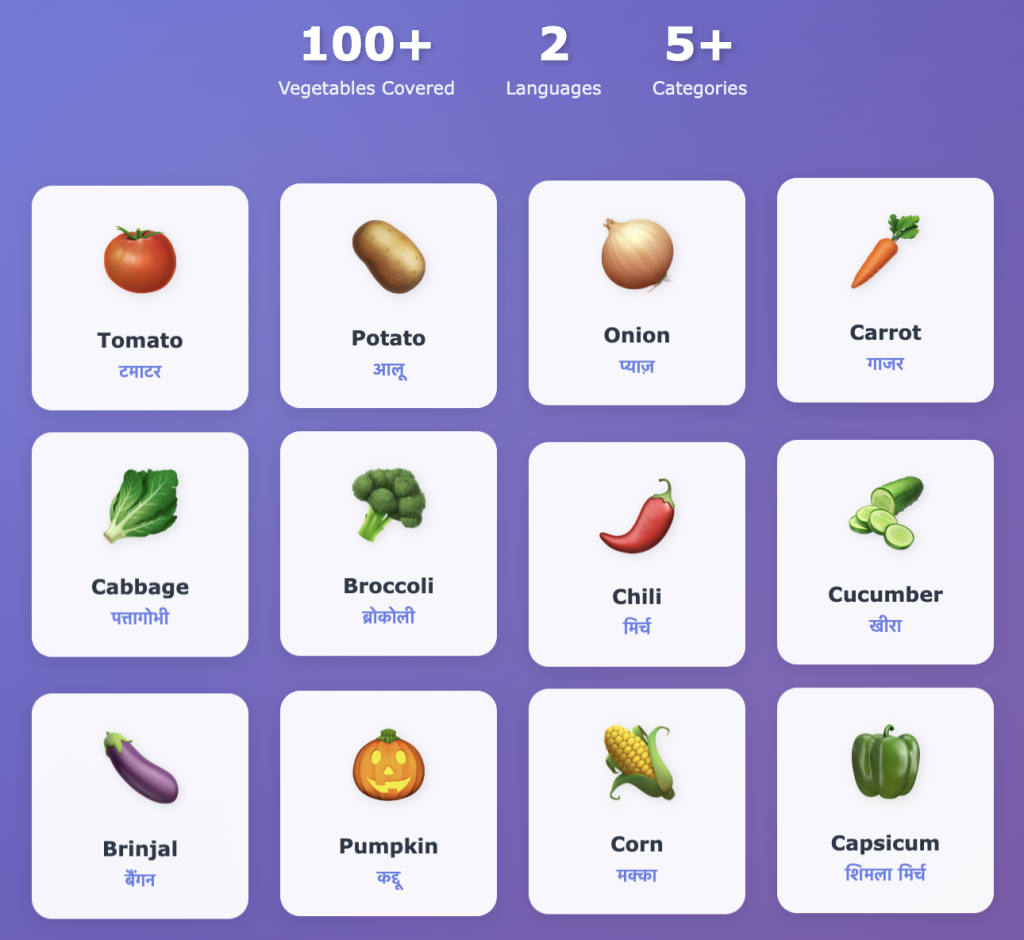
Imagine your English teacher asking, “Can anyone name 10 vegetables in English?” and you confidently raise your hand while others hesitate. Or picture yourself helping your younger sibling with their EVS homework, listing vegetables effortlessly in both English and Hindi. Knowing vegetables names isn’t just about vocabulary it’s a fundamental life skill that helps in exams, grocery shopping with parents, science projects, and even understanding nutrition lessons in school.
This comprehensive guide covers everything from common vegetables to rare ones, with pronunciations, Hindi translations, and easy-to-remember categories. Whether you’re preparing for a class test, working on a school project, or simply expanding your vocabulary, this article is your complete resource.
Book a Counseling Session
Why Learning Vegetables Names Matters for Students
Learning vegetables names strengthens your English vocabulary and helps in multiple academic situations. During EVS or science classes, you’ll discuss plant parts, nutrition, and food groups—all requiring vegetable knowledge. English composition and speaking exams often include topics like “My Favorite Food” or “A Visit to the Market,” where knowing vegetables names becomes essential.
Beyond academics, this knowledge helps you communicate confidently during grocery shopping, understand recipes, make healthy food choices, and participate in family conversations about meals. It’s practical vocabulary that you’ll use throughout life.
Class 6-10 90% Marks Guarantee Program with NCERT syllabus, weekly tests, and personal mentorship.
10 Most Common Vegetables Name in English
Every student should know these basic vegetables that appear frequently in textbooks, exams, and daily life:
Tomato – Used in salads and cooking
Potato – Most versatile vegetable
Onion – Essential cooking ingredient
Carrot – Orange root vegetable
Cabbage – Leafy green vegetable
Cauliflower – White flowered vegetable
Spinach – Dark green leafy vegetable
Brinjal – Purple or green vegetable
Pumpkin – Large orange vegetable
Cucumber – Green salad vegetable
These ten vegetables name in English form the foundation of vegetable vocabulary. They appear most commonly in school textbooks, exam questions, and everyday conversations.
Vegetables Name in Hindi and English – Complete Table
This table helps students learn vegetables names in both languages simultaneously perfect for bilingual learners:
English Name
Hindi Name
Category
Tomato
टमाटर (Tamatar)
Fruit Vegetable
Potato
आलू (Aloo)
Root Vegetable
Onion
प्याज़ (Pyaaz)
Bulb Vegetable
Carrot
गाजर (Gajar)
Root Vegetable
Cabbage
पत्तागोभी (Pattagobhi)
Leafy Vegetable
Cauliflower
फूलगोभी (Phoolgobi)
Flower Vegetable
Spinach
पालक (Palak)
Leafy Green
Brinjal
बैंगन (Baingan)
Fruit Vegetable
Pumpkin
कद्दू (Kaddu)
Fruit Vegetable
Cucumber
खीरा (Kheera)
Fruit Vegetable
Lady Finger
भिंडी (Bhindi)
Fruit Vegetable
Radish
मूली (Mooli)
Root Vegetable
Beetroot
चुकंदर (Chukandar)
Root Vegetable
Bitter Gourd
करेला (Karela)
Fruit Vegetable
Bottle Gourd
लौकी (Lauki)
Fruit Vegetable
This vegetables name in Hindi and English table helps you learn dual vocabulary efficiently, especially useful for students in Indian schools where both languages are taught.
All Vegetables Name in English by Categories
Understanding vegetables by categories makes learning systematic and memorable.
This 100 vegetables name in English list covers common to exotic varieties, giving you comprehensive vocabulary for any academic or practical situation.
Common Mistakes Students Make
Confusing Fruits and Vegetables: Many students call tomato, cucumber, and brinjal as only vegetables. Botanically, they’re fruits but culinary vegetables. In exams, follow the context of the question.
Spelling Errors: Common mistakes include writing “cabage” instead of “cabbage,” “brocoli” instead of “broccoli,” or “cabage” instead of “cabbage.” Practice writing these words multiple times.
Pronunciation Problems: Students often mispronounce vegetables like “broccoli” (brawk-uh-lee) or “quinoa” (keen-wah). Listen to pronunciations online or ask your teacher.
Mixing Hindi and English: During English exams, avoid writing “aloo” when the question asks for English names. Similarly, don’t write “potato” in Hindi paper answers.
Incomplete Lists: When asked to write 10 vegetables name in English, students sometimes repeat items or include fruits like apple or banana. Stick to actual vegetables.
Easy Tricks to Remember Vegetables Names
Color Grouping Method: Remember vegetables by color green (spinach, cucumber, lady finger), orange (carrot, pumpkin), purple (brinjal, cabbage), white (cauliflower, radish).
Kitchen Connection: Notice vegetables used at home daily. Making personal connections helps retention. “Mom uses onion in every dish” makes onion memorable.
Rhyming and Songs: Create simple rhymes like “Potato, tomato, go together in the plate-o” or sing vegetable names to popular tunes.
Category Method: Group by plant parts leaves (spinach, cabbage), roots (carrot, radish), flowers (cauliflower, broccoli), fruits (tomato, cucumber). This biological classification aids memory.
Market Visit: Visit a vegetable market with parents and note down names. Visual and practical exposure strengthens learning significantly.
Flashcards: Create flashcards with vegetable pictures on one side and English/Hindi names on the other. Review them daily for 10 minutes.
Conclusion
Mastering vegetables names in English and Hindi is more than a vocabulary exercise—it’s building a foundation for academic success, practical life skills, and confident communication. From remembering 10 vegetables name in English for a class test to listing 100 vegetables name in English for a project, this knowledge serves you throughout your educational journey.
Use the tables, categories, and memory tricks shared here to make learning systematic and enjoyable. Practice daily, connect vegetables to real-life experiences, and soon you’ll find yourself confidently naming vegetables in any situation whether in exams, at home, or in the market.
Remember, every new vegetable name you learn is a step toward stronger English skills and broader general knowledge. Keep this guide handy, revise regularly, and watch your vocabulary grow naturally. You’ve got this!
FAQs about Vegetables Names
Q. What are the 10 most common vegetables name in English?
The 10 most common vegetables are tomato, potato, onion, carrot, cabbage, cauliflower, spinach, brinjal, pumpkin, and cucumber. These appear frequently in school textbooks, exams, and daily cooking, making them essential vocabulary for students.
Q. How can I learn vegetables name in Hindi and English together?
Use bilingual tables, flashcards, or apps that show both languages simultaneously. Practice by labeling vegetables at home in both languages. Cooking with parents while naming vegetables in both Hindi and English reinforces dual learning effectively.
Q. Are tomato and cucumber vegetables or fruits?
Botanically, tomato and cucumber are fruits because they contain seeds and develop from flowers. However, in cooking and nutrition, they’re classified as vegetables. In school exams, follow the context—science questions may classify them as fruits, while general lists include them as vegetables.
Q. Why do I need to learn all vegetables name in English?
Learning all vegetables names improves English vocabulary, helps in EVS and science classes, prepares you for comprehension and composition exams, and develops practical life skills for shopping, cooking, and healthy eating discussions. It’s foundational knowledge for academic and daily success.
Q. What’s the easiest way to remember 100 vegetables name in English?
Break the list into categories like leafy, root, fruit, and flower vegetables. Learn 10 names daily, use flashcards, connect vegetables to dishes you eat, and practice writing them. Category-based learning with daily revision makes memorizing 100 names manageable within two weeks.
Q. Which vegetables are both used as salad and cooked dishes?
Tomato, cucumber, cabbage, carrot, and capsicum are versatile vegetables used in both salads and cooked dishes. This dual usage makes them common in exam questions about food preparation, nutrition, and recipes in home science or English classes.
Q. How do I avoid spelling mistakes in vegetables names during exams?
Practice writing each vegetable name five times daily, pay attention to double letters like in “broccoli” and “cabbage,” use mnemonic devices for tricky spellings, and read vegetable names in textbooks carefully. Regular writing practice eliminates most spelling errors.
Q. What vegetables should I include when asked to write vegetables name in a class assignment?
Include a mix of common and less common vegetables to show vocabulary range combine basics like potato and onion with vegetables like broccoli, zucchini, or asparagus. Balance leafy, root, and fruit vegetables for a comprehensive, impressive list that demonstrates thorough knowledge.