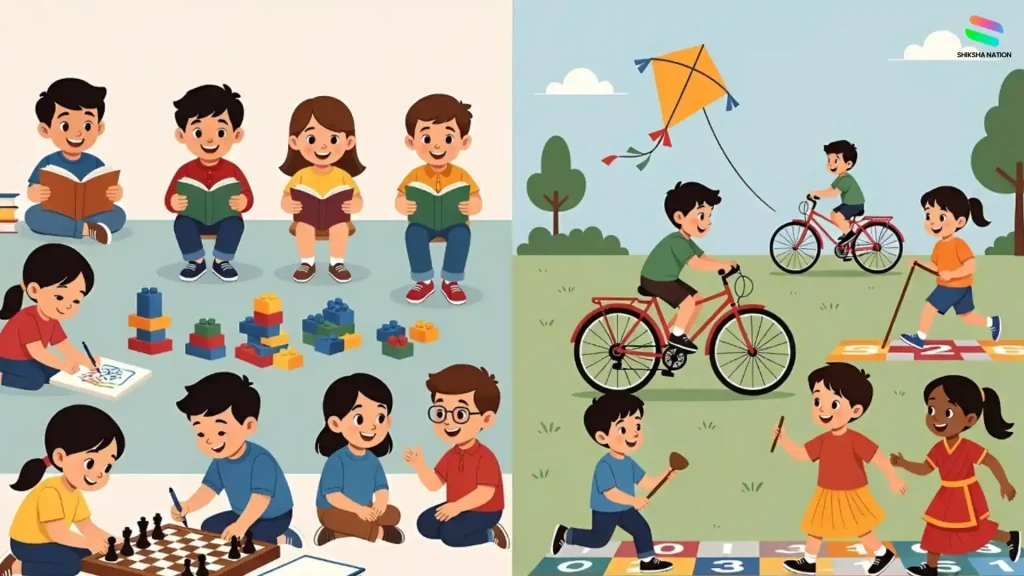
Why Screen-Free Activities Are Important for Kids
Today many children spend a large part of their day using mobile phones, tablets, or television. While digital tools can support learning, too much screen exposure may reduce physical activity and affect attention levels.
For many parents, one common concern is how to reduce screen time for kids while still keeping them engaged and happy. Screen-free activities can provide a healthy balance between learning, play, and rest.
Impact of Excessive Screen Time
Spending long hours on screens can affect children in several ways:
- Reduced attention and concentration during studies
- Less physical movement and outdoor play
- Disturbed sleep patterns, especially at night
- Limited face-to-face interaction with family and friends
These challenges can slowly affect both learning habits and overall wellbeing.
Encourages Creativity and Thinking
Offline activities give children the freedom to imagine and explore ideas.
- Drawing, building models, or storytelling improves creativity
- Puzzle games and word challenges build problem-solving skills
- Hands-on activities help students think independently
Such activities support skills that are also useful in school learning.
Supports Physical and Social Development
When children play without screens, they naturally become more active.
- Outdoor games improve physical fitness and energy levels
- Group activities help children learn teamwork and communication
- Family activities strengthen bonding and confidence
For both parents and students, these experiences help create healthier daily habits beyond the digital world.
Indoor Screen-Free Activities for Kids
Children do not always need phones or tablets to stay engaged at home. Many simple screen free activities for kids indoors can keep them active, curious, and creative. These activities are useful during weekends, holidays, or rainy days when outdoor play is limited.
Parents can guide children initially, but most activities can later be done independently. These indoor games for kids also help develop thinking, creativity, and problem-solving skills.
Creative Drawing and Coloring
Give children blank paper, crayons, or color pencils and let them draw freely.
- Draw your favourite animal or cartoon character
- Create a small comic story using pictures
- Color different shapes and patterns
This activity improves imagination and artistic expression.
Puzzle Solving and Brain Teasers
Puzzles help children think carefully and stay focused.
- Jigsaw puzzles
- Sudoku for beginners
- Simple riddles or logic puzzles
Such games develop patience and problem-solving ability.
Building Structures With Paper or Blocks
Children enjoy creating things using simple materials.
- Build towers using building blocks
- Create bridges using paper or cardboard
- Use LEGO or stacking toys
These activities encourage creativity and basic engineering thinking.
Storytelling Challenge
Storytelling is a great way to develop language and imagination.
- Ask children to create a story using three random words
- Tell a story about a school day or adventure
- Take turns telling parts of the story in the family
This helps improve communication skills.
DIY Craft Projects
Craft activities help children use their hands and creativity.
- Make greeting cards
- Create bookmarks using paper and colors
- Decorate old boxes or jars
Parents can also save craft items for school projects.
Indoor Treasure Hunt
A small treasure hunt can make learning fun.
- Hide small objects around the house
- Give simple clues to find them
- Use riddles for older children
This game improves observation and thinking skills.
Reading Storybooks
Reading is one of the most useful indoor activities.
- Choose short storybooks or comics
- Encourage children to read aloud
- Discuss the story after reading
This habit strengthens vocabulary and understanding.
Word Building Games
Language games can be both fun and educational.
- Make new words from a long word
- Play spelling challenges
- Create sentences using random words
These activities support language learning for students.
Board Games With Family
Board games bring families together while improving thinking skills.
- Ludo
- Carrom
- Chess
- Snakes and Ladders
Children learn strategy, patience, and teamwork.
Simple Science Experiments
Basic science experiments can spark curiosity.
- Mix vinegar and baking soda to see a reaction
- Grow a small plant in a pot
- Observe how magnets attract metal objects
Such activities help children understand science concepts in a practical way.
Music and Dance Practice
Music and movement can refresh a child’s mind.
- Practice simple dance steps
- Learn a new song
- Clap rhythm games with family members
This activity improves confidence and expression.
Journaling or Daily Writing
Older children can develop a habit of writing.
- Write about their day at school
- Note down new ideas or dreams
- Maintain a small diary
Writing helps students organise their thoughts and improve language skills.
Screen-Free Activities for Kids at Home
Children do not always need toys or gadgets to stay engaged. Many screen free activities for kids at home can be done using simple items already available in the house. These activities help children stay active, curious, and connected with family members.
For parents, such fun activities without mobile are a good way to encourage learning while spending meaningful time together. Children also learn practical life skills through everyday experiences.
Cooking Simple Recipes Together
Involving children in small kitchen tasks can be both fun and educational.
- Help wash vegetables or fruits
- Mix ingredients while preparing simple dishes
- Arrange plates or serve food on the table
Children learn basic cooking skills and understand teamwork in the family.
Reading Story Books
Reading together helps build a strong learning habit at home.
- Choose simple storybooks or short novels
- Ask children to read aloud for a few minutes
- Discuss the characters or message of the story
This activity improves vocabulary, imagination, and reading confidence.
Helping With Household Tasks
Small household responsibilities can teach children discipline and independence.
- Folding clothes
- Arranging books or school supplies
- Watering plants at home
Parents can guide them in the beginning, but children soon start enjoying these tasks.
Learning Origami or Paper Crafts
Paper craft activities are creative and easy to organise.
- Make paper boats, birds, or flowers
- Create greeting cards for family members
- Decorate notebooks or school projects
These activities improve hand coordination and creative thinking.
Family Board Games
Playing board games together helps children develop patience and strategy.
- Ludo
- Carrom
- Chess
- Snakes and Ladders
Such games encourage family interaction and teach children how to think before making decisions.
Memory and Observation Games
Simple memory games can challenge a child’s thinking ability.
- Place a few objects on a table and ask children to remember them
- Hide one object and ask what is missing
- Ask children to recall things they saw during the day
These games strengthen observation and memory skills.
Indoor Plant Care
Taking care of plants is a calm and meaningful activity.
- Water indoor plants regularly
- Observe how plants grow over time
- Learn the names of common plants at home
Children become more responsible and develop respect for nature.
Writing or Drawing About the Day
Encourage children to express their thoughts creatively.
- Write about something interesting they learned
- Draw a picture of their favourite activity
- Share the story with family members
This habit improves expression skills and builds confidence in communication.
Outdoor Screen-Free Activities for Kids
Outdoor play gives children a natural break from phones and televisions. Fresh air, sunlight, and open spaces help children stay active and curious. For many students, spending time outside also improves mood and concentration.
Parents can encourage children to explore their surroundings and enjoy simple activities. Outdoor experiences help children learn through observation and physical movement.
Cycling Around the Neighbourhood
Cycling is one of the most enjoyable outdoor activities for children.
- Ride bicycles in the park or safe neighbourhood streets
- Practice balance and control while riding
- Set small cycling goals, like reaching a nearby park
Cycling improves physical fitness and builds confidence in children.
Nature Walks in Local Parks
A short walk in a park or green area can become a learning activity.
- Observe trees, birds, and insects
- Collect fallen leaves or small stones
- Talk about different plants and their shapes
Such walks help children notice small details in nature and develop curiosity.
Kite Flying
Kite flying is a traditional outdoor activity enjoyed in many parts of India.
- Choose an open ground or terrace with safe space
- Learn how to control the kite using the thread
- Try flying kites with friends or family members
This activity improves coordination and brings excitement to outdoor play.
Gardening and Plant Care
Gardening helps children understand nature and responsibility.
- Water plants regularly
- Plant small seeds in pots or garden soil
- Observe how plants grow over time
Children learn patience and develop respect for the environment.
Neighbourhood Exploration
Exploring nearby areas can turn into a small adventure for children.
- Walk around the neighbourhood with parents
- Notice different shops, trees, and buildings
- Count birds, vehicles, or street signs along the way
This activity helps children become more observant and aware of their surroundings.
Playing Simple Outdoor Games
Open spaces allow children to move freely and play with friends.
- Running races
- Catch and throw games
- Simple group games in parks or playgrounds
These activities improve stamina, coordination, and social interaction with other children.
Traditional Indian Games Kids Should Play
Before mobile phones became common, children in India spent a lot of time playing outdoor games with friends. Many traditional Indian games for kids are simple, energetic, and do not require expensive equipment.
These games encourage teamwork, physical activity, and quick thinking. Parents can also introduce these games to children so they understand the value of active play and local traditions.
Kho Kho
Kho Kho is a fast and exciting team game often played in school grounds.
- Two teams take turns chasing and defending
- Players must run, dodge, and change direction quickly
- The goal is to tag opponents within a limited time
This game improves speed, coordination, and teamwork among children.
Kabaddi
Kabaddi is another popular Indian sport that combines strength and strategy.
- One player enters the opponent’s area while saying “kabaddi” continuously
- The player must tag opponents and return safely
- Team members work together to stop the attacker
Kabaddi helps children develop stamina, courage, and teamwork.
Lagori (Seven Stones)
Lagori, also called Seven Stones, is a fun game played with a small ball and flat stones.
- Players stack seven stones on top of each other
- One team throws a ball to break the stack
- The other team tries to rebuild the stack while avoiding the ball
This game improves focus, accuracy, and coordination.
Gilli Danda
Gilli Danda is a traditional street game that uses two small wooden sticks.
- The small stick (gilli) is placed on the ground
- Players hit it using the longer stick (danda)
- The aim is to send the gilli as far as possible
This game improves hand-eye coordination and timing.
Stapoo (Hopscotch)
Stapoo is a simple game that can be played almost anywhere.
- Draw boxes on the ground using chalk
- Toss a small stone into one of the boxes
- Hop through the boxes on one foot to complete the round
Stapoo helps children improve balance, coordination, and physical control while having fun with friends.
Screen-Free Activities for Toddlers (2-4 Years)
Toddlers learn best through touch, movement, and simple play. At this age, children are naturally curious and enjoy exploring new objects and colours. Many screen free activities for toddlers can help them develop basic thinking and motor skills without using mobile phones.
Parents can guide toddlers gently during these activities and turn everyday play into small learning moments.
Stacking Blocks
Stacking blocks is a simple activity that toddlers enjoy.
- Build small towers using blocks or cups
- Encourage the child to stack them one by one
- Let them knock down the tower and rebuild again
This activity improves hand control and coordination.
Sorting Colours
Colour sorting helps toddlers recognise different colours.
- Use coloured toys, beads, or paper pieces
- Ask children to group similar colours together
- Name the colours while they sort them
This activity strengthens observation and early learning skills.
Looking at Picture Books
Picture books are very helpful for young children.
- Choose books with large colourful images
- Ask toddlers to name animals, fruits, or objects
- Encourage them to point at pictures while listening to the story
This builds early language and listening skills.
Clay or Dough Play
Playing with clay or dough allows toddlers to use their hands creatively.
- Roll small balls or shapes
- Press the clay using fingers
- Create simple objects like flowers or animals
This activity improves finger strength and encourages imagination.
Screen-Free Activities for 5-10 Year Old Kids
Children between 5 and 10 years are full of curiosity and energy. This is the age when they enjoy learning new things through play and simple challenges. Parents often look for screen free activities for 5 year olds and young students that keep them engaged without using phones or tablets.
These activities can support creativity, thinking skills, and early learning habits while allowing children to have fun.
Drawing Competitions
Drawing helps children express their imagination.
- Choose a simple topic like “My Favourite Animal” or “My School”
- Set a small time limit for the drawing
- Let children explain their drawings after finishing
This activity improves creativity and confidence in expression.
Word Games
Word games help children build language and spelling skills.
- Create new words from a given word
- Play simple spelling challenges
- Ask children to form sentences using random words
Such games make learning language more enjoyable for students.
Building Models
Children enjoy creating objects using simple materials.
- Build houses or bridges using cardboard
- Create models using clay or building blocks
- Make simple craft models for school projects
These activities improve creativity and problem-solving ability.
Beginner Science Experiments
Simple science experiments can make learning exciting.
- Observe how plants grow from seeds
- Mix colours to create new shades
- Test which objects float or sink in water
These experiments encourage curiosity and help children understand basic science concepts in a practical way.
Screen-Free Activities for Tweens (10-12 Years)
Children between the ages of 10 and 12 begin to develop stronger thinking and communication skills. At this stage, they often enjoy activities that challenge their ideas and creativity. Parents searching for screen free activities for tweens can encourage hobbies that improve focus, curiosity, and confidence.
These activities also help students build habits that support school learning and personal growth.
Journaling
Writing regularly can help tweens organise their thoughts and ideas.
- Write about daily experiences or school events
- Maintain a small gratitude journal
- Note down new ideas, goals, or interesting facts learned during the day
Journaling improves writing skills and helps children express their feelings clearly.
Playing Chess
Chess is a thoughtful and strategic game for growing minds.
- Play friendly matches with family members
- Learn different chess moves and strategies
- Practice solving simple chess puzzles
This game strengthens concentration, planning, and decision-making skills.
DIY Science Projects
Hands-on science activities make learning more interesting.
- Build a simple volcano experiment using baking soda and vinegar
- Create a small model of the solar system
- Test simple physics ideas like balance or motion
These projects encourage curiosity and help students understand science concepts in a practical way.
Storytelling and Friendly Debates
Tweens often enjoy expressing their ideas and opinions.
- Tell creative stories during family time
- Discuss simple topics such as favourite books or hobbies
- Participate in friendly debates with siblings or friends
These activities improve communication skills and build confidence in speaking.
Screen-Free Activities for Families
Spending time together without mobile phones can strengthen family relationships. Many screen free activities for families allow parents and children to learn, laugh, and communicate more openly. These moments also help children feel supported and connected at home.
When families participate together, children often enjoy the activity more and develop positive habits.
Family Quiz Night
A quiz night can be a fun learning activity for everyone.
- Ask simple questions about general knowledge, animals, or history
- Divide family members into small teams
- Let children also create questions for others
This activity improves knowledge, memory, and teamwork.
Cooking Challenges
Cooking together can turn into an enjoyable family challenge.
- Prepare simple snacks like sandwiches or fruit salads
- Let children help with mixing or decorating food
- Taste and share the dishes together
Children learn basic cooking skills and responsibility.
Board Games With Family
Board games are simple and engaging for all age groups.
- Ludo
- Carrom
- Chess
- Snakes and Ladders
These games teach patience, planning, and friendly competition.
Storytelling Sessions
Storytelling helps families share ideas and experiences.
- Parents can tell stories from their childhood
- Children can create their own imaginative stories
- Take turns continuing the same story
This activity improves listening skills and encourages creative thinking in children.
Tips for Parents to Reduce Screen Time for Kids
Many parents worry about how to reduce screen time for kids without creating daily arguments. The goal is not to remove technology completely but to create a healthy balance between screens, learning, and play.
Simple habits at home can slowly help children spend less time on mobile devices and more time on meaningful activities.
Create Screen-Free Routines
Setting clear routines can help children understand when screen use is allowed.
- Keep meal times free from phones and television
- Encourage offline activities after school hours
- Set a fixed time for limited screen use
When routines are consistent, children adapt more easily.
Encourage Hobbies and Interests
Children are less likely to depend on screens when they enjoy other hobbies.
- Drawing or painting
- Playing musical instruments
- Reading books or solving puzzles
Parents can observe what the child enjoys and support that interest.
Lead by Example
Children often copy the habits they see at home.
- Avoid using phones during family conversations
- Spend time reading or doing activities together
- Show that free time can also be spent offline
Positive behaviour from parents encourages children to follow similar habits.
Plan Regular Family Activity Time
Family activities can naturally replace screen time.
- Evening walks together
- Playing board games at night
- Weekend creative activities
These moments help children feel connected and make offline time more enjoyable.
FAQs on Screen-Free Activities for Kids
Q. What are the best screen-free activities for kids at home?
Some of the best activities are simple and require very few materials. Children can enjoy reading storybooks, drawing, solving puzzles, building models, or helping with small household tasks. These activities keep them busy while also improving creativity and thinking skills.
Q. How can parents reduce screen time for children?
Parents can start by setting clear rules for screen use at home. For example, keeping phones away during meals or limiting screen time after school. Encouraging hobbies, outdoor play, and family activities can slowly help children spend less time on mobile devices.
Q. What activities can keep kids busy without mobile phones?
Children can stay engaged with activities like board games, storytelling, craft projects, gardening, or simple science experiments. These activities keep their minds active and also allow them to learn new skills outside the classroom.
Q. Are screen-free activities important for child development?
Yes, screen-free activities support many areas of development. They help children improve creativity, communication skills, and physical movement. When children play and learn without screens, they also build stronger social connections with family and friends.
Q. How many hours of screen time are safe for children?
Health experts generally suggest limiting recreational screen time for school-age children to around one to two hours per day. Parents can focus on maintaining a balance where children also spend time on reading, play, outdoor activity, and family interaction.