


Who is Philip Glass?
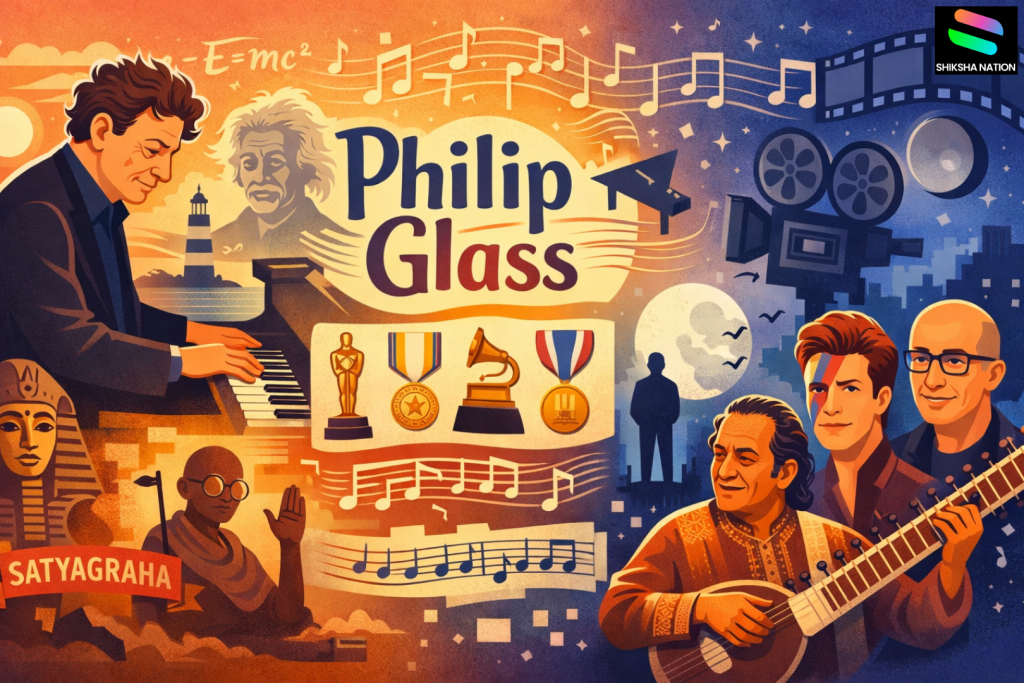
Philip Glass is an American composer and pianist known for changing how people listen to modern classical music. He is especially famous for a style called minimalist music, where simple musical patterns repeat and slowly change over time.
For students, Philip Glass is important because he did not follow old music rules blindly. Instead, he created a fresh sound that made classical music more accessible to new audiences. His work shows that music can be powerful even without complex melodies.
Parents often come across his name in school projects, music chapters, or film studies. This is because his compositions are used in operas, concerts, and popular movies. He is best known for works like Einstein on the Beach and for film scores that create strong mood and emotion.
In music history, he stands out as a composer who connected traditional classical music with modern ideas.
Who Is Philip Glass?
Early identity and background
Philip Glass was born on 31 January 1937 in Baltimore, Maryland, USA. He grew up in a family where music and books were part of daily life. This early exposure helped him develop a deep interest in sound, rhythm, and structure.
For students, his background shows that early learning and curiosity play a big role in long-term success. He did not become famous overnight and spent many years learning and experimenting.
Role in modern classical music
Philip Glass is an American composer and pianist who played a key role in shaping modern classical music. At a time when classical music was becoming complex and difficult to understand, he introduced simpler patterns that focused on rhythm and repetition.
His approach made contemporary music easier for young listeners and first-time learners. Many music teachers use his works to explain how modern classical music evolved after the 20th century.
Global recognition and influence
Today, Philip Glass is recognised across the world for his original musical voice. His compositions are performed in major concert halls, operas, and international festivals.
Parents may also notice his music in films and theatre, which has helped his work reach a wider audience beyond classrooms and concert halls.
Early Life and Education of Philip Glass
Childhood and Musical Background
The early life of Philip Glass played an important role in shaping his musical thinking. He was raised in a home where music was always present. His father owned a record store, which gave him access to many kinds of recordings at a young age.
Instead of listening only to popular tunes, he was exposed to classical, modern, and experimental music. This helped him develop an open mind towards new sounds and ideas.
For students, this shows how regular listening can improve understanding of music. Parents can relate to this stage, as early exposure often builds long-term interest and confidence in learning.
He also learnt to play musical instruments as a child, which helped him understand rhythm and melody practically, not just in theory.
Formal Music Training
Philip Glass education included training at some of the most respected music institutions. He studied music seriously and later joined the Juilliard School, where he focused on composition and keyboard studies.
At Juilliard, he learnt strong musical basics such as harmony, structure, and discipline. These skills later helped him break traditional rules in a thoughtful way.
He also studied under Nadia Boulanger in Paris, a teacher known for shaping many great composers. From her, he gained a deep respect for Western classical composers like Bach, Mozart, and Schubert.
For students preparing for music studies, his journey shows that strong fundamentals and good teachers are essential before developing a personal style.
Philip Glass and Minimalist Music
What Is Minimalist Music?
Minimalist music is a style of music that uses simple patterns, steady rhythm, and repetition. Instead of changing tunes quickly, the music repeats small ideas and slowly adds or removes layers.
For students, this makes the music easier to follow and understand. You can hear how a single musical phrase grows over time rather than getting replaced again and again.
This style focuses more on structure and timing than on heavy decoration. Many listeners find minimalist music calming, while others find it powerful because of its steady flow.
Parents may notice that this kind of music helps students concentrate, as the repeating patterns create a clear and organised sound.
How Philip Glass Shaped Minimalism
Philip Glass is often called a Philip Glass minimalist composer because he played a major role in developing this style. He described his work as “music with repetitive structures,” which clearly explains his approach.
Instead of complex melodies used in traditional classical music, he built his compositions using short musical phrases that repeat and slowly shift. This created a new listening experience for audiences.
For music students, his work shows that creativity does not always mean complexity. For parents, his success proves that new ideas can still respect classical training while moving in a fresh direction.
His approach helped minimalist music gain global attention and acceptance in concert halls and film music.
Major Works of Philip Glass
Famous Operas by Philip Glass
Many Philip Glass compositions are best known through his operas, which brought modern classical music to a wider audience. These operas do not follow the usual storytelling style. Instead, they focus on ideas, history, and human thinking.
Einstein on the Beach is one of his most recognised works. It does not have a fixed story but uses music, movement, and visuals to explore the life and ideas of Albert Einstein. Music students often study it to understand how opera can move beyond traditional rules.
Satyagraha is another important opera, based on the early life of Mahatma Gandhi. The music is slow, powerful, and reflective. Parents may find this work meaningful as it connects music with values like truth and non-violence.
Akhnaten focuses on an ancient Egyptian ruler and explores leadership and belief. The opera uses repeated musical patterns and strong rhythm, making it a good example of how Glass uses music to support big historical themes.
Symphonies and Concertos
Apart from operas, many Philip Glass works include symphonies, concertos, and chamber music. His symphonies are known for their steady rhythm and gradual changes, rather than sudden dramatic shifts.
He has written concertos for instruments like violin, piano, and cello. These pieces balance solo performance with orchestra, helping students understand coordination and musical structure.
Philip Glass has also composed several string quartets. These are often used in music education because they clearly show repetition, balance, and teamwork between instruments.
Together, these works show his wide contribution to modern classical music.
Philip Glass Film Scores
Music and storytelling in films
Philip Glass film scores are known for creating strong mood and emotional depth. His music does not try to dominate scenes. Instead, it quietly supports the visuals and helps viewers feel the emotion of the story.
For students studying film or music, his work is a good example of how background music shapes meaning. Parents may notice that his film music feels calm yet powerful, even without heavy dialogue.
Famous films with Philip Glass’s music
One of his most important film scores is Koyaanisqatsi. The music plays a major role in the film, guiding the viewer’s emotions without spoken words. Repetition in the score reflects the fast and slow pace of modern life.
In The Hours, his music matches the inner feelings of the characters. The repeated piano patterns help show sadness, hope, and time passing, making the story more emotional.
The Truman Show uses his music to highlight isolation and curiosity. The simple musical phrases slowly build tension and help the audience connect with the main character’s journey.
In Kundun, his music supports the spiritual and emotional themes of the film. The slow rhythm and layered sounds help express calmness, struggle, and belief.
Why his music works well in films
Philip Glass’s style suits films because repetition creates focus. Instead of distracting the viewer, the music builds atmosphere and feeling.
For students, this shows how music and visuals work together. For parents, it explains why his film scores are remembered long after the movie ends.
Awards and Achievements
Recognition for musical excellence
Over his long career, Philip Glass awards reflect his strong impact on music and culture. His work has been recognised not only in classical music but also in film and theatre.
For students, these honours show how consistent effort and original thinking can lead to long-term success. Parents may see these awards as proof of his global respect and credibility.
Major national and international honours
Philip Glass received several Academy Award nominations for his film music. These nominations highlight how his compositions added emotional depth to important films.
He has also been nominated for and honoured by the Grammy Awards, especially for his contributions to contemporary classical music. This shows acceptance of his style within the music industry.
One of his highest recognitions is the National Medal of Arts, given in the United States to artists who make a lasting cultural contribution. This award places him among the most respected creative figures of his time.
Philip Glass was also honoured with the Kennedy Center Honors, which celebrate lifetime achievement in the arts. For students and parents, this recognition confirms his lasting influence across generations.
Why these awards matter
These achievements show that his music reached both experts and the general public. They help explain why Philip Glass is studied, performed, and respected worldwide.
Influence and Collaborations
Influence on modern music
The Philip Glass influence can be seen across many styles of modern music. His use of repetition and steady rhythm inspired composers to think differently about structure and sound.
For students, his impact shows that one strong idea can change an entire field. Many modern classical composers learned from his approach to simplicity and timing.
Parents may notice that his influence goes beyond classrooms. His musical ideas appear in films, theatre, and even popular music, making his work easy to recognise.
Important musical collaborations
Philip Glass worked with Ravi Shankar, the famous Indian musician, early in his career. This collaboration helped him understand rhythm in a new way. It also added global depth to his music thinking.
He also collaborated with David Bowie, blending classical ideas with rock and modern sound. These projects showed that music does not have strict boundaries between genres.
Another key collaborator was Brian Eno, known for ambient music. Together, their ideas helped connect minimalist music with wider audiences.
Why collaborations mattered
For music students, these partnerships explain how learning from others improves creativity. For parents, they show that teamwork and openness can lead to innovation.
These collaborations helped Philip Glass reach listeners across cultures and generations.
Why Philip Glass Is Important in Music History
Academic and cultural significance
The importance of Philip Glass lies in how he changed the direction of modern classical music. He showed that music does not need to be complex to be meaningful. Simple patterns, when used well, can create deep impact.
For students, his work is academically important because it explains the shift from traditional classical music to modern styles. Many textbooks and music courses include his compositions to teach structure, rhythm, and repetition.
Lasting impact on learning and culture
Philip Glass also holds strong cultural value. His music appears in operas, films, theatre, and public performances, making classical music more reachable for everyday listeners.
Parents may notice that his music is often used in school projects and higher studies. This is because his style is clear, organised, and easy to analyse.
Students still study him because his work connects history with modern thinking. He proves that innovation can come from simplicity, discipline, and patience.
Related Biography:
Frequently Asked Questions About Philip Glass
Q. Is Philip Glass a minimalist composer?
Yes, Philip Glass is widely known as a minimalist composer. His music uses repeating patterns and steady rhythm. Instead of sudden changes, the sound slowly develops over time.
Q. What is Philip Glass most famous for?
He is most famous for his operas, film music, and his unique musical style. Works like Einstein on the Beach made him well known in modern classical music.
Q. Which Philip Glass music is best for beginners?
Beginners can start with his piano pieces or short instrumental works. These pieces clearly show repetition and rhythm without being too complex.
Q. Did Philip Glass write film music?
Yes, Philip Glass composed music for many films. His film scores are known for creating mood and emotion rather than loud effects.