
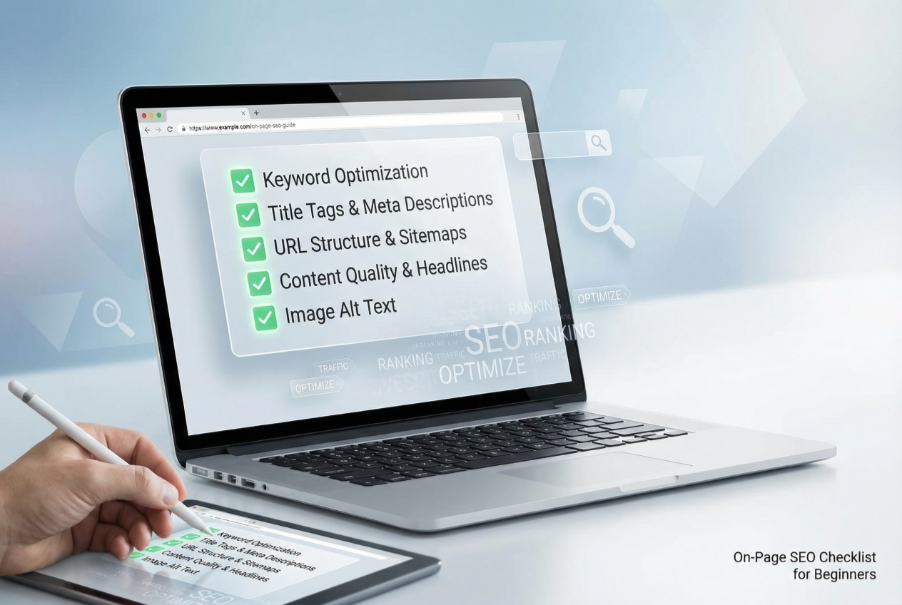

Learning on-page SEO is one of the most important steps for anyone who wants to rank higher on Google. Without proper optimisation, even great content can fail to reach the right audience. A clear and simple on-page SEO checklist helps beginners understand what really matters and how to improve pages without feeling overwhelmed.
On-page SEO refers to everything you can control directly on your website content, keywords, title tags, meta descriptions, images, internal links, structure and more. These small improvements can make a big difference in how search engines understand your site and how readers experience your content. When your pages are easy to read, helpful and well-structured, Google rewards them with better visibility.

Many beginners believe SEO is complicated, but most of the work comes down to following consistent steps. With the right checklist, you can create content that is both search-friendly and user-friendly. This guide breaks down everything you need in a clean, simple and complete on-page SEO process.
According to the official guidelines shared by Google Search Central, search engines prefer pages that are clear, structured and helpful.
Understanding the Basics of On-Page SEO
Before using the full on-page SEO checklist, it’s important to understand what search engines look for. Google wants to show users the most relevant, high-quality and trustworthy content. This means your page should answer the user’s question clearly, provide useful information and be organised in a way that is easy to follow.
The foundation of your optimisation starts with your main keyword in this case, on-page SEO checklist. This keyphrase should appear in your title, introduction, meta description and naturally throughout the content. It tells Google what your page is about. But keyword stuffing must be avoided. Your writing must remain natural, straightforward and valuable.
User experience is another core part of on-page SEO. Clean layouts, simple language, properly placed headings and readable paragraphs help both visitors and search engines. When readers enjoy your content and stay longer on the page, Google gets a positive signal that the content is helpful.
When you follow the basics correctly, the deeper parts of your on-page SEO checklist become much easier.
A Simple On-Page SEO Checklist Beginners Can Follow
Beginners often worry about what to optimise first. To make things easy, this checklist covers the most important steps. These steps prepare your content for better ranking without needing technical skills or expensive tools.
1. Start With a Clear Focus Keyword
Your focus keyphrase — such as ‘on-page SEO checklist’ should match what people are searching for. Use tools like Google Suggest, AnswerThePublic, or simple competitor research to decide which keyword fits your page. Once you choose your focus keyword, include it naturally in the title, introduction and a few body paragraphs.
2. Create a Strong SEO Title
Your SEO title must be clear, simple and contain the focus keyword at the beginning. Google prefers titles that directly explain what the page offers. Avoid clickbait and keep it readable. A good SEO title helps your page stand out in search results and improves click-through rates.
3. Write a Helpful Meta Description
The meta description is a short summary of the page. It tells users what to expect before they click. It should include the focus keyword once but still read like normal language. A strong meta description increases clicks and signals relevance to search engines.
4. Use Headings to Organise Your Content
Headings break your content into clean sections. They help readers scan the page and help Google understand the structure. Use only one H1 (your main title), and then use H2 or H3 for sections. Do not over-optimise headings by repeating the keyword too much. Keep them natural and user-friendly.
5. Write Clear, Valuable Content
Google favours content that answers questions clearly. Your writing should be simple, conversational and easy to read. Break long paragraphs into smaller ones. Use examples where needed. Make sure your content fully answers the topic and doesn’t leave users searching elsewhere.
6. Include Internal and External Links
Internal links help visitors explore more of your site. They also help search engines understand the structure of your website. External links to trusted sources increase credibility and support your information. Just make sure the links are relevant and helpful.
7. Optimise Images With ALT Text
Images need descriptive ALT text so search engines can understand what the image represents. ALT text also improves accessibility. Keep it short and accurate. Avoid using your focus keyphrase unnecessarily.
8. Improve URL Structure
A good URL is short, clean and includes your main keyword. Avoid long URLs filled with numbers or unnecessary words. A simple slug makes your page easier to understand for both Google and readers.
9. Make Your Page Mobile-Friendly
Most users browse on mobile devices. Your page must load properly, fit small screens and maintain readability. Mobile-friendly pages rank better because they provide a good user experience.
10. Improve Page Load Speed
Slow websites lose visitors quickly. Compress images, remove unnecessary plugins and use lightweight themes. Even a one-second improvement can boost engagement and rankings.
These steps form the core of your on-page SEO checklist. Following them consistently helps your website grow with healthy, sustainable SEO practices.
How On-Page SEO Helps Beginners Rank Better
The biggest advantage of on-page SEO is that beginners have full control over it. Unlike backlinks or technical optimisation, on-page improvements can be done immediately. When your content is organised, clear and keyword-focused, Google understands it easily. This increases your chances of ranking even if your site is new.
On-page SEO also improves user experience. When visitors stay longer, interact more and read more pages, your site becomes stronger in Google’s eyes. This creates a cycle of growth: better content → longer engagement → higher ranking → more visitors.
Another benefit is long-term value. Once you optimise a page correctly using this on-page SEO checklist, it continues to attract traffic for months or even years. Good on-page SEO is not a one-time trick — it’s a long-term investment.
Putting the On-Page SEO Checklist Into Action
Beginners often feel overwhelmed, but applying this checklist step by step makes the process simple. Start with your keyword. Create a strong title. Write a clear introduction. Add helpful sections. Insert internal links. Optimise images. Keep your URL clean. Read the whole page again to make sure it flows smoothly.
With time, this process becomes natural. You will start recognising what readers want and what search engines expect. The more you follow this on-page SEO checklist, the more confident you become.
Summary
On-page SEO is the foundation of good ranking. It makes your content easier to find, easier to understand and more valuable to readers. By following a simple on-page SEO checklist, beginners can improve their website’s visibility without advanced knowledge or tools. Good SEO is not about tricks — it’s about clarity, structure and quality. When your content is organised, helpful and optimised with the right keywords, Google rewards it with better rankings. Start with the basics, follow the checklist, and your website will grow naturally over time.
ALSO READ: Best AI Tools for Marketers in 2025