

Lala Lajpat Rai was one of the most fearless leaders of India’s freedom struggle. Many students study Lala Lajpat Rai in school history books, but often remember only his name. This section helps students and parents clearly understand who he was and why he matters, in simple words.
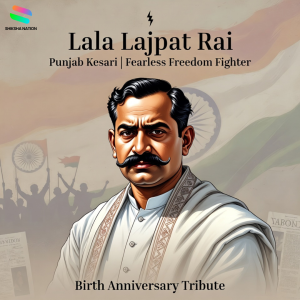
When learning about Lala Lajpat Rai, it is important to see him not just as a political leader, but as a guide who believed in strong values, education, and self-respect. His ideas helped shape the thinking of young Indians during British rule.
For students preparing for exams, this topic is important for history answers, essays, and quick revision. For parents, it supports homework discussions and helps children understand India’s freedom movement in a meaningful way.
Who Was Lala Lajpat Rai?
A brief introduction for students
When students learn about Lala Lajpat Rai, they come across a leader who stood firmly against British rule. He was a freedom fighter, writer, and social reformer who believed that Indians should govern themselves. His life story forms an important part of Indian history lessons.
Lala Lajpat Rai’s role in society
The Lala Lajpat Rai biography shows that he worked not only in politics but also in education and social reform. He supported equality, spoke against unfair practices, and encouraged people to become confident and self-reliant. Parents can relate his ideas to values like courage, honesty, and service.
Why is he remembered as Punjab Kesari?
Lala Lajpat Rai is remembered as Punjab Kesari, which means “Lion of Punjab,” because of his fearless nature. He never stayed silent in front of injustice and inspired many young Indians to stand up for the nation. Even today, students remember him as a symbol of bravery and strong leadership.
Early Life and Education of Lala Lajpat Rai
Birth and family background
The Lala Lajpat Rai biography begins with his birth on 28 January 1865 in Dhudike village, Punjab. He was born into a simple family where honesty, discipline, and service to society were valued. These early surroundings shaped his strong character.
Education and early learning
He studied law at Government College, Lahore, where he developed a deep interest in social issues and national thinking. During his student life, he was known for his sharp mind and clear opinions. Parents can note how education helped him think beyond personal success.
Values that shaped his future
From a young age, he believed in equality, education, and self-respect. These values later guided his work as a leader and reformer. For students, his early life shows how learning and strong values together can shape a meaningful life.
Role of Lala Lajpat Rai in the Indian Freedom Movement
Lala Lajpat Rai played a strong and active role in the Indian freedom movement. He believed that freedom could not be achieved by slow talks alone and that people must stand united against injustice. His actions inspired students, youth, and common people across India.
Parents and teachers often highlight his role because it shows how leadership, courage, and clear thinking can influence a nation’s future.
Lal Bal Pal and Extremist Nationalism
Lala Lajpat Rai was part of the famous trio Lal Bal Pal, along with Bal Gangadhar Tilak and Bipin Chandra Pal. This group believed in strong and direct action against British rule. They wanted complete self-rule and encouraged people to be bold.
During the early 1900s, their ideas gave a new direction to the Indian freedom movement. For students, this phase is important for exam answers as it explains the shift from moderate to stronger nationalist thinking.
Contribution to Swadeshi and National Education
Lala Lajpat Rai strongly supported the Swadeshi movement, which asked Indians to use Indian-made goods and reject foreign products. He believed this would make the country economically strong and confident.
He was also an active member of the Indian National Congress and promoted national education. He helped set up Indian-run schools and colleges so students could learn with pride and independence. This teaches students today the value of self-reliance and education in nation-building.
Lala Lajpat Rai and the Simon Commission Protest
Why the Simon Commission was opposed
In 1927, the British government sent the Simon Commission to India to review constitutional reforms. Indians were angry because the commission had no Indian member. This led to nationwide protests, especially among students and leaders.
For exams, students should remember that this protest became a turning point in the freedom struggle.
Lala Lajpat Rai’s leadership during the protest
In October 1928, Lala Lajpat Rai led a peaceful march in Lahore against the Simon Commission protest. The protest was silent and non-violent, showing discipline and unity. Many students and youth also joined this movement, inspired by his courage.
Parents can explain to children how peaceful protest was an important method during British rule.
How this protest led to his death
During the march, the police used force, and Lala Lajpat Rai was seriously injured. Though he continued to guide the movement, his health worsened. This answers an important exam question — Lala Lajpat Rai died in which movement: he passed away in November 1928, after injuries suffered during the anti–Simon Commission protest.
This incident made him a symbol of sacrifice and strengthened the freedom movement further.
How Did Lala Lajpat Rai Die?
The incident that caused his death
The Lala Lajpat Rai death was the result of injuries he suffered during a peaceful protest. In October 1928, he was hurt while leading a silent march against the British government’s policies. The injuries weakened his health over the following weeks.
For students, this event is important because it shows the risks leaders took while fighting for freedom.
Movement linked to his sacrifice
Many exam questions ask Lala Lajpat Rai died in which movement. He passed away on 17 November 1928, due to injuries received during the protest against the Simon Commission. This sacrifice deeply affected the nation and strengthened the spirit of resistance.
Parents can help children understand that his death was not sudden, but a result of standing bravely for the country through non-violent action.
Books Written by Lala Lajpat Rai
Lala Lajpat Rai was not only a freedom fighter but also a thoughtful writer. His books explain his ideas, experiences, and views on British rule and Indian society. This part of the Lala Lajpat Rai biography is useful for CUET, GK, and senior students who need deeper understanding.
Parents can also use these points to help students connect history with ideas and values.
The Story of My Deportation (1908)
This book is based on his personal experience when he was sent away from India without a trial. In simple words, he explains what happened and why many Indians were unhappy with British rule.
For students, this book helps understand how leaders were treated during the freedom struggle and why protests increased during that time.
Arya Samaj (1915)
In this book, he wrote about social reform and the need for equality and education. He explained the ideas of the Arya Samaj movement in a clear and logical way.
This book is important for students learning about social reform in India, not just political freedom.
The United States of America: A Hindu’s Impression (1916)
During his stay abroad, he closely observed American society and education. In this book, he shared what India could learn from other countries, especially about democracy and public participation.
Higher-class students can use this example to understand comparative thinking in history.
England’s Debt to India (1917)
This book explained how British economic policies affected India. He used facts and examples to show how Indian resources were used unfairly.
For competitive exams and GK, this book helps students understand the economic side of colonial rule.
Unhappy India (1928)
This was one of his last works, written close to the end of his life. In this book, he clearly expressed why Indians were frustrated and why freedom was necessary.
Students preparing for exams should remember this book as it reflects the strong feelings of the time.
Why his books matter for students
The writings of Lala Lajpat Rai help students see history from the viewpoint of a leader who lived through it. His books are often mentioned in higher-level exams because they combine facts, experience, and ideas.
Reading about his books helps students go beyond dates and events, and truly understand India’s freedom struggle.
Why Is Lala Lajpat Rai Called Punjab Kesari?
Meaning of the title
Lala Lajpat Rai is called Punjab Kesari, which means “Lion of Punjab.” This title was given to him because of his fearless nature and strong leadership. Just like a lion, he stood bravely against injustice without fear.
For exams, students should remember that this title reflects his courage, not an official position.
Actions that earned him the name
He openly opposed British policies and never stepped back from protest, even when risks were high. In 1928, while leading a peaceful protest, he continued marching despite police action. This bold behaviour made people see him as a symbol of strength.
Parents can explain to children how true bravery means standing firm for what is right.
Why the title matters in history
The name Punjab Kesari helped inspire young Indians to stay confident and united. It became a reminder that courage and self-respect are powerful tools in a freedom struggle. For students, this title is often asked in one-line or short-answer questions.
Lala Lajpat Rai Essay (Short & Exam-Ready)
Introduction
This Lala Lajpat Rai essay explains the life and contribution of one of India’s brave freedom fighters. He was a strong leader who worked for India’s independence and social reform. Students often study his role in history as part of school exams.
Early life and values
Lala Lajpat Rai was born on 28 January 1865 in Punjab. From a young age, he believed in honesty, education, and equality. These values guided his actions throughout his life and helped him become a respected leader.
Parents can use this example to teach children how values learned early can shape the future.
Role in the freedom struggle
He actively took part in India’s fight against British rule. He supported strong national thinking and encouraged people to be confident and united. His leadership inspired many young Indians to join the movement for freedom.
For exams, students should remember that he believed in action along with discipline.
Stand against injustice
In 1928, he led a peaceful protest against unfair British decisions. Even when faced with violence, he did not step back. His courage during this time showed his deep love for the country.
This part is important for short-answer and essay questions.
Death and sacrifice
Lala Lajpat Rai passed away on 17 November 1928 due to injuries suffered during the protest. His sacrifice shocked the nation and strengthened the freedom movement further.
Students should remember this as an example of bravery and dedication.
Conclusion
Lala Lajpat Rai will always be remembered as a fearless leader who stood for truth and justice. This Lala Lajpat Rai essay shows why he holds an important place in Indian history. His life teaches students the value of courage, responsibility, and service to the nation.
Lala Lajpat Rai in Hindi (Student Note)
हिंदी में संक्षिप्त परिचय
Lala Lajpat Rai in Hindi समझना कई छात्रों के लिए आसान होता है, खासकर जब वे बोर्ड परीक्षा या भाषण की तैयारी कर रहे हों।
लाला लाजपत राय भारत के महान स्वतंत्रता सेनानी थे। उनका जन्म 28 जनवरी 1865 को पंजाब में हुआ था। वे निडर, स्पष्ट वक्ता और देश के लिए समर्पित नेता थे।
उन्हें “पंजाब केसरी” कहा जाता है क्योंकि वे अन्याय के खिलाफ बिना डरे खड़े रहते थे।
छात्रों के लिए यह नोट क्यों उपयोगी है
कई बार परीक्षा में छोटे उत्तर या एक–दो पंक्ति में जवाब हिंदी में लिखने होते हैं। ऐसे में यह संक्षिप्त जानकारी मदद करती है।
माता-पिता भी बच्चों को इतिहास समझाने के लिए हिंदी में सरल बातें समझा सकते हैं।
परीक्षा में लिखने योग्य 3–4 पंक्तियाँ (हिंदी)
लाला लाजपत राय भारत के स्वतंत्रता आंदोलन के प्रमुख नेता थे।
उन्होंने देश में आत्मसम्मान और साहस की भावना जगाई।
1928 में एक शांतिपूर्ण विरोध के दौरान वे गंभीर रूप से घायल हुए।
17 नवंबर 1928 को उनका निधन हो गया।
छात्रों के लिए सुझाव
पूरी कहानी याद करने के बजाय, नाम, तारीखें और योगदान पर ध्यान दें।
इस तरह की हिंदी नोट्स से उत्तर साफ, सही और अंक-लाभ वाले बनते हैं।
Key Facts About Lala Lajpat Rai (Quick Revision Table)
This quick table helps students revise important points before exams. Parents can also use it for fast homework checks.
| Point | Details |
| Full Name | Lala Lajpat Rai |
| Birth | 28 January 1865 |
| Birthplace | Dhudike, Punjab |
| Title | Punjab Kesari (Lion of Punjab) |
| Major Role | Leader in India’s freedom struggle |
| Famous Protest | Anti–Simon Commission protest |
| Death | 17 November 1928 |
| Remembered For | Courage, leadership, sacrifice |
This format is useful for one-mark, two-mark questions and last-minute revision before tests.
Frequently Asked Questions (FAQs)
Q. Who was Lala Lajpat Rai in short?
Lala Lajpat Rai was a brave Indian freedom fighter and social reformer. He worked for India’s independence and inspired people to stand up against unfair British rule. Students often remember him for his courage and leadership.
For exams, he is known as one of the strong nationalist leaders of his time.
Q. Lala Lajpat Rai died in which movement?
Many students ask Lala Lajpat Rai died in which movement. He passed away after being injured during the protest against the Simon Commission in 1928. The protest was peaceful and aimed at opposing British policies.
This question is commonly asked in board exams and competitive tests.
Q. What was the reason behind Lala Lajpat Rai death?
The Lala Lajpat Rai death was caused by serious injuries he suffered during a protest march. The injuries affected his health over the next few weeks. He died on 17 November 1928.
Parents can explain this to children as an example of sacrifice through non-violent protest.
Q. Why was Lala Lajpat Rai important for India?
He played a key role in shaping strong national thinking among Indians. He encouraged unity, self-respect, and courage at a time when the country needed strong voices. His actions inspired youth and students to take part in the freedom struggle.
His life shows how one leader’s courage can influence a whole nation.
Q. Is Lala Lajpat Rai important for exams?
Yes, this topic is very important for Class 8–10 boards, CUET, and GK exams. Questions can be asked in one-line answers, short notes, essays, or match-the-following formats.
Students should remember his role, important dates, and the movement linked to his death for scoring well.