

Preparing well for JEE Main is important, but what you wear on the exam day also matters. Many students feel anxious because they are unsure about the jee main 2026 dress code and worry about being stopped or delayed at the exam centre. This confusion often increases pressure, especially for first-time test takers and their parents.
To be clear, the National Testing Agency (NTA) does not prescribe any fixed uniform for candidates. Instead, it shares general guidelines to ensure smooth security checks and a fair exam process. The aim of the dress code for jee mains is simple — to avoid metal detection issues, reduce frisking time, and help students enter the exam hall without unnecessary delay.
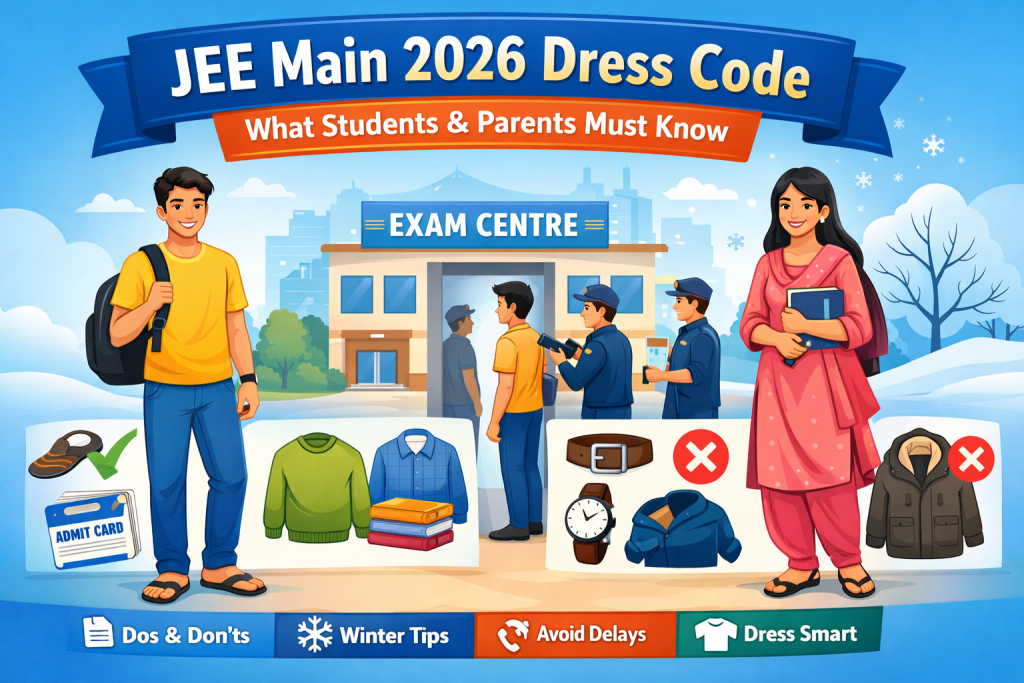
This guide is written to remove doubt, not to scare you. Here, you will understand what clothing choices are considered safe, why certain items are discouraged, and how to prepare calmly for the exam day. Parents will also find this useful, as a small check at home can prevent last-minute stress at the centre.
By following these practical guidelines, students can focus on what truly matters – the paper – and walk into the exam hall with confidence and clarity.
Why JEE Main Dress Code Matters on Exam Day
The dress code exists to support a smooth and fair exam process, not to trouble students. On exam day, every candidate goes through a security screening before entering the centre. Simple clothing helps this process move faster and reduces unnecessary checks.
How Security Checks Work at the Centre
At the gate, students pass through a metal detector check and may also go through a basic frisking procedure. These steps are required to ensure exam safety. Clothes with metal parts or extra layers can slow this process and lead to repeated checks.
How Wrong Clothing Can Delay Entry
If clothing does not meet guidelines, students may be asked to remove items or wait longer. This can cause exam centre entry delays and increase stress just before the paper. Parents should understand that following dress guidelines is about saving time and keeping the student calm, not about strict control.
Choosing simple, comfortable clothes helps students enter smoothly and start the exam with a clear and focused mind.
General Dress Code Guidelines for JEE Main 2026
The safest way to avoid confusion on exam day is to choose clothing that works at every exam centre. There is no fixed uniform, but students are expected to wear simple clothing that does not create issues during checking.
Choose Simple and Comfortable Clothes
Light, plain clothes are always a safe option. Avoid clothes with extra layers, deep pockets, or heavy designs. Simple outfits help students feel comfortable during the long exam and make entry faster. Parents should ensure the clothes are easy to manage and not distracting.
Why Metal-Free Clothes Are Important
Clothes with metal parts can trigger repeated checks. Zippers, big buttons, badges, or decorative elements often slow down entry. Wearing metal-free clothes helps students clear security smoothly and reduces last-minute stress at the gate.
Footwear Rules You Should Follow
Footwear is checked carefully at most centres. Shoes with thick sole shoes or heavy designs are usually not allowed. Slippers, sandals, or light footwear are the safest choices. Parents should remind students to avoid new or uncomfortable footwear on exam day.
Following these basic guidelines helps ensure a calm and smooth start to the exam.
JEE Main Dress Code for Male Candidates
Understanding the jee main dress code for male candidates helps avoid last-minute confusion at the exam centre. The goal is comfort during the three-hour exam and smooth entry without repeated checking. Simple choices make a big difference.
What Male Students Can Wear Safely
Male students should choose light and comfortable clothes. Plain T-shirts or simple shirts with trousers or jeans are generally safe. The fabric should allow easy movement and help students stay relaxed throughout the paper.
Footwear should be easy to remove and wear. Slippers or light sandals are usually the best option. Parents should ensure clothes are tried earlier, so nothing feels tight or uncomfortable during the exam.
What to Avoid at the Exam Centre
Clothes with metal parts, extra pockets, or heavy designs should be avoided. Belts, caps, watches, or any accessories can slow down checking and cause delay.
Wearing complicated clothing may lead to repeated frisking, which can increase stress before the exam. Simple dressing helps male candidates enter calmly and focus fully on their performance.
JEE Main Dress Code for Female Candidates
Following the jee main dress code for female candidates is mainly about choosing simple, comfortable clothing that allows easy checking at the exam centre. The aim is not strict rules, but smooth entry and a stress-free start to the exam. Parents can support by helping students prepare their outfit in advance.
Clothing & Accessories Guidelines
Female students should wear plain and comfortable clothes without heavy designs. Simple tops with jeans, leggings, or salwar are usually safe choices. Clothes should not have metal parts, deep pockets, or extra layers that may slow down checking.
Accessories should be kept minimal. Jewellery, fancy hair accessories, or items that need repeated checking should be avoided. Simple hair ties and basic footwear help keep the process smooth.
Practical Tips for Smooth Entry
Choose clothes that are easy to manage and comfortable for the full exam duration. Avoid wearing new outfits on exam day to prevent discomfort.
Parents should do a final check before leaving home to ensure the student feels confident. Simple dressing helps avoid delays, keeps anxiety low, and allows full focus on the exam.
JEE Main 2026 Winter Session Dress Code (January Exam)
The January attempt is held in cold weather in many cities, which makes the jee main winter dress code an important concern. Students should plan their jee main january session dress code carefully so warmth does not cause entry problems at the centre.
Light Sweater vs Heavy Jacket
For winter wear, a light sweater or thin layer is usually the safest choice. Heavy jackets, hoodies, or coats may lead to extra checking or removal at the gate. Wearing light layers keeps students warm without slowing down security checks.
Balancing Weather and Frisking
The goal is to stay comfortable while allowing easy frisking. Clothes with thick padding or multiple layers can delay entry. Parents should guide students to dress in layers that can be adjusted quickly if needed.
Common Winter Mistakes to Avoid
Many students wear bulky jackets or forget footwear rules in winter. Such choices can cause delays and stress. Simple winter clothing helps ensure smooth entry and a calm start to the exam.
Common Dress Code Mistakes That Cause Entry Delay
Many students face entry delay not because of major rule breaks, but due to small mistakes made in hurry. Learning from others’ experience can help avoid unnecessary stress on exam day.
Small Items Students Often Forget
Belts are one of the most common issues. Many students forget to remove them before checking, which leads to repeated frisking. Similarly, shoes that are not removed early can slow down the process at busy centres.
Extra Layers and Last-Minute Confusion
Wearing extra layers, jackets, or multiple clothing items often leads to extra checks. Centre staff may ask students to remove or adjust these items, causing delays.
Parents should remind students to follow centre staff instructions calmly and without argument. Simple preparation at home helps students enter on time and stay focused on the exam.
What Parents Should Check Before Leaving Home
Parents play an important role in keeping the exam day calm and organised. A quick check at home can help avoid last-minute stress and support the student’s confidence.
Final Clothing and Comfort Check
Ensure the student is wearing simple, comfortable clothes that follow the guidelines. Check footwear, pockets, and extra layers so nothing causes delay at the centre. Comfortable dressing supports better focus during the exam.
Documents and Basic Readiness
Before leaving, verify that all required documents are packed and easy to access. Remind the student to stay calm and follow instructions at the centre.
These small steps improve overall exam-day readiness and help students start the exam with a clear and relaxed mind.
JEE Main 2026 Dress Code – FAQs
Below are common questions students and parents search before exam day. These answers focus on clarity, not fear.
Q. Are jeans allowed in JEE Main 2026?
Yes, plain jeans are allowed if they are comfortable and do not have metal parts or heavy designs.
Q. Are shoes allowed at the exam centre?
Shoes are usually discouraged. Light sandals or slippers help avoid delays during security checks.
Q. Can I wear full sleeves in winter?
Yes, but full sleeves should be light. Thick or layered clothing may be checked again.
Q. Is jewellery allowed inside the exam hall?
No, jewellery should be avoided as it can slow down checking and cause inconvenience.
Q. What happens if the dress code is not followed?
Students may face extra checking or be asked to remove items, leading to stress or delay.
Q. Is there a different rule for the January session?
Rules remain similar, but winter clothing should be light and easy to check.
Q. Can I wear a light sweater during the exam?
Yes, a thin sweater is usually fine if it does not have metal or heavy parts.
Q. Are belts allowed with trousers or jeans?
Belts are better avoided as they often cause repeated frisking.
Q. Is a watch allowed in JEE Main 2026?
Watches are generally not allowed inside the exam hall.
Q. Can students wear caps or head covers?
Caps and head covers are usually not permitted unless medically required.
Q. Are hair accessories allowed for female candidates?
Simple hair ties are fine. Decorative or metal accessories should be avoided.
Q. Will biometric check be done at the centre?
Yes, biometric check is part of the entry process at most centres.
Q. Does dress code affect reporting time?
Wrong clothing can slow entry, even if you reach before reporting time.
Q. Can students wear layered clothing in cold regions?
Layering should be minimal to avoid repeated checks.
Q. Are exam hall rules same at all centres?
Basic exam hall rules are similar, though checking speed may vary by centre.
Q. Should students carry extra clothing items?
Extra items are not recommended as they may create confusion at entry.
Q. Can parents accompany students inside the centre?
Parents are usually not allowed beyond the main gate.
Q. Is there any written uniform prescribed by NTA?
No, NTA provides guidelines, not a fixed uniform.
Q. Can wearing wrong clothes affect exam start time?
Yes, it may cause delay and increase anxiety before the paper.
Q. What is the safest dressing approach overall?
Simple, comfortable clothing that supports smooth checking is always the best choice.