

Exams bring pressure for most students. Even those who study regularly feel nervous before papers. Exam fear in students is very common, especially when marks start deciding confidence, future options, and family expectations.
Many parents worry when they see a student not scoring good marks despite effort. The first reaction is often to increase study hours, but that rarely fixes the real problem. Most students struggle because concepts are not clear or the study method is not working for them.
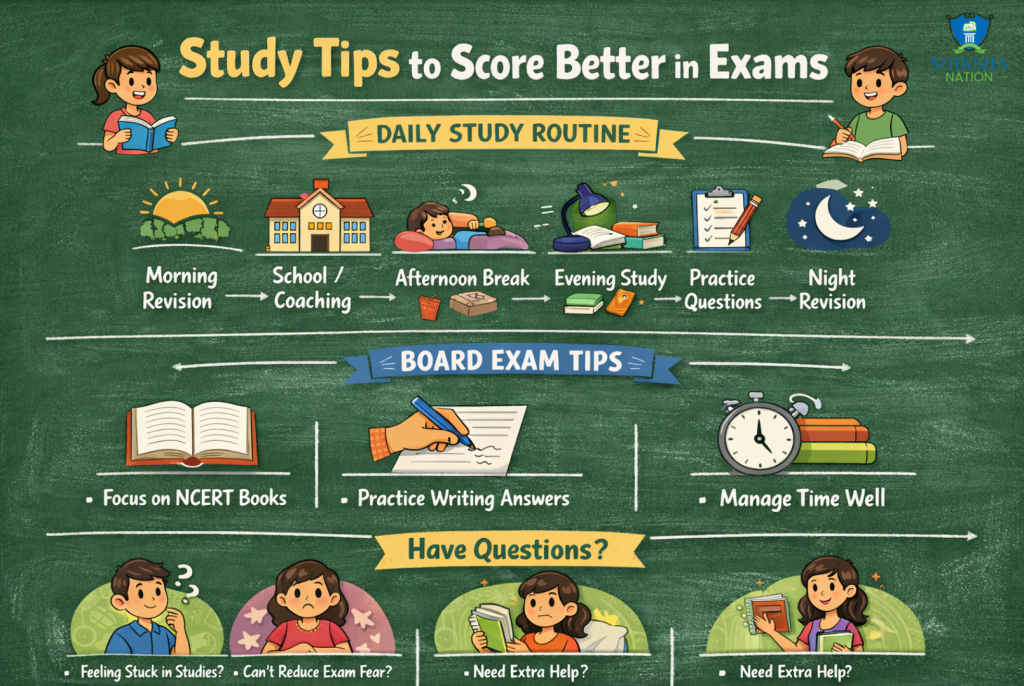
If you are searching how to score good marks in exams, this guide is not about shortcuts or last-minute tricks. It is about understanding what actually helps students learn better, revise smartly, and write exams with confidence.
This guide is written for students who feel stuck and for parents who want to support without adding pressure. Step by step, it will help you move from confusion to clarity and from fear to better results.
Why Students Struggle to Score Good Marks in Exams
Many students work hard but still do not get the marks they expect. This usually happens not because of laziness, but because the learning process is not clear or well planned. Parents often feel confused when they see a student not scoring good marks even after regular study.
Studying Without Real Understanding
A common reason is studying only to finish chapters. Students read, underline, or memorise answers without knowing why things work. When questions change slightly in exams, they feel stuck and lose marks.
Poor Revision Habits
Revision is often rushed or skipped. Many students revise only once, just before exams. Without repeated revision, concepts fade quickly, and students forget steps, formulas, or key points during the paper.
Pressure and Exam Stress
Exam pressure affects thinking ability. Fear of marks, time limits, and expectations can block clear thinking. Even prepared students may make silly mistakes because of stress and panic.
Weak Basics from Earlier Classes
When basic concepts are not clear, advanced topics feel heavy. Students labelled as weak in studies often carry gaps from previous classes. These gaps slowly reduce confidence and exam performance.
Understanding these root causes helps parents and students focus on the right solutions instead of blaming effort or ability.
Common Mistakes That Reduce Exam Scores
Many students try harder before exams but still do not see improvement. The reason is often small mistakes in study habits. Parents also feel worried when effort increases but results do not. Understanding these mistakes is the first step in learning how to get good marks in exams.
Studying Too Much Without a Plan
Some students study for long hours without deciding what to study first. They jump between subjects and chapters. This creates tiredness but not clarity, and important topics remain weak.
Memorising Instead of Understanding
Learning answers by heart may work for simple questions, but exams often test understanding. When questions are twisted or indirect, memorised answers fail. This is why concept clarity matters more than rote learning.
Ignoring Previous Mistakes
Many students never review test papers or homework errors. They repeat the same mistakes again in exams. One of the most useful exam preparation tips for students is to learn from past errors and fix them early.
Avoiding these common mistakes helps students study smarter and improve exam performance steadily.
How to Study for Exams Effectively (What Actually Works)
Many students feel busy all day but still doubt their preparation. The problem is not effort, but the method. Learning how to study for exams effectively means using simple techniques that help the brain understand, remember, and apply concepts in exams.
Focus on Concepts Before Questions
Before solving many questions, students should understand the topic clearly. Ask “why” and “how” instead of only “what is the answer.” When concepts are strong, students can handle new or tricky exam questions with confidence.
Parents can help by checking if the child can explain a topic in simple words, not just read answers from the book.
Active Study Methods (Explain, Write, Recall)
Active study works better than silent reading. Students should explain topics aloud, write short answers, and recall points without looking at notes. This method shows what is clear and what needs revision.
Following a fixed study routine for exams with short study slots and breaks makes active learning easier and less tiring.
Smart Use of Notes and NCERT
Notes should be short and clear, not copied pages. Highlight key ideas, formulas, and examples. NCERT should be used to understand basics and definitions, as many exam questions are based on its concepts.
Parents should encourage quality study over long hours. Studying smartly helps students stay calm and perform better in exams.
How to Score Good Marks in Exams – Step-by-Step Plan
Scoring well is not about studying all day. It is about following a clear plan that reduces stress and builds confidence. This step-by-step method shows how to score good marks in exams by focusing on the right actions at the right time, especially when pressure is high.
Step 1 – Fix Weak Topics First
Start with chapters that feel confusing or incomplete. Ignoring weak areas increases fear and panic later. Spend time understanding basics before moving ahead. When weak topics improve, overall confidence increases and exam fear in students starts reducing.
Parents can help by ensuring the child does not skip difficult chapters.
Step 2 – Create a Realistic Daily Study Routine
A good routine should be practical, not strict. Divide time into short study slots with breaks. Include revision and practice every day. A balanced routine helps students stay consistent and avoids burnout during exam preparation.
Parents should support the routine without forcing long hours.
Step 3 – Practice, Test, Analyse
Practice questions regularly after completing a topic. Give small tests and analyse mistakes honestly. Instead of worrying about low scores, focus on what went wrong and how to correct it. This habit improves accuracy and speed over time.
This step is key for students searching how to score good marks in exams in less time.
Step 4 – Revise Without Panic
Revision should be calm and planned. Revise important points, formulas, and mistakes from past tests. Avoid learning new topics at the last moment. A clear revision plan keeps the mind relaxed and improves exam performance.
Following these steps helps students move from fear to confidence and from hard work to better marks.
Study Routine That Helps Score Better in Exams
Most students ask, “How long should I study?”
The better question is, what should I do from morning to night?
A clear study routine for exams removes daily confusion. Students stop wasting energy deciding what to study and parents stop worrying about uneven effort.
A Full-Day Exam Study Routine (Morning to Night)
| Time | What to Do | Why It Matters |
| 6:30 am | Wake up + freshen up | Calm start, no rush |
| 6:45 – 7:15 am | Light revision (yesterday’s topic) | Improves memory retention |
| 7:15 – 8:00 am | Get ready + breakfast | Brain needs fuel |
| School / coaching hours | Attend actively | First learning happens here |
| 4:00 – 4:30 pm | Rest + snack | Mind recovery time |
| 4:30 – 5:30 pm | Learn one new concept | Quality over quantity |
| 5:30 – 5:45 pm | Short break | Prevents overload |
| 5:45 – 6:30 pm | Practice questions | Converts learning into marks |
| 7:00 – 7:30 pm | Dinner + relax | Reduces stress |
| 7:30 – 8:00 pm | Revise weak points | Fixes confusion early |
| 8:00 – 8:20 pm | Review mistakes | Avoid repeat errors |
| 9:00 pm | Light recall + plan tomorrow | Confidence before sleep |
| 10:00 pm | Sleep | Brain processes learning |
Why This Routine Works Better Than Long Study Hours
- Every day has learning + practice + revision
- Breaks prevent burnout and fear
- Mistakes are fixed daily, not before exams
Parents often notice that when students follow this routine, stress reduces and focus improves. Over time, this steady approach helps students score better and move closer to goals like how to get full marks in exam, without panic or pressure.
Study Routine for Weak Students (Who Feel Left Behind)
Students who are weak in studies do not need more pressure. They need clarity, repetition, and small daily wins. This routine is designed to rebuild confidence slowly and reduce exam fear in students.
Daily Routine for Weak Students (Simple & Manageable)
| Time | What to Do | Why It Helps |
| 6:45 am | Wake up + freshen up | Calm start |
| 7:00 – 7:20 am | Revise one easy topic | Builds confidence |
| 7:20 – 8:00 am | Get ready + breakfast | Energy for learning |
| School / coaching | Listen, don’t memorise | First exposure |
| 4:00 – 4:30 pm | Rest + snack | Mind recovery |
| 4:30 – 5:15 pm | Learn basic concepts only | Fix weak foundation |
| 5:15 – 5:30 pm | Break | Avoid overload |
| 5:30 – 6:00 pm | Solve 5–10 simple questions | Small success daily |
| 7:00 – 7:30 pm | Dinner + relax | Stress control |
| 7:30 – 7:50 pm | Revise what was studied | Retention |
| 9:00 pm | Quick recall + sleep | Brain absorbs learning |
Why This Routine Works for Weak Students
- Focuses on basics, not speed
- Avoids long study hours
- Daily success improves confidence
Parents should praise effort, not marks. When weak students feel supported, improvement follows naturally.
Last 30 Days Before Exams – Smart & Stress-Free Routine
The last month before exams is not for learning everything again. It is for revision, practice, and calm preparation. This routine helps students understand how to score good marks in exams in less time.
Daily Routine for the Last 30 Days Before Exams
| Time | What to Do | Purpose |
| 6:30 am | Wake up | Fixed rhythm |
| 6:45 – 7:15 am | Revise formulas / key points | Memory boost |
| School / coaching | Focus on weak areas | Clarification |
| 4:00 – 4:30 pm | Rest | Avoid fatigue |
| 4:30 – 5:30 pm | Practice exam questions | Improve accuracy |
| 5:30 – 5:45 pm | Break | Mental refresh |
| 5:45 – 6:30 pm | Test + analyse mistakes | Exam readiness |
| 7:30 – 8:00 pm | Light revision | Confidence |
| 8:00 – 8:15 pm | Plan next day | Clarity |
| 10:00 pm | Sleep | Stress control |
What to Avoid in the Last 30 Days
- Starting new topics
- Studying late nights
- Comparing preparation with others
This routine supports a strong study routine for exams and helps students stay calm, focused, and consistent during the most critical phase.
Study Routine for Board Exams (Class 10 & Class 12)
Board exams need a different approach. The syllabus is fixed, answers are checked strictly, and presentation matters. A clear study routine for exams helps students stay disciplined, calm, and consistent during this high-pressure phase.
Parents should focus on routine stability, not constant reminders.
Morning Routine for Board Exam Students (Concept + Memory)
| Time | Task | Purpose |
| 6:00 am | Wake up + freshen up | Fixed body clock |
| 6:15 – 6:45 am | Revise formulas, definitions, diagrams | Improves recall |
| 6:45 – 7:15 am | Read NCERT theory (one topic) | Board-aligned clarity |
| 7:15 – 8:00 am | Get ready + breakfast | Energy for the day |
Why this matters:
Morning revision helps students retain theory, which is crucial for writing correct board answers.
Afternoon Routine (School + Light Recovery)
| Time | Task | Purpose |
| School / coaching hours | Attend attentively | Doubt clarification |
| 3:30 – 4:00 pm | Rest + snack | Mental reset |
Parents should avoid asking “what did you study today?” at this time. Let the mind settle.
Evening Routine (Practice + Writing Focus)
| Time | Task | Purpose |
| 4:00 – 5:00 pm | Practice board-type questions | Answer accuracy |
| 5:00 – 5:15 pm | Break | Avoid fatigue |
| 5:15 – 6:15 pm | Writing practice (answers/derivations) | Presentation skills |
This stage is critical for students aiming how to score good marks in board exams, as writing practice directly affects marks.
Night Routine (Revision + Calm Closure)
| Time | Task | Purpose |
| 7:00 – 7:30 pm | Dinner + relax | Stress reduction |
| 7:30 – 8:00 pm | Revise weak topics | Confidence |
| 8:00 – 8:20 pm | Review mistakes | Prevent repetition |
| 9:00 pm | Plan next day | Clarity |
| 10:00 pm | Sleep | Brain consolidation |
Why This Board Exam Routine Works
- Matches CBSE/ICSE board answer expectations
- Balances theory, practice, and writing
- Reduces exam fear in students
- Helps even average students improve steadily
With consistency, this routine supports students who want to understand how to score good marks in exams without panic or last-minute pressure.
Study Routine That Helps Score Better in Exams
Toppers do not study all day. They follow a fixed study routine for exams where every hour has a clear purpose. This kind of routine keeps the mind fresh, reduces confusion, and improves performance steadily.
Parents often notice that toppers are calm because they trust their routine, not because they study more.
Daily Study Routine Followed by Toppers
| Time Block | What Toppers Do | Why It Works |
| Early morning | Revise formulas, key points | Best time for memory |
| School / coaching | Listen actively, note doubts | First understanding |
| Post-school | Short rest + snack | Mental recovery |
| Evening block 1 | Study one core subject | Deep focus |
| Short break | Walk / relax | Avoid tiredness |
| Evening block 2 | Practice questions | Improves accuracy |
| Night block | Revise mistakes + recall | Strong retention |
| Sleep time | Proper sleep | Brain processing |
How to Score Good Marks in Board Exams (CBSE & ICSE)
Board exams are different from school tests. Here, answers are checked strictly and marks depend on clarity, steps, and presentation. Students and parents should understand that scoring well is about following board expectations, not just studying more. This section explains how to score good marks in board exams with simple and practical habits.
Focus on NCERT and Board Syllabus
For CBSE and ICSE, NCERT concepts form the base of most questions. Students should read theory carefully, understand definitions, and practise examples. Extra books help only after NCERT concepts are clear.
Parents can support by ensuring NCERT is revised properly before moving to reference material.
Practice Writing Answers Regularly
Knowing answers is not enough. Students must practise writing them in proper steps. Writing practice improves speed, clarity, and confidence during the exam. Even short daily writing makes a big difference.
Improve Presentation and Time Management
Well-presented answers fetch more marks. Use headings, steps, and neat diagrams where needed. Time management is equally important. Students should learn how much time to give to each question and avoid spending too long on one answer.
With focused preparation and regular practice, board exams become manageable and students perform closer to their potential.
How Parents Can Help Children During Exams
Exams are stressful not only for students but also for parents. Many children perform better when they feel supported, not judged. Understanding how parents can help during exams plays a big role in a child’s confidence and focus.
What Parents Should Say
Use calm and positive words. Say things like, “Do your best” or “We trust your effort.” Ask if the child needs help instead of asking about marks. Simple encouragement reduces fear and builds motivation.
What Parents Should Avoid
Avoid comparing the child with others or reminding them about past results. Repeated questions about syllabus and marks increase pressure. Silence and patience often help more than advice during exam days.
Create a Calm Study Environment
Keep the home environment peaceful. Fix study time, meal time, and sleep time. Reduce noise, avoid unnecessary discussions, and respect the child’s routine. A calm space helps students concentrate and revise better.
When parents stay supportive and relaxed, students feel safer and more confident while preparing for exams.
When Extra Academic Help Becomes Necessary
Every student struggles at some point, but some signs show that self-study alone is not enough. Parents should not wait too long when they notice their child is weak in studies, as early support makes learning easier and less stressful.
Repeated Confusion in Basic Topics
If a student feels confused even after studying the same topic many times, it means the basics are not clear. Re-reading books again and again without understanding only increases frustration.
Falling Confidence and Fear
Low marks over time can break confidence. Students may stop asking doubts, avoid studying, or feel scared before exams. This emotional drop often affects performance more than the subject itself.
No Improvement Despite Honest Effort
When effort is regular but marks do not improve, the study method may be wrong. Extra academic help can provide guidance, clear concepts, and a proper learning path.
Seeking help is not a failure. It is a smart step to support the student and bring learning back on track.
Frequently Asked Questions (FAQs)
Q. Can average students score good marks in exams?
Yes. Many average students improve when their basics become clear and their study routine becomes structured. With the right method and regular practice, it is possible to understand how to score good marks in exams without pressure.
Q. How many hours should students study daily?
There is no fixed number. Most students do well with 4–6 focused hours. Quality matters more than long sitting hours. Parents should focus on consistency, not forcing extra time.
Q. Is last-minute study effective?
Last-minute study helps only for quick revision, not for learning new topics. It works best when concepts are already clear and students revise key points calmly.
Q. How can students reduce exam fear?
Exam fear reduces when preparation is planned. Daily revision, small tests, and enough sleep help students feel in control. Parents should avoid panic talk before exams.
Q. Should parents focus more on marks or concepts?
Concepts matter more than marks. When understanding improves, marks follow naturally. Parents should praise effort and learning instead of only results.
Q. How to get good marks in exams if time is less?
Focus on important topics, revise notes, and practise previous questions. Smart planning helps students cover more in less time without stress.
Q. Is it possible to score well without tuition?
Yes, if the student understands concepts and follows a proper routine. However, some students need extra guidance when they feel stuck or confused.
Q. How often should students revise?
Short daily revision works better than long weekly revision. Revising mistakes regularly helps students avoid repeating errors in exams.
Q. What should students do one day before the exam?
Revise key points, avoid new topics, and sleep on time. Staying calm helps memory and improves performance during the paper.
Q. How can parents support children during exams?
Parents should provide a peaceful environment, healthy food, and emotional support. Simple words like “do your best” help more than constant checking.