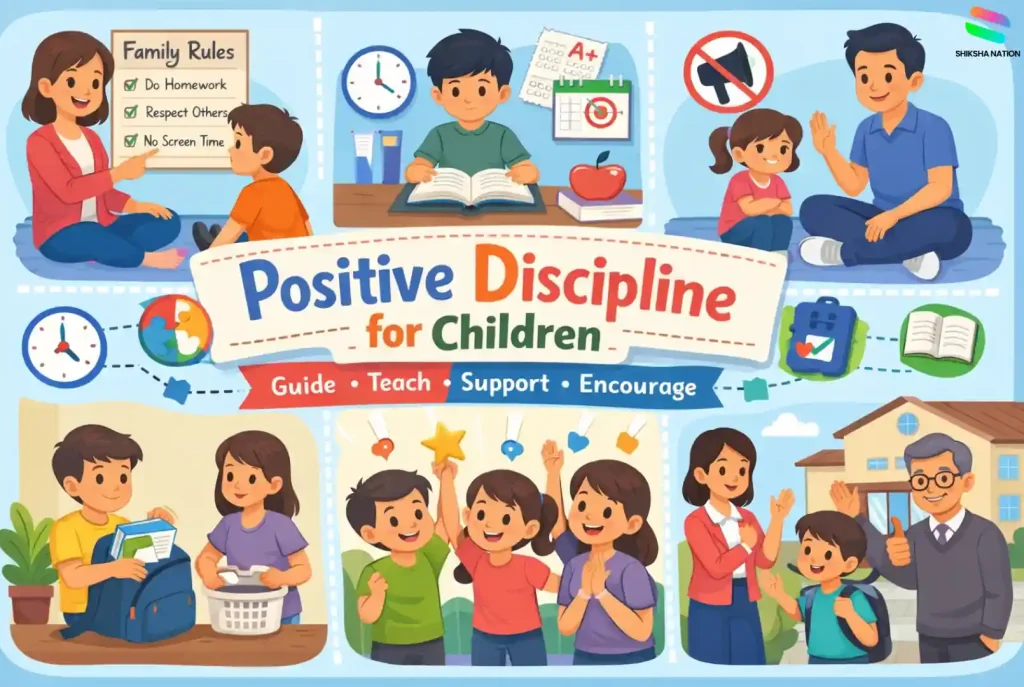
What Does Discipline Really Mean for Children?
Many parents believe discipline means strict rules or punishment. In reality, discipline is about teaching children how to behave responsibly. It helps children understand limits, respect others, and develop self-control.
When discipline is used correctly, children slowly learn how to make better choices on their own. This skill becomes important not only at home but also in school, friendships, and studies.
Discipline vs Punishment
Understanding the difference between discipline vs punishment is important for parents.
- Discipline means teaching.
Parents explain the mistake and guide the child toward better behaviour.
- Punishment is usually a reaction.
It often happens in anger and focuses only on the mistake.
For example:
- If a child forgets homework, discipline means helping them create a study routine.
- Punishment would be shouting or scolding without explaining what to do next.
Discipline helps children learn responsibility, while punishment may only create fear.
Why Positive Discipline Works Better
Positive discipline for kids focuses on guiding behaviour instead of controlling it.
It works better because:
- Children feel emotionally safe and are more open to listening.
- Better long-term behaviour develops because children understand the reason behind rules.
- It builds a stronger parent-child relationship based on trust.
When children feel supported rather than judged, they are more likely to cooperate and develop responsible habits.
Why Some Children Do Not Listen to Parents
Many parents feel frustrated when children ignore instructions or argue frequently. This often leads them to search for how to discipline a child that won’t listen. In most cases, the issue is not stubbornness but certain habits or situations that affect a child’s behaviour.
Understanding these reasons helps parents choose better parenting discipline strategies instead of reacting with anger.
Lack of Clear Rules
Children need simple and consistent rules to understand what is expected from them.
If rules change frequently or are not clearly explained, children may get confused. For example, a child may not know when screen time is allowed or when homework must be completed.
Clear rules help children understand boundaries.
Too Many Instructions or Constant Scolding
When children hear instructions all day, they may slowly stop paying attention.
Frequent scolding can also make children defensive. Instead of listening, they may start ignoring the parent or responding with frustration.
Children respond better when instructions are calm and specific.
Screen Distractions and Mobile Usage
Mobile phones, games, and videos easily capture a child’s attention.
When children spend too much time on screens, they may lose focus on studies, chores, or conversations at home. This can make them appear as if they are not listening.
Balanced screen habits are important for discipline.
Seeking Attention
Sometimes children misbehave simply because they want attention from parents.
If parents are busy with work or phones, children may interrupt, argue, or ignore instructions to get noticed.
Spending a little focused time with children every day can reduce such behaviour.
7 Effective Ways to Discipline Kids Without Yelling
Many parents look for how to discipline a child without yelling, especially when children argue, ignore instructions, or resist studying. Shouting may stop behaviour for a moment, but it rarely teaches children what to do next.
Instead, parents can use simple and practical methods that guide children calmly. These effective ways to discipline a child focus on learning, responsibility, and consistency.
Set Clear and Consistent Rules
Children feel more secure when rules are simple and predictable.
Parents can explain basic rules such as:
- finish homework before using the phone
- respect elders and teachers
- keep school books and bags organised
When rules stay consistent, children slowly understand expectations and follow them more easily.
Use Natural Consequences
Children learn faster when they experience the natural result of their actions.
For example:
- If a child forgets homework, they may have to explain it to the teacher.
- If toys are left scattered, the child may lose playtime until they clean them.
Natural consequences help children connect behaviour with responsibility.
Praise Positive Behaviour
Children often repeat behaviour that gets attention.
Instead of focusing only on mistakes, parents can appreciate small positive actions such as:
- finishing homework on time
- helping at home
- showing respect to others
This approach encourages better behaviour and supports positive discipline for kids.
Limit Screen Time
Mobile phones, games, and videos can easily distract children from studies and family time.
Parents can create simple limits such as:
- no screens during homework time
- limited entertainment after studies
- device-free family meals
Healthy screen habits improve attention and behaviour.
Create Daily Routines
Children perform better when daily activities follow a predictable routine.
A simple routine may include:
- fixed study time
- play or outdoor activity
- dinner with family
- proper sleep schedule
Routines reduce arguments because children know what to expect each day.
Stay Calm During Conflicts
Children often react emotionally when they feel shouted at.
Parents who stay calm can explain mistakes more clearly. A calm conversation helps children understand the issue without feeling scared or defensive.
This makes discipline more effective and respectful.
Be a Role Model
Children observe parents closely and often copy their behaviour.
If parents show patience, honesty, and responsibility in daily life, children slowly learn the same values.
Being a good example is one of the most powerful ways to teach discipline.
How to Discipline a Child at Home (Practical Tips)
Many parents wonder how to discipline child at home in a calm and practical way. Discipline does not always require strict control or punishment. Small daily habits at home can help children understand responsibility and self-control.
When parents guide children patiently and set clear expectations, discipline becomes a natural part of everyday life.
Create Simple Family Rules
Children follow rules better when they are clear and easy to remember.
Parents can create simple rules such as:
- finish homework before playing
- keep school bags and books organised
- respect family members
Writing these rules and reminding children calmly helps them develop responsible behaviour.
Use Time-outs Wisely
Time-outs can give children a short break to calm down when emotions become strong.
Instead of using it as punishment, parents can ask the child to sit quietly for a few minutes and think about their behaviour. This helps children understand mistakes without feeling embarrassed.
Encourage Responsibility Through Small Tasks
One effective way of teaching responsibility to children is by giving them small daily tasks.
For example:
- arranging their study table
- packing their school bag
- helping with simple household work
These small responsibilities help children become more independent.
Maintain Study and Sleep Routine
A fixed routine helps children stay organised and disciplined.
Parents can encourage:
- regular homework time
- limited screen use before bedtime
- proper sleep schedule
When routines are consistent, children develop habits that support both discipline and better focus in school.
How to Teach Discipline in a Child Through Daily Habits
Parents often ask how to teach discipline in a child in a way that supports both behaviour and studies. Discipline grows slowly through everyday habits rather than strict rules.
When children follow simple routines and responsibilities, they develop focus, consistency, and confidence. These habits also play an important role in building discipline in students, especially during school years.
Homework Routine
A fixed homework routine helps children understand the importance of regular study.
Parents can encourage children to:
- start homework at the same time each day
- finish assignments before entertainment
- keep books and notes organised
This habit improves concentration and reduces last-minute stress before exams.
Time Management
Learning to manage time is an important part of discipline.
Parents can guide children to divide their time between:
- school work
- play or sports
- rest and sleep
Simple planning helps children balance studies and activities without feeling overwhelmed.
Accountability for School Work
Children should slowly learn to take responsibility for their own learning.
Parents can encourage children to:
- check their homework diary
- prepare their school bag at night
- complete projects on time
This builds confidence and independence in students.
Respect for Teachers and Family
Discipline also includes respectful behaviour.
Parents can teach children to:
- listen carefully to teachers
- speak politely with family members
- follow instructions at school and home
These values help children grow into responsible and respectful individuals.
Common Discipline Mistakes Parents Should Avoid
Many parents want their children to behave well, but sometimes the methods used can create more problems instead of solving them. Understanding these mistakes can help parents follow healthier parenting discipline strategies.
When discipline focuses on guidance and patience, it supports positive discipline for kids and helps children learn better behaviour over time.
Shouting Frequently
Constant shouting can make children feel scared or defensive.
After some time, children may stop paying attention because they become used to loud reactions. Calm communication usually helps children understand instructions more clearly.
Comparing Children
Comparing a child with siblings, classmates, or neighbours can hurt their confidence.
For example, saying “Look how well your friend studies” may make a child feel discouraged rather than motivated. Every child learns and grows at their own pace.
Inconsistent Rules
Children feel confused when rules keep changing.
If parents allow something one day and punish it the next day, children may not understand what behaviour is expected. Consistent rules help children follow discipline more easily.
Physical Punishment
Physical punishment may stop behaviour for a short time, but it does not teach children the right way to act.
Children may develop fear or anger instead of learning responsibility.
Ignoring Good Behaviour
Parents sometimes focus only on mistakes and forget to notice positive actions.
When children are appreciated for small good habits, they feel encouraged to repeat that behaviour.
How Discipline Helps Children Build Strong Study Habits
Discipline plays an important role in a child’s learning journey. When good habits are developed early, children find it easier to stay organised and focused in school. This is why building discipline in students is closely connected with academic success.
Parents who guide children patiently help them develop routines that support both behaviour and studies.
Homework Consistency
Disciplined children usually follow a regular homework routine.
They learn to:
- complete assignments on time
- revise lessons after school
- keep study materials organised
This consistency reduces last-minute stress before tests or submissions.
Exam Preparation
Discipline helps students prepare for exams in a planned way.
Instead of studying only at the last moment, disciplined students gradually revise topics, practise questions, and manage their study time better.
Better Concentration
When children follow structured routines, their ability to focus improves.
Limited distractions and fixed study hours help students concentrate on lessons for longer periods.
Responsibility Towards Learning
One of the biggest benefits of discipline is teaching responsibility to children.
Students start understanding that their learning depends on their own effort. Over time, they become more responsible about homework, projects, and exam preparation.
FAQs on How to Discipline Kids Effectively
Q. How can I discipline my child without yelling?
Parents can discipline children without yelling by staying calm and giving clear instructions. Children usually listen better when parents explain what behaviour is expected instead of reacting in anger. Setting simple rules, maintaining routines, and appreciating good behaviour can make a big difference. When children feel respected, they are more likely to cooperate and understand their mistakes.
Q. What is the best way to discipline a child who does not listen?
When a child does not listen, the first step is to understand the reason behind the behaviour. Sometimes children ignore instructions because they are distracted, tired, or seeking attention. Parents can handle this situation by speaking calmly, setting clear expectations, and following consistent consequences. Over time, children begin to understand that their actions have results.
Q. At what age should children learn discipline?
Children can start learning discipline from an early age, usually around three to four years. At this stage, they can understand simple rules and routines. As children grow older, discipline becomes more about responsibility. Parents can gradually guide them to manage homework, daily tasks, and respectful behaviour.
Q. What is the difference between discipline and punishment?
Discipline focuses on teaching children the right behaviour. It helps them understand their mistakes and learn how to improve. Punishment, on the other hand, is usually a reaction to wrongdoing. It may stop behaviour temporarily, but it does not always help children understand what they should do differently.
Q. How can parents build discipline in students?
Parents can build discipline in students by creating structured daily habits. Regular study time, organised school materials, and limited distractions help students stay focused. Encouraging children to take responsibility for homework and school tasks also builds confidence. With consistent guidance, students gradually develop self-control and responsibility toward their studies.