Child Exam Confidence: A Parent’s Guide to Reducing Exam Stress
Child Exam Confidence is one of the most important factors in a child’s academic performance, yet it is often misunderstood.
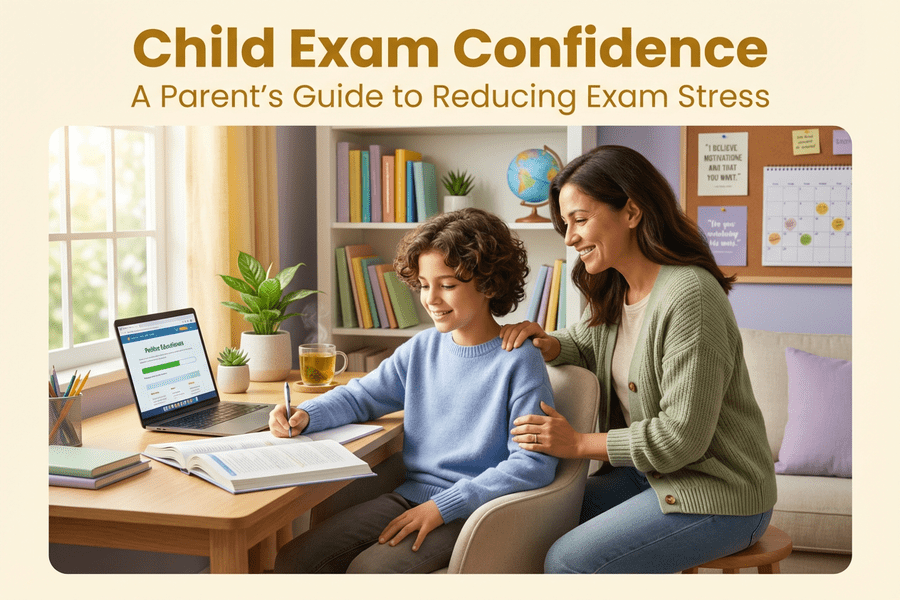
Child Exam Confidence is one of the most important factors in a child’s academic performance, yet it is often misunderstood. Many children study sincerely but still feel scared as exams approach. They worry about forgetting answers, making mistakes or disappointing parents. Some children become nervous, others withdraw, and some lose interest in studying because fear overwhelms them.
The good news is that confidence is not something children are born with — it is something they learn. And as a parent, you play the strongest role in shaping child exam confidence. When children feel supported, heard and encouraged, their fear reduces naturally and their performance improves.
This guide explains gentle, practical and emotionally safe ways to help your child build confidence before exams.
Understand Their Fear Instead of Judging It
Every child fears exams for a different reason. Some fear failure, some worry about making mistakes, and others feel anxious because they don’t understand the concepts clearly. Before you can build their confidence, it’s important to understand what is troubling them.
Ask questions like:
-
“Which part of the exam makes you nervous?”
-
“Is there something you find difficult?”
-
“How can I help you feel better?”
Listening without judgement makes your child feel understood and supported, which is the first step toward stronger confidence.
Create a Calm and Supportive Environment
Children pick up emotional signals quickly. If the home becomes tense, loud or overly focused on marks, exam fear increases. A calm environment helps children feel safe and reduces pressure.
Try to:
-
Avoid shouting or negative talk
-
Keep study spaces quiet and clean
-
Maintain a predictable routine
-
Appreciate effort instead of pushing for perfection
When children feel safe, they think more clearly and study more confidently.
Strengthen Concepts and Basics Gradually
Often, exam fear comes from unclear concepts. Children may attend classes but still not understand topics deeply, which makes them anxious.
Help by:
-
Breaking chapters into small parts
-
Using simple examples
-
Giving them time to understand
-
Offering academic support if needed
Clear concepts build confidence naturally. When children understand what they’re learning, they fear exams much less.
Break Tasks Into Small, Achievable Goals
Large tasks overwhelm children and lower confidence. Small tasks motivate them.
Instead of saying:
“Finish this whole chapter today.”
Try:
“Let’s complete these two topics first.”
Small wins give children a sense of progress. When children feel they are improving step by step, their confidence grows steadily.
Avoid Comparing Your Child With Others
Nothing damages confidence more than comparison. When children are compared to siblings, classmates or neighbours, they begin to believe they are “not good enough”.
Focus on:
-
Their personal growth
-
Their effort
-
Their small improvements
-
Their individual strengths
Confidence grows when children feel valued for who they are.
Introduce Simple Relaxation Techniques
Relaxation helps reduce exam anxiety and improves focus. Teach your child simple techniques like:
-
Deep breathing
-
Counting backwards slowly
-
Stretching during breaks
-
Listening to calming music
-
Saying positive affirmations
These techniques help children calm their minds and approach exams with more confidence.
Create a Simple and Realistic Study Routine
A predictable study routine gives children a sense of control. When they know what to study and when, stress reduces.
A good routine includes:
-
Short study sessions
-
Regular revision time
-
Clear breaks
Time for weak subjects
Light review before sleeping
Structure builds confidence and reduces last-minute panic.
Use Mock Tests for Practice, Not Pressure
Mock tests help children get used to the exam format. But they should be used gently, with encouragement rather than criticism.
Praise effort with phrases like:
“You tried well.”
“You’re improving.”
“Every test makes you stronger.”
This turns mock tests into confidence-boosting tools instead of fear-building ones.
Encourage Open Conversations
Children often hide their fear because they don’t want to upset their parents. Encourage honest conversations so they feel comfortable expressing their worries.
Ask:
“What worries you the most about exams?”
“How can I support you?”
“Which subject feels difficult right now?”
When children feel heard and understood, their confidence increases naturally.
Celebrate Small Wins
Small achievements build big confidence. Celebrate:
-
Completing a chapter
-
Solving a tough question
-
Improving handwriting
-
Finishing revision
-
Doing well in a mock test
Celebration doesn’t need to be big — a smile, hug or kind word works wonders.
Reduce Focus on Marks
When children feel judged by their marks, they begin to fear exams more.
Shift from:
“How many marks will you get?”
to
“What did you learn today?”
This simple shift helps children focus on understanding rather than fear.
Final Thoughts
Building Child Exam Confidence is a journey, not a one-day task. Children don’t need perfection; they need support, patience and belief. When they feel safe and encouraged, exam fear naturally reduces and confidence becomes part of their personality.
With the right emotional and academic guidance, your child can face exams calmly, feel more prepared and believe in themselves — and that belief is the strongest foundation for lifelong success.
Harvard Graduate School of Education – Child Learning Research (https://www.gse.harvard.edu/)