Why Phone Addiction Happens (Understanding the Psychology)
Many students do not realise that phone addiction is not only about habits. It is also connected to how the brain reacts to rewards and stimulation. Modern smartphones are designed to keep users engaged for longer periods of time.
Apps, notifications, and social media platforms constantly give small rewards that make people want to check their phones again and again. Over time, this behaviour develops into smartphone addiction, especially among teenagers and students who use their phones frequently.
Understanding the psychology behind this habit helps students and parents take better control of phone usage.
The Dopamine Effect of Social Media and Notifications
One major reason behind excessive phone use is the connection between dopamine and phone addiction. Dopamine is a chemical in the brain that creates a feeling of pleasure when we receive something enjoyable.
When students get:
- likes or comments on posts
- new messages from friends
- interesting short videos or reels
the brain releases dopamine. This makes the experience feel rewarding and encourages students to check their phones repeatedly.
Because these rewards are unpredictable, students often keep refreshing apps or opening notifications, which strengthens social media addiction in students.
Why Students Check Their Phones During Study Time
Many students check their phones during study sessions without even thinking about it. This behaviour often develops because of simple daily triggers.
Common reasons include:
- Boredom during difficult topics
- Stress before exams or homework
- Habit of checking notifications frequently
- Fear of missing messages or updates
Over time, the brain begins to associate short study breaks with phone use. This creates a habit loop where students automatically reach for their phones whenever they feel distracted or tired.
Signs You May Have a Phone Addiction
Many students use smartphones for learning, communication, and entertainment. However, when phone use starts affecting studies, sleep, or daily routines, it may indicate phone addiction in students.
Often, students do not realise when normal phone use slowly turns into a habit that is difficult to control. Parents may also notice changes in behaviour, especially when teenagers spend long hours on their phones.
Here are some common signs that may suggest mobile addiction in teenagers.
Checking the Phone Very Frequently
One of the most noticeable signs is the habit of checking the phone again and again.
Students may:
- Look at their phone every few minutes
- Open social media apps repeatedly
- Check notifications even when none appear
This behaviour often happens automatically, even during study time.
Difficulty Focusing on Studies
Phone addiction can make it harder for students to concentrate on schoolwork.
Students may:
- Get distracted during homework or revision
- Switch between studying and phone use
- Find it difficult to complete long study sessions
As a result, study time increases but learning becomes less effective.
Late-Night Phone Usage
Many teenagers stay awake late at night using their phones.
Common patterns include:
- Scrolling through social media before sleeping
- Watching short videos or playing games late at night
- Losing track of time while using the phone
This habit can disturb sleep and reduce energy the next day.
Feeling Restless Without the Phone
Another warning sign is feeling uncomfortable when the phone is not nearby.
Some students may:
- Feel anxious when the phone battery dies
- Check the phone immediately after waking up
- Carry the phone everywhere, even during short breaks
These signs show that the phone has become a strong daily habit rather than just a useful tool.
How Phone Addiction Affects Students and Studies
Smartphones are helpful tools for learning, but excessive use can slowly affect a student’s academic performance. When phones become a constant part of daily routines, they start creating digital distraction during studies.
Many students feel they are studying for long hours, but frequent phone checking breaks concentration again and again. Over time, this habit can affect learning, memory, and overall study efficiency.
Parents may also notice that their children spend more time with their phones than with books, which can reduce the quality of study time.
Reduced Focus and Concentration
One of the biggest problems caused by phone addiction is the loss of deep focus.
When a phone is nearby, students often:
- Check notifications during study sessions
- Open social media for a “short break”
- Switch between apps and textbooks
Each interruption breaks concentration. It then takes several minutes for the brain to return to the same level of focus.
This constant interruption creates digital distraction during studies, making it difficult to understand complex topics.
Sleep Problems and Late-Night Scrolling
Many students use their phones late at night before sleeping.
Common habits include:
- Watching videos or scrolling through social media
- Chatting with friends late at night
- Using the phone in bed for long periods
Late-night screen exposure can disturb the natural sleep cycle. Poor sleep makes students feel tired, less alert, and less prepared for school or exams.
Parents often notice that children who sleep late struggle to concentrate the next day.
Lower Academic Productivity
Phone addiction does not always reduce study hours, but it affects how effectively students use that time.
Students may:
- Spend hours studying but learn very little
- Take frequent phone breaks
- Delay homework or revision
As a result, important student productivity habits like focused study sessions and disciplined routines become weaker.
When students learn to reduce screen time for students, they often notice better concentration, improved understanding, and more productive study sessions.
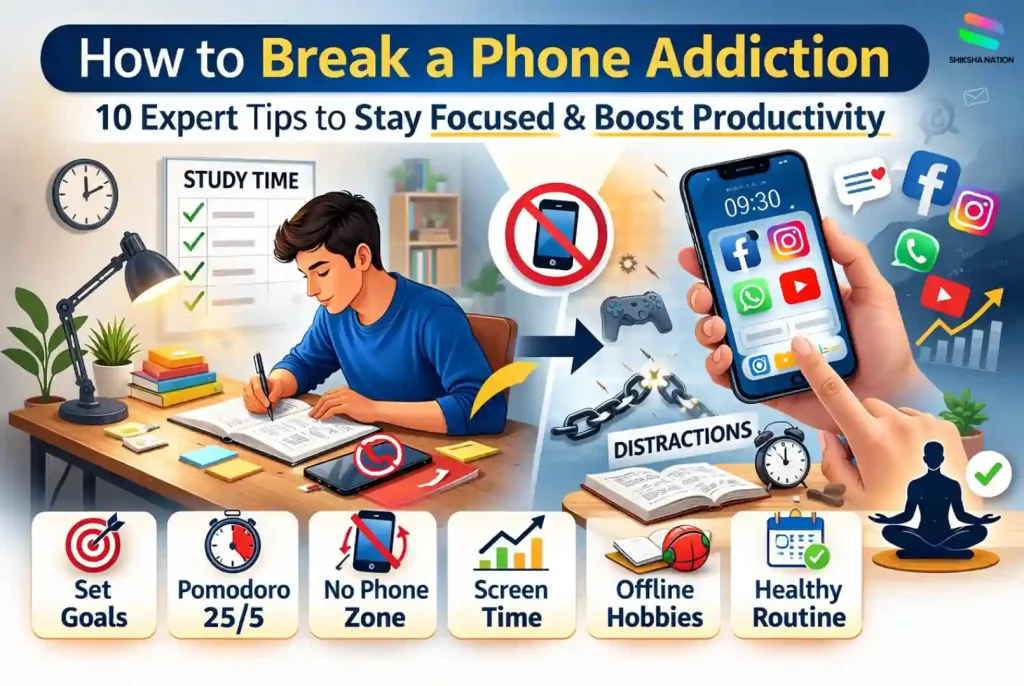
10 Practical Ways to Break a Phone Addiction
Breaking phone addiction does not require extreme changes. Small daily habits can help students regain control over their screen time. The goal is not to completely stop using a phone, but to use it in a more disciplined way.
The following strategies are simple ways to break a phone addiction and improve focus during studies.
Keep Your Phone Away During Study Sessions
One of the easiest ways to reduce distractions is to keep the phone away from your study table.
Students can:
- Keep the phone in another room
- Place it inside a drawer or bag
- Use silent mode during study time
When the phone is not within reach, the temptation to check it reduces naturally.
Turn Off Non-Essential Notifications
Many distractions come from constant notifications.
Students can control this by:
- Turning off alerts from social media apps
- Disabling unnecessary app notifications
- Keeping only important calls or messages active
This simple step helps control mobile addiction and reduces unnecessary interruptions.
Use the 25-Minute Study Rule (Pomodoro)
Studying continuously for long hours can feel tiring. The Pomodoro technique helps maintain focus.
Students can try this method:
- Study for 25 minutes without using the phone
- Take a 5-minute break afterwards
- Repeat the cycle 3–4 times
This approach trains the brain to focus better.
Set Daily Screen-Time Limits
Most smartphones now show how much time you spend on apps each day.
Students can:
- Check their daily screen-time report
- Set limits for social media or gaming apps
- Reduce usage gradually each week
This method helps students learn how to reduce phone usage in a practical way.
Avoid Social Media Before Bed
Using phones before sleeping is a common habit among teenagers.
To improve sleep quality, students can:
- Stop using social media at least 30–45 minutes before bed
- Keep the phone away from the bed
- Read a book or revise notes instead
Parents can also encourage a healthy night routine at home.
Replace Phone Time With Offline Activities
Simply removing phone time may create boredom. Instead, students should replace it with useful activities.
Examples include:
- Reading books or magazines
- Playing outdoor sports
- Drawing, writing, or creative hobbies
These activities help reduce the urge to constantly check the phone.
Create Phone-Free Study Zones
Designating certain places as phone-free zones can improve discipline.
Students may choose:
- Study desk
- Library or study room
- Coaching classroom
When phones are not allowed in these spaces, focus naturally improves.
Track Your Screen Time Weekly
Awareness is the first step to change.
Students can:
- Check weekly screen-time reports
- Identify apps that consume the most time
- Reduce usage of those apps gradually
Tracking helps students understand how to stop addiction to phone step by step.
Use Phone Only During Breaks
Phones do not have to be avoided completely. Instead, they should be used at fixed times.
A simple rule can help:
- No phone during study sessions
- Phone allowed only during short breaks
This keeps the mind disciplined while studying.
Build Strong Study Habits
Strong study routines naturally reduce unnecessary phone use.
Students can develop habits such as:
- Fixed daily study schedule
- Clear goals for each study session
- Planned breaks instead of random phone checking
When students build good study discipline, how to control mobile addiction becomes much easier over time.
How Students Can Avoid Using Phone Too Much While Studying
Many students start studying with good intentions but end up checking their phones repeatedly. Even a quick look at notifications can break concentration and make it difficult to return to the same level of focus.
Learning how to avoid using phone too much during study time can greatly improve productivity. With a few simple adjustments in study habits and environment, students can stay more focused and complete their tasks more efficiently.
Create a Distraction-Free Study Environment
A clean and quiet study space helps the brain concentrate better. When fewer distractions are present, it becomes easier to stay focused.
Students can improve their study environment by:
- Keeping only necessary books and stationery on the desk
- Avoiding background distractions like television or loud music
- Studying in a calm place such as a study room or library
Parents can also help by encouraging a quiet environment at home during study hours.
Study in Fixed Time Blocks
Long study sessions can sometimes make students feel tired or bored, which increases the urge to check the phone.
Studying in shorter, planned blocks can help maintain focus:
- Study for 30–40 minutes with full attention
- Take a short break of 5–10 minutes
- Repeat the cycle for multiple sessions
This method helps students understand how to focus on studies without phone interruptions.
Keep Phone in Another Room
One of the simplest ways to avoid distractions is to keep the phone away from the study area.
Students can try these small steps:
- Leave the phone in another room while studying
- Keep it inside a bag or drawer during study sessions
- Ask a family member to hold the phone for some time
These small habits can make a big difference for students trying to learn how to get rid of phone addiction while studying.
Tips for Parents to Help Children Reduce Phone Addiction
Parents play an important role in helping children build healthy phone habits. Many students are still learning how to manage their time, so guidance from parents can make a big difference.
Instead of completely banning phones, it is more effective to teach children responsible use. With supportive guidance and clear routines, parents can help their children understand how to get rid of mobile phone addiction gradually.
Set Clear Family Screen-Time Rules
Children often follow the habits they see at home. Setting simple family rules can help maintain screen time control.
Parents can try:
- Fixing specific hours for phone use
- Avoiding phones during meals and family time
- Keeping phones away during study hours
Consistent rules help children develop discipline over time.
Encourage Offline Activities and Hobbies
When children spend too much time on phones, it usually means they lack engaging offline activities.
Parents can encourage:
- Outdoor sports or physical activities
- Reading books or creative hobbies
- Art, music, or learning new skills
These activities keep children mentally active and reduce unnecessary phone usage.
Monitor Study Time and Phone Use
Parents should stay aware of how children balance studies and phone use.
Helpful practices include:
- Checking if phones are used during study sessions
- Discussing daily study goals with children
- Encouraging breaks without phone distractions
When parents show interest and support, children are more likely to develop healthier digital habits.
How Long Does It Take to Break a Phone Addiction?
Many students wonder how long does it take to break a phone addiction. The answer is different for everyone, because habits develop over time and need gradual effort to change.
Research on habit formation suggests that new routines usually take around 21 to 30 days to become stable. This means students who consistently reduce phone use for a few weeks can start building healthier study habits.
However, the process is not always easy. Some students may feel tempted to check their phones again, especially during free time or study breaks.
Why Consistency Matters
Breaking phone addiction depends more on daily consistency than strict rules.
Students can improve their habits by:
- Reducing phone use step by step instead of stopping suddenly
- Setting clear study hours without phone distractions
- Following a fixed daily routine
Many students ask how hard is it to break a phone addiction. It can feel difficult in the beginning, but small daily changes make the process easier.
With patience and discipline, students gradually learn to control their phone habits and focus better on studies.
FAQs on Phone Addiction
Q. What is the best way to break a phone addiction?
The best way to break a phone addiction is to reduce usage gradually and build better daily habits. Students can start by keeping their phone away during study time, turning off unnecessary notifications, and setting clear screen-time limits. Small and consistent changes are more effective than trying to stop phone use suddenly.
Q. How can students control mobile addiction?
Students can control mobile addiction by creating disciplined study routines. Helpful steps include keeping the phone away from the study table, studying in fixed time blocks, and using the phone only during breaks. These habits reduce distractions and help students stay focused on learning.
Q. Is phone addiction common in teenagers?
Yes, phone addiction has become quite common among teenagers. Social media, gaming, and short video platforms attract a lot of attention and make students spend more time on their phones. Parents and teachers often notice that excessive phone use affects study time and sleep patterns.
Q. How can I stay away from my phone while studying?
To stay away from phone distractions while studying, students can keep their phone in another room or switch it to silent mode. Studying in a quiet environment and setting clear study goals also helps reduce the urge to check the phone repeatedly.
Q. Can reducing screen time improve concentration?
Yes, reducing screen time can significantly improve concentration. When students limit unnecessary phone usage, their minds become calmer and more focused. This allows them to understand concepts better and complete study tasks more efficiently.
Q. How do I quit phone addiction gradually?
Students who want to quit phone addiction should begin with small steps. They can track their daily screen time, reduce social media usage, and replace phone time with productive activities such as reading, exercising, or revising lessons.
Q. How can parents help children reduce phone addiction?
Parents can guide children by setting clear screen-time rules at home. Encouraging outdoor activities, monitoring study routines, and having open conversations about responsible phone use can help children develop balanced digital habits.
Q. How can I stop checking my phone repeatedly?
To stop a phone addiction habit like constant checking, students should remove triggers such as notifications and social media alerts. Keeping the phone out of reach during important tasks helps break the habit of checking it frequently.
Q. Can phone addiction affect exam preparation?
Yes, excessive phone use can disturb exam preparation. Constant distractions reduce study focus and waste valuable revision time. Students who manage their phone usage properly often find it easier to concentrate and prepare effectively for exams.