What Are Democratic Rights?
Many students studying civics often ask what are democratic rights and why they are important in a democracy. Democratic rights are the basic freedoms and protections that citizens receive in a country where people elect their government.
These rights allow individuals to participate in public life, express their opinions, and live with dignity. Without these rights, people cannot freely take part in decision-making or hold leaders accountable.
In simple terms, people’s democratic rights make sure that power does not stay with a few people. Instead, citizens get a voice in how their country is governed.
Why Democratic Rights Exist
Democratic rights exist to protect citizens and maintain fairness in society. They ensure that governments follow laws and respect the voices of the people.
For students and parents, this means that everyone has equal protection under the system, regardless of background, religion, or social status.
These rights also encourage active citizen participation, which is a key feature of any democracy.
Examples of Democratic Rights
Some common examples of democratic rights include:
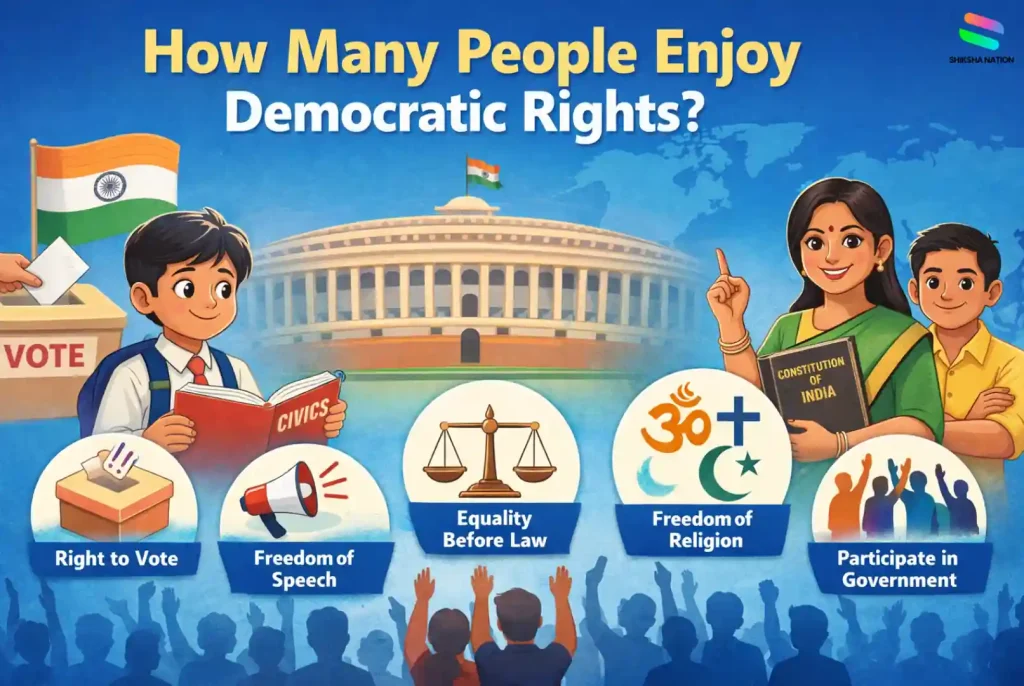
- Right to vote: Citizens can choose their leaders through elections.
- Freedom of speech: People can express their opinions and ideas openly.
- Equality before law: Every citizen is treated equally by the legal system.
- Freedom to participate in public life: Citizens can join political activities or discussions.
Together, these rights help build a system where people can live with freedom, fairness, and equal opportunities.
How Many People Enjoy Democratic Rights in the World?
Many students wonder how many people enjoy democratic rights across the world. The answer depends on how many countries follow a democratic system where citizens can elect their leaders and participate in decision-making.
Today, democracy exists in many parts of the world, but not every country follows it fully. In democratic nations, citizens have the freedom to vote, express opinions, and take part in political processes.
Number of Democracies in the World
Experts and global reports suggest that there are around 140 countries practicing democracy in some form. However, the strength of democracy can vary from country to country.
Some countries have strong democratic systems with regular elections and strong institutions. Others may have limited democratic practices where certain freedoms are restricted.
Because many countries follow democratic governance, billions of people across the world enjoy democratic rights such as voting, free expression, and legal equality.
Countries Without Full Democratic Rights
Even though democracy is common, some countries still have restricted political systems.
In such places:
- Elections may not be free or fair
- People may not be able to criticize the government openly
- Political opposition may face restrictions
This means that while a large part of the global population enjoys democratic rights, not everyone in the world has the same level of freedom and participation in government.
How Many People Enjoy Democratic Rights in India?
India is often called the world’s largest democracy because a very large number of citizens take part in elections and public decision-making. When students ask how many people enjoy democratic rights in India, the answer is simple – every adult citizen of the country has these rights.
India follows the principle of universal adult franchise, which means every citizen aged 18 or above can vote in elections. This system ensures that people from different regions, religions, and communities have an equal say in choosing their leaders.
Equal Voting Rights for Citizens
One important reason India is a democratic country because people enjoy equal political rights. Every voter’s vote has the same value.
This means:
- Citizens can vote in Lok Sabha and state elections
- People can choose their representatives
- Governments are formed based on the choice of the public
Through this system, millions of Indians participate in democratic processes.
Democratic Rights in India
Apart from voting, democratic rights in India are also protected by the Constitution.
Some important examples include:
- Right to vote in elections
- Freedom of speech and expression
- Equality before the law
- Right to participate in public discussions and governance
For students and parents, this means that citizens have both rights and responsibilities in maintaining democracy. Active participation and awareness help keep democratic values strong in the country.
What Are the Rights We Enjoy in a Democratic Country?
Many students ask what are the rights we enjoy in a democratic country while studying civics. In a democracy, citizens are given certain freedoms that allow them to live with dignity and participate in public life.
These rights protect people from unfair treatment and give them the ability to take part in decisions that affect society. Understanding what are the democratic rights we enjoy today helps students see how democracy works in everyday life.
Below are some common examples of democratic rights that citizens enjoy in democratic countries.
Right to Vote
The right to vote allows citizens to choose their leaders through elections. In democratic countries, adults can vote for representatives in national or state elections. This ensures that governments are formed based on the will of the people.
Freedom of Speech and Expression
Citizens have the freedom to express their thoughts, opinions, and ideas without fear. For students and parents, this means people can discuss social issues, share opinions, and participate in public debates.
Equality Before Law
In a democracy, everyone is treated equally under the law. Whether a person is rich or poor, the legal system must treat all citizens fairly.
Freedom of Religion
People are free to follow the religion of their choice. They can practice their beliefs, celebrate festivals, and follow traditions without interference.
Right to Participate in Government
Citizens can take part in political activities and decision-making processes. This includes voting, joining political groups, and expressing views on government policies. These rights help people actively shape the future of their country.
Rights People Do Not Enjoy in Non-Democratic Countries
To understand democracy better, students should also learn about rights people do not enjoy in non democratic countries. In such systems, power is usually controlled by a small group, a single leader, or the military.
Because of this, citizens may not have the same freedoms that people enjoy in democratic nations. This difference helps explain the difference between democratic and non democratic rights.
No Free Elections
In many non-democratic countries, citizens do not have the opportunity to choose their leaders through fair elections.
Sometimes elections are not held regularly, or people are forced to support only one political party. As a result, ordinary citizens have little influence over government decisions.
Limited Freedom of Speech
Another major restriction is the lack of free expression.
In these countries, people may not be allowed to criticize the government openly. Speaking against authorities can sometimes lead to punishment or strict action. This is one of the important freedom people do not enjoy in non democratic countries.
Restricted Political Participation
Citizens may also have limited opportunities to participate in political activities.
For example:
- Political opposition may not be allowed
- Independent organizations may face restrictions
- Public discussions about government policies may be controlled
For students and parents, understanding these differences helps highlight why democratic systems focus on protecting citizens’ rights and freedoms.
Why Democratic Rights Are Important for Citizens
Understanding the importance of democratic rights helps students see how democracy protects people in everyday life. These rights give citizens the freedom to participate in society and ensure that governments work for the public.
When people have rights, they can share their opinions, vote for leaders, and raise their voices if something is unfair. This explains why democratic rights are important for citizens in any democratic country.
Citizen Participation
Democratic rights allow citizens to take part in the political process.
For example:
- Voting in elections
- Sharing opinions on public issues
- Participating in community discussions
This participation helps governments understand the needs of the people.
Protection From Misuse of Power
Democratic rights protect citizens from unfair actions by those in authority.
Laws and institutions ensure that leaders cannot easily misuse their power or take decisions without public accountability.
Equality and Justice
Another reason why democracy is important is that it promotes fairness in society.
In a democracy:
- Every citizen is treated equally under the law
- Justice is available to all people
- Discrimination based on caste, religion, or gender is not allowed
Accountability of Government
Democratic rights make governments responsible to the people.
Through elections and public discussion, citizens can question policies and demand better governance. This system encourages leaders to act in the interest of society.
Short Answer – How Many People Enjoy Democratic Rights?
Many students search for a short answer how many people enjoy democratic rights while preparing for civics exams or completing homework. The idea is simple and focuses on how democracy works in different countries.
Around the world, billions of people enjoy democratic rights because many countries follow democratic systems. In these nations, citizens have the power to elect their leaders through regular elections.
Some important features of this system include:
- Citizens can vote to choose their government
- People can express opinions and discuss public issues
- Laws ensure equal rights and legal protection
A clear example is India, which is known as the world’s largest democracy. In India, every adult citizen aged 18 or above has the right to vote, regardless of religion, caste, gender, or background.
For students, this means democratic rights allow people to take part in governance and help shape the future of their country through participation and responsible citizenship.
FAQs on Democratic Rights
Q. What are democratic rights in simple words?
Democratic rights are the basic freedoms given to citizens in a democratic country. These rights allow people to vote, express opinions, and live with equality under the law. They ensure that citizens can participate in decisions that affect society.
Q. How many people enjoy democratic rights in the world?
Billions of people enjoy democratic rights because many countries follow democratic systems. In these nations, citizens can vote, participate in elections, and express their views on public issues. However, some countries still have limited democratic freedoms.
Q. Why do people enjoy democratic rights in India?
People enjoy democratic rights in India because the country follows a democratic constitution and the principle of universal adult franchise. This means every adult citizen has the right to vote and participate in choosing the government.
Q. What are examples of democratic rights in India?
Some common examples of democratic rights in India include the right to vote in elections, freedom of speech and expression, equality before the law, and freedom to follow any religion. These rights are protected by the Constitution of India.
Q. What is the difference between democratic and non-democratic rights?
The difference between democratic and non democratic rights is mainly about freedom and participation. In democratic countries, citizens can vote, speak freely, and question the government. In non-democratic systems, these freedoms may be restricted or controlled.
Q. Why is democracy important for citizens?
Democracy is important because it allows citizens to choose their leaders and participate in decision-making. It also protects people from misuse of power and ensures fairness in governance.
Q. Do all countries provide democratic rights?
No, not all countries provide full democratic rights. Some countries have political systems where citizens have limited freedom to vote or express their opinions.
Q. At what age can citizens use democratic rights like voting in India?
In India, citizens can start voting when they turn 18 years old. This right allows young adults to participate in elections and contribute to the democratic process.