

Many students and parents often ask how many calories in an apple, especially when choosing healthy daily snacks. An apple is a simple fruit, but it gives energy without being heavy on the stomach. On average, the calories in 1 apple are low compared to packaged snacks, which makes it a safe choice for school-going children.
For students, an apple helps keep energy levels steady during study hours. For parents, it is an easy and natural option to include in a child’s routine without worrying too much about excess calories.
How Many Calories Are There in One Apple?
The calories in one apple mainly depend on its size. When people say “one apple,” they usually mean a medium-sized apple that fits easily in the hand. This type of apple gives a moderate amount of energy and is light on the stomach.
For students, apple calories are enough to support focus during classes or self-study without making them feel lazy or full. Parents often prefer apples because they are natural, easy to carry, and do not add unnecessary calories like many packed snacks.

It is also important to remember that very small apples and very large apples will not have the same calorie value. So, whenever you hear “one apple,” think of an average medium apple, not an extra-large or tiny one.
Calories in 1 Apple Based on Size
The calories in 1 apple are not the same for every apple. Size matters. A small apple gives less energy, while a large apple gives more. This helps students and parents choose the right portion based on age and hunger.
| Apple Size | Approximate Calories |
| Small apple | 70–80 calories |
| Medium apple | 90–100 calories |
| Large apple | 110–120 calories |
For younger children, a small or medium apple is usually enough. Older students may prefer a medium or large apple, especially during long study hours.
Calories in 1 Apple With Skin vs Without Skin
Many parents and students wonder whether eating an apple with the skin changes its calorie value. The calories in 1 apple with skin are slightly higher because the skin adds natural fibre and nutrients, even though the difference is not very big.
When the apple is peeled, the calories in 1 apple without skin reduce a little. However, peeling also removes most of the fibre, which helps in digestion and keeps students feeling full for longer during school or study time.
For parents, giving an apple with skin is usually better if the fruit is washed properly. For younger children who find the skin hard to chew, peeled apple is also fine and still provides energy.
Apple Nutrition Per 100g (Easy Breakdown)
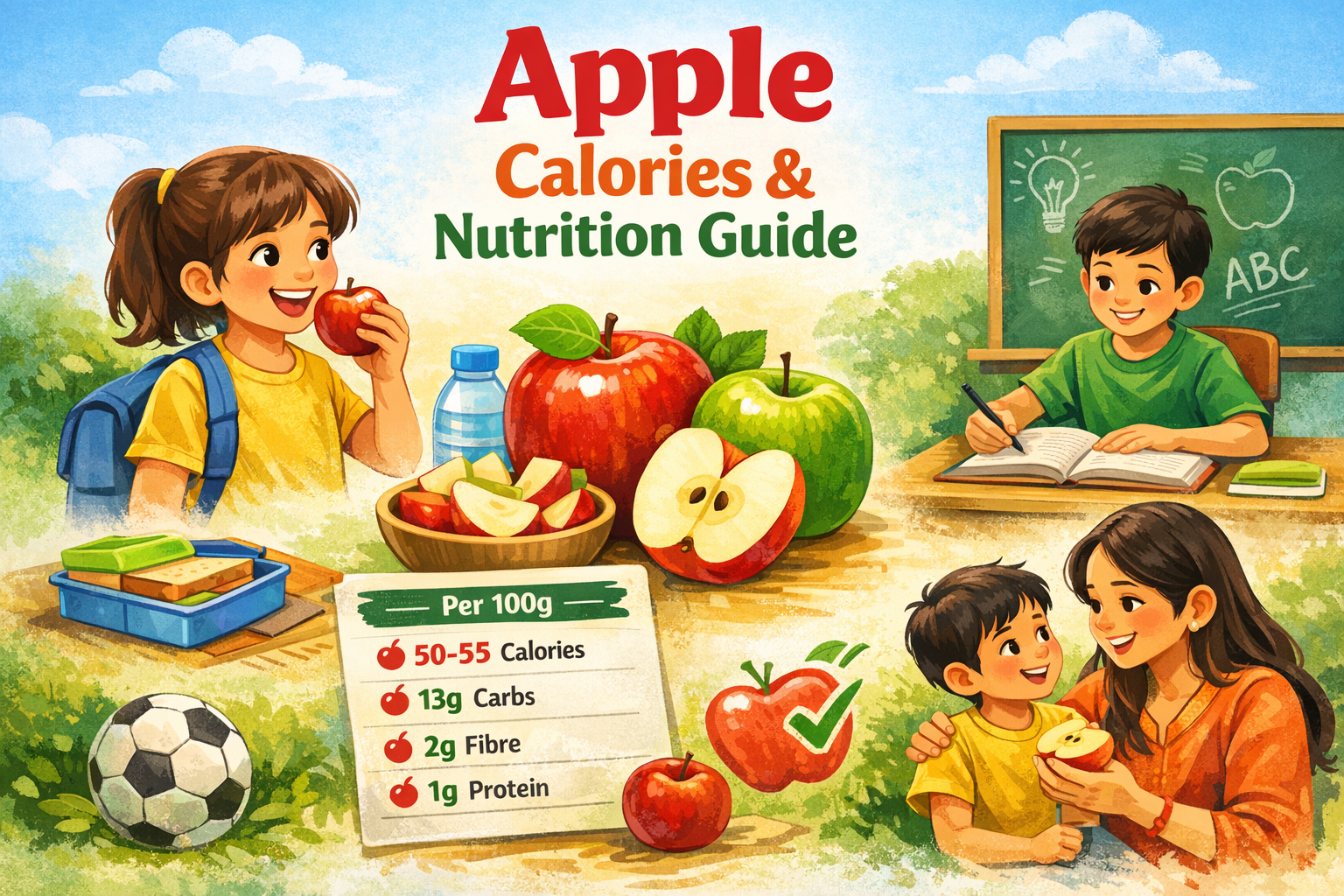
Understanding apple nutrition per 100g helps students and parents compare apples with other everyday foods. Using 100 grams makes it simple, as the size of apples can vary. On average, 100g apple calories are low, which makes apples a light and balanced food.
| Nutrient (per 100g apple) | Approximate Value |
| Calories | 50–55 |
| Carbohydrates | 13–14 g |
| Natural sugars | 10–11 g |
| Fibre | 2–3 g |
| Protein | Less than 1 g |
For students, this nutrition gives steady energy without heaviness. For parents, it shows why apples are often suggested as a regular fruit, as they provide useful nutrients in a simple and natural form.
Nutritional Value of Apple for Students
The nutritional value of apple makes it a useful fruit for growing students. Apples give natural energy that helps children stay active in school and focused during study time. They are easy to eat and do not feel heavy.
Most of this energy comes from apple carbs, which provide quick fuel for the brain and body. Along with this, 1 apple protein is present in a small amount, supporting basic growth needs without overloading the body.
For parents, apples are a safe daily option because they support learning and digestion in a simple way. For students, eating an apple between classes or study breaks can help maintain energy without distraction.
Is an Apple a Healthy Daily Snack for Children?
Yes, an apple can be a healthy daily snack for most children when given in the right amount. It is easy to eat, simple to carry to school, and does not require cooking or packing effort.
From a parent’s view, apple calories are moderate and come from natural sources, not added sugar. This makes apples a better choice than many packed snacks that children often eat during breaks.
For students, an apple helps control hunger between meals and supports steady energy during classes. Younger children can have a small apple or half portion, while older students can manage a full apple based on their appetite.
Half Apple Calories – For Younger Children
For younger children, a full apple may feel too much at one time. In such cases, half apple calories are easier to manage and still give enough energy for play and learning.
Parents can give half an apple during school breaks or in the evening. It keeps the child satisfied without overeating and helps build a healthy eating habit from an early age.
FAQs on Apple Calories and Nutrition
Q. Does eating an apple daily add extra calories?
For most children and students, eating one apple daily does not add unwanted calories. When eaten in a normal portion, it fits well into a balanced routine and supports daily energy needs.
Q. How many calories are in a green apple?
A green apple has almost the same calorie value as other apples of similar size. The colour or taste does not change the energy it provides to the body.
Q. Is apple better than packaged snacks for school?
Yes, an apple is usually a better choice than packaged snacks. It is natural, easy to digest, and does not contain added flavours or preservatives that many packed foods have.
Q. How many apples can a child eat in a day?
Most children can eat one apple in a day without any problem. Younger children may prefer half an apple, while older students can manage a full apple based on their hunger.
Q. Does apple help with digestion and energy?
Apples contain natural fibre that supports smooth digestion. They also provide steady energy, helping students stay active in class and focused during study hours.
Q. Are apples suitable for children trying to stay active?
Yes, apples are suitable for active children. They provide natural energy without making the body feel heavy, which is helpful for sports and outdoor play.
Q. Is one apple a day too much sugar for children?
The sugar in apples is natural and comes along with fibre. When eaten in moderation, one apple a day is safe for most children and does not cause sudden energy drops.