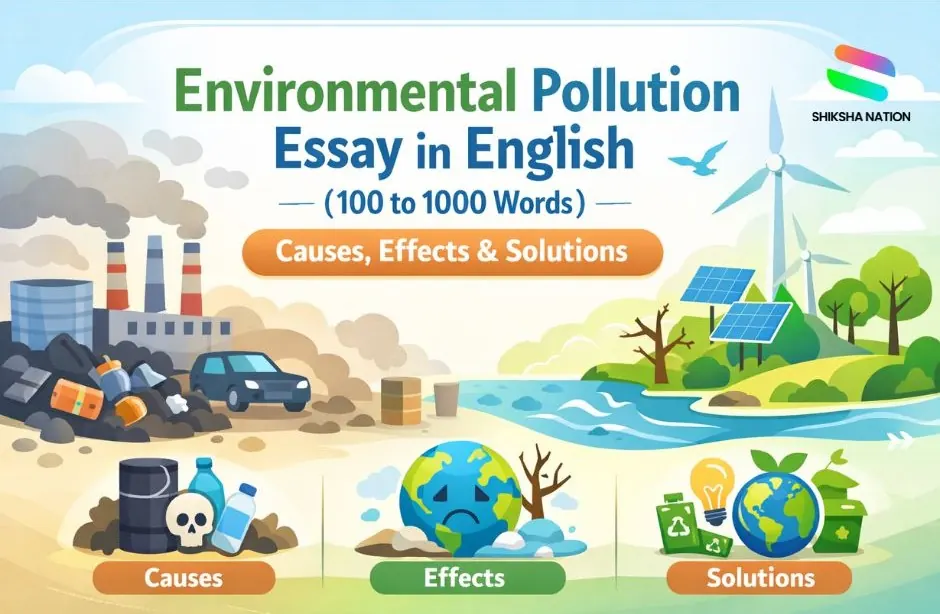
Environmental Pollution Essay (100 to 1000) Words
Environmental Pollution Essay (100 Words)
Environmental pollution is one of the major problems affecting our planet today. It occurs when harmful substances like smoke, chemicals, plastic waste, and toxic gases enter the natural environment. Pollution mainly affects the air, water, and land, disturbing the balance of the ecosystem.
Air pollution is caused by vehicle emissions and factory smoke, while water pollution happens when waste and chemicals are dumped into rivers and oceans. Land pollution is mostly due to plastic waste and garbage.
Environmental pollution leads to serious issues such as global warming, climate change, and loss of biodiversity. If people do not take care of nature, the problem will become more serious in the future. Protecting the environment is everyone’s responsibility.
Environmental Pollution Essay (150 Words)
Environmental pollution refers to the contamination of the natural environment by harmful substances. It affects the air, water, and soil, which are essential for life on Earth. Human activities such as industrialization, urbanization, and excessive use of natural resources are major causes of pollution.
There are different types of pollution, including air pollution, water pollution, soil pollution, and noise pollution. Air pollution is mainly caused by vehicle emissions, burning fossil fuels, and factory smoke. Water pollution occurs when waste materials, chemicals, and plastic are thrown into rivers, lakes, and oceans.
Environmental pollution can lead to serious problems such as climate change, global warming, respiratory diseases, and damage to ecosystems. Many animals and plants are also affected by polluted environments.
To reduce pollution, people should follow sustainable development practices, plant more trees, reduce plastic usage, and conserve natural resources. Awareness and education about environmental protection is very important for a cleaner and healthier planet.
Essay on Environmental Pollution (200 Words)
Environmental pollution is a serious global issue that affects the health of our planet and all living organisms. It occurs when harmful substances like chemicals, waste materials, and toxic gases enter the environment and disturb the natural balance of ecosystems.
There are several types of pollution, including air pollution, water pollution, land pollution, and noise pollution. Air pollution is mainly caused by industries, vehicles, and burning fossil fuels. Water pollution happens when sewage, plastic waste, and chemicals are discharged into rivers, lakes, and oceans. Land pollution occurs due to improper waste disposal and excessive use of plastic.
Environmental pollution leads to many environmental and health problems. It contributes to global warming, climate change, ozone layer depletion, and biodiversity loss. Polluted air can cause breathing problems and other diseases in humans.
Protecting the environment is very important for sustainable living. People can reduce pollution by planting trees, using renewable energy, recycling waste, and minimizing plastic use. Governments also need to implement strict environmental laws.
Environmental awareness among people is necessary. If everyone makes small efforts, we can reduce environmental pollution and create a healthier environment for future generations. But sometimes people ignore small actions which actually matter a lot.
Essay on Environmental Pollution (250 Words)
Environmental pollution is one of the biggest challenges faced by the modern world. It refers to the introduction of harmful substances into the natural environment, which negatively affects the air, water, land, and overall ecosystem. Pollution has increased rapidly due to industrial growth, urban development, and population expansion.
The major types of pollution include air pollution, water pollution, land pollution, and noise pollution. Air pollution is mainly caused by factory emissions, vehicle smoke, and burning fossil fuels such as coal and petrol. Water pollution happens when industrial waste, sewage, and plastic materials are dumped into rivers, lakes, and oceans. Land pollution occurs due to excessive garbage, chemical fertilizers, and plastic waste.
Environmental pollution has many harmful effects on humans and nature. It contributes to climate change, global warming, soil degradation, and loss of biodiversity. Polluted air can cause respiratory diseases, while contaminated water can spread serious illnesses.
Environmental protection is necessary for maintaining ecological balance. Simple steps such as reducing plastic usage, recycling waste, conserving water, and planting trees can help control pollution. The use of renewable energy sources like solar and wind energy can also reduce environmental damage.
Governments, organizations, and individuals must work together to control pollution and promote sustainable development. Education and awareness programs can encourage people to adopt eco-friendly habits.
If we do not take action now, environmental pollution may become more dangerous in the coming years. Some people still think pollution is not a big problem, but actually it affects everyone.
Essay on Environmental Pollution (350 Words)
Environmental pollution is a major environmental issue that affects both developed and developing countries. It refers to the contamination of natural resources such as air, water, and soil by harmful substances produced through human activities.
Industrialization, urbanization, deforestation, and population growth have increased pollution levels worldwide. The major types of environmental pollution include air pollution, water pollution, land pollution, and noise pollution.
Air pollution is caused by vehicle emissions, industrial smoke, and burning fossil fuels. It releases harmful gases such as carbon dioxide and sulfur dioxide into the atmosphere, contributing to global warming and climate change. Water pollution occurs when sewage, chemicals, and plastic waste are dumped into rivers and oceans. This harms aquatic life and damages marine ecosystems.
Land pollution results from improper waste disposal, excessive use of pesticides, and plastic accumulation. Soil pollution reduces soil fertility and affects agricultural productivity. Noise pollution, often ignored, is caused by traffic, machines, and construction activities, which disturb both humans and animals.
Environmental pollution has serious consequences for human health and biodiversity. Polluted air can cause asthma, lung diseases, and other respiratory problems. Water pollution can spread diseases and threaten aquatic biodiversity.
To reduce environmental pollution, people must adopt sustainable development practices. Recycling, reducing plastic use, conserving water, and using renewable energy sources are effective steps. Governments should also enforce environmental laws and promote eco-friendly technologies.
Public awareness and environmental education are very important. Schools and institutions should teach students about environmental conservation and climate responsibility.
Protecting the environment is not only the duty of governments but also the responsibility of every individual. Small steps like planting trees and reducing waste can make a big difference. Sometimes we think our small actions don’t matter, but they actually help the planet.
Essay on Environmental Pollution (500 Words)
Environmental pollution is one of the most serious challenges facing the modern world. It refers to the contamination of natural resources such as air, water, and soil by harmful substances. Pollution has increased significantly due to rapid industrialization, urbanization, and excessive use of natural resources.
The main types of environmental pollution include air pollution, water pollution, soil pollution, and noise pollution.
Air pollution is caused by vehicle emissions, industrial smoke, burning of fossil fuels, and deforestation. These activities release harmful gases like carbon dioxide and nitrogen oxides into the atmosphere, leading to global warming and climate change.
Water pollution occurs when sewage, chemicals, plastic waste, and industrial effluents enter water bodies such as rivers, lakes, and oceans. This affects aquatic ecosystems and threatens marine biodiversity. Polluted water can also spread diseases among humans.
Land pollution happens when waste materials, plastics, and chemicals accumulate on land. Improper waste management and excessive use of fertilizers contribute to soil degradation. Noise pollution, caused by traffic and industrial machines, also affects human health and wildlife behavior.
Environmental pollution has serious impacts on ecosystems and biodiversity. Many species are becoming endangered due to habitat destruction and pollution. Human health is also at risk, as polluted air and water can cause respiratory diseases, infections, and other health issues.
To control environmental pollution, it is important to adopt environmental protection and sustainable development strategies. People should reduce plastic usage, recycle waste, conserve water, and use renewable energy sources like solar and wind power.
Governments should implement strict environmental policies and encourage industries to adopt eco-friendly technologies. Environmental education and awareness programs can help people understand the importance of protecting nature.
Protecting the environment is a shared responsibility. Every individual should contribute by following eco-friendly habits and supporting environmental conservation. If collective efforts are made, environmental pollution can be reduced and a healthier planet can be created for future generations.
Environmental Pollution Essay (1000 Words)
Environmental pollution is one of the most serious environmental challenges affecting the Earth today. It refers to the contamination of natural resources such as air, water, and soil by harmful substances produced mainly through human activities. Pollution disturbs the natural balance of ecosystems and negatively affects plants, animals, and human life.
Over the past few decades, environmental pollution has increased rapidly due to industrialization, urbanization, population growth, and excessive exploitation of natural resources. These activities release harmful pollutants into the environment, causing damage to ecosystems and biodiversity.
Types of Environmental Pollution
There are several types of environmental pollution that affect the Earth.
Air pollution occurs when harmful gases, dust, and smoke enter the atmosphere. Major sources include vehicle emissions, industrial smoke, burning fossil fuels, and forest fires. Air pollution contributes to climate change, global warming, and respiratory diseases.
Water pollution happens when harmful substances such as chemicals, sewage, oil spills, and plastic waste contaminate water bodies like rivers, lakes, and oceans. This affects aquatic ecosystems and threatens marine biodiversity.
Land pollution occurs due to improper waste disposal, excessive use of pesticides and fertilizers, and accumulation of plastic waste. Soil pollution reduces agricultural productivity and harms microorganisms that maintain soil fertility.
Noise pollution is caused by excessive sound from traffic, industries, and construction activities. It affects human health and disturbs wildlife.
Causes of Environmental Pollution
Several factors contribute to environmental pollution, including:
- Industrial emissions
- Vehicle exhaust gases
- Deforestation
- Plastic waste and improper waste management
- Excessive use of chemical fertilizers and pesticides
- Rapid population growth
Effects of Environmental Pollution
Environmental pollution has many harmful effects on both nature and human health.
It contributes to global warming, climate change, ozone layer depletion, biodiversity loss, and ecosystem imbalance. Polluted air can cause respiratory diseases such as asthma and bronchitis. Contaminated water can spread water-borne diseases.
Environmental pollution also affects wildlife. Many species lose their natural habitats due to pollution and environmental degradation.
Solutions to Environmental Pollution
Reducing environmental pollution requires collective efforts from governments, organizations, and individuals. Some important solutions include:
- Promoting renewable energy sources such as solar and wind power
- Reducing plastic usage and encouraging recycling
- Planting more trees and preventing deforestation
- Implementing strict environmental laws
- Encouraging sustainable development practices
Environmental education also plays a very important role in creating awareness among people.
Conclusion
Environmental pollution is a global problem that requires immediate attention. Protecting the environment is essential for maintaining ecological balance and ensuring a healthy future for coming generations.
Every individual should take responsibility for reducing pollution by adopting eco-friendly habits and supporting environmental conservation efforts. Small actions like saving water, reducing waste, and planting trees can make a big difference.
If society works together, it is possible to control environmental pollution and create a cleaner, greener, and more sustainable world. Sometimes people think their actions are very small, but actually they matter a lot for the planet.
Environmental Pollution Essay related FAQs
1. What is environmental pollution?
Environmental pollution means the contamination of air, water, and land by harmful substances such as smoke, chemicals, plastic waste, and toxic gases. It disturbs the natural balance of the ecosystem and affects living beings.
2. What are the main types of environmental pollution?
The major types of pollution include air pollution, water pollution, land (soil) pollution, and noise pollution. These types of pollution are mostly caused by human activities like industrial work, vehicle emissions, and improper waste disposal.
3. What are the main causes of environmental pollution?
Some common causes of environmental pollution are industrialization, vehicle smoke, plastic waste, deforestation, chemical fertilizers, and population growth. These activities release harmful pollutants into the environment.
4. What are the effects of environmental pollution?
Environmental pollution can cause climate change, global warming, health problems, biodiversity loss, and ecosystem damage. Polluted air and water can also lead to serious diseases in humans.
5. How can we reduce environmental pollution?
We can reduce pollution by planting trees, reducing plastic use, recycling waste, conserving water, and using renewable energy sources like solar and wind power. Small actions from individuals can help protect the environment.