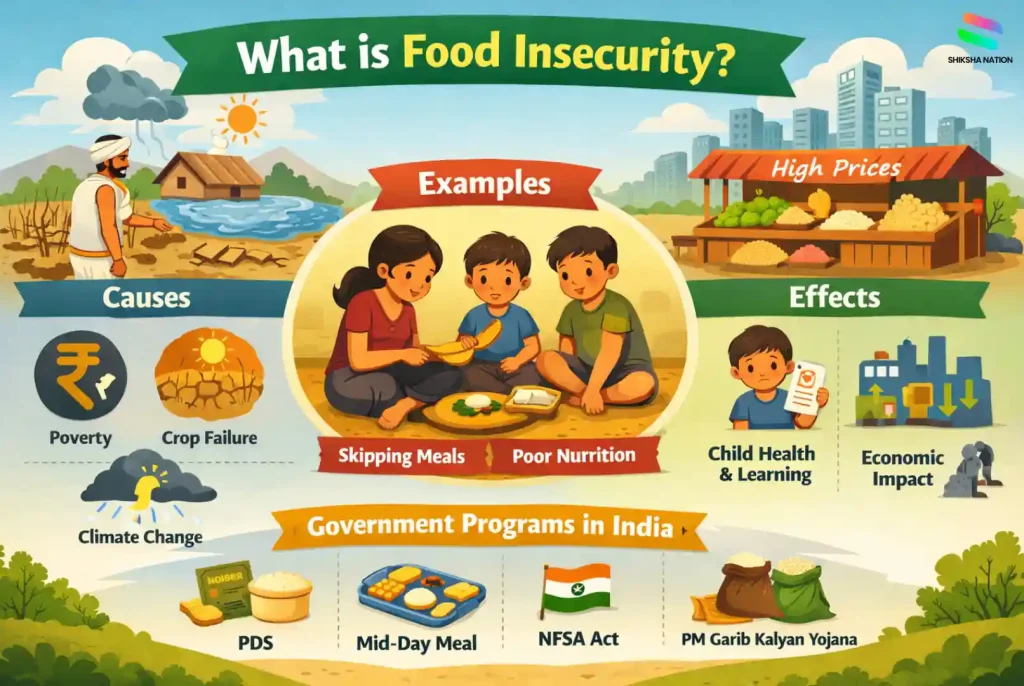
Definition of Food Insecure (Simple Explanation)
Basic Meaning
To understand what is the definition of food insecure, think about a situation where a person or family does not always have enough food to eat. This can happen when food is too expensive, not easily available, or when income is very limited.
In simple words, what is the meaning of food insecure refers to people who cannot regularly access safe, nutritious, and sufficient food required for a healthy life.
For many families, this does not always mean complete hunger. Sometimes it means reducing meal size, skipping meals, or choosing cheaper food that may not provide proper nutrition.
Academic Definition
In economics and social science, the term food insecure describes households that face uncertainty about their ability to obtain adequate food.
This condition is often linked with food poverty, where people cannot afford enough nutritious food because of financial limitations, unemployment, or rising food prices.
Students often study this concept in topics related to food security, poverty, and development, especially in school economics chapters.
Real-Life Understanding
A food insecure household may face daily struggles related to food access.
For example:
- A family may skip one meal to save money.
- Parents may eat less so that children can eat properly.
- Families may depend on cheaper, less nutritious food to manage expenses.
Situations like these help explain what is the definition of food insecure in real life, where food availability is uncertain and nutrition needs are not always fully met.
What Does Food Insecure Mean in Real Life?
Food insecurity is not only a concept from textbooks. In real life, it affects how families eat, how often they eat, and the quality of food they can afford. Many food insecurity examples can be seen in daily life where families struggle to manage basic food needs.
When income is limited and food prices increase, families may have to make difficult choices about meals. This situation is often linked with hunger and poverty, where access to regular and nutritious food becomes uncertain.
Families Skipping or Reducing Meals
One common situation is when families reduce the number of meals they eat in a day.
For example:
- Parents may skip meals so children can eat.
- Families may eat only two meals instead of three.
- Meal portions may become smaller to make food last longer.
These situations are common food insecurity examples in households facing financial difficulties.
Children Not Getting Balanced Nutrition
Food insecurity also affects the quality of food children receive.
In some families:
- Meals may lack fruits, vegetables, or protein-rich foods.
- Children may depend mostly on low-cost foods that fill the stomach but do not provide enough nutrients.
- Over time, this can lead to poverty and malnutrition, which affects health and growth.
Limited Access to Affordable Food
Another real-life issue is the lack of affordable and nutritious food in certain areas.
Families living in poor or remote regions may face problems such as:
- Limited availability of fresh food
- Higher food prices in local markets
- Difficulty in accessing government food support programs
These everyday challenges clearly show how hunger and poverty are closely connected with food insecurity in many communities.
Food Insecurity Examples Students Can Understand
Food insecurity can be easier to understand when we look at situations that happen in real life. Many food insecurity examples are connected with income problems, rising food prices, or unexpected financial challenges. These situations show how food insecurity and poverty are often closely related.
Below are some simple examples that students can easily understand.
Rural Families Facing Crop Loss
In many villages, families depend on farming for both income and food. If crops fail due to drought, floods, or pest attacks, the family may lose their main source of food and earnings.
As a result:
- The household may struggle to buy food from the market.
- Meals may become smaller or less frequent.
- Families may rely on government ration support.
This is a common example of food insecurity in rural areas.
Urban Families Struggling With High Food Prices
Food insecurity is not limited to villages. It can also affect families living in cities.
For example:
- A daily wage worker may lose income due to job instability.
- Rising food prices may make basic items like vegetables, milk, and grains difficult to afford.
- Families may start buying cheaper but less nutritious food.
These situations show how food insecurity and poverty can affect urban households as well.
Children Facing Nutritional Deficiencies
Sometimes children may get enough food to fill their stomach but not enough nutrients for proper growth.
For example:
- Lack of protein-rich foods like eggs or pulses
- Limited access to fruits and vegetables
- Irregular meal patterns
Such food insecurity examples can lead to nutritional deficiencies that affect children’s health, learning ability, and overall development.
What Causes Food Insecurity?
Understanding what causes food insecurity helps students see why many families struggle to get enough nutritious food. Food insecurity does not happen because of a single reason. It usually occurs due to economic, environmental, and social challenges.
Several issues related to poverty and hunger together create situations where people cannot regularly access healthy food.
Poverty and Low Income
One of the biggest reasons behind food insecurity is poverty. When families earn very little, most of their income goes toward basic needs like rent, electricity, and transport.
As a result:
- There may not be enough money left to buy nutritious food.
- Families may choose cheaper food items instead of balanced meals.
- Children may not always get proper nutrition.
This is why poverty is strongly connected with hunger and food insecurity.
Food Shortages and Supply Problems
Another important factor is the causes of food shortage in certain regions. When food production or distribution is disrupted, availability becomes limited.
Common reasons for food scarcity include:
- Poor agricultural production
- Transportation problems
- Disruptions in food supply chains
When food supply becomes limited, prices increase and poorer families struggle to buy enough food.
Natural Disasters and Climate Change
Natural events can also affect food production and supply.
For example:
- Floods may destroy crops.
- Droughts can reduce agricultural output.
- Extreme weather conditions may damage farmland.
These environmental challenges can lead to temporary or long-term food insecurity in affected regions.
Rising Food Prices
Food prices often increase due to inflation, fuel costs, or supply shortages. When prices rise quickly, low-income families are affected the most.
For many households:
- Basic food items become difficult to afford.
- Families may reduce meal quantity or quality.
- Long-term nutrition problems may develop.
These economic pressures are important factors that explain what causes food insecurity in many parts of the world.
Effects of Food Insecurity on People and Society
Food insecurity affects more than just daily meals. It can influence health, education, and overall quality of life. The effects of food insecurity are often long-term and can impact both individuals and communities.
When families struggle to get enough nutritious food, the problem is closely linked with hunger and poverty, which can create serious challenges for society.
Health and Malnutrition
One of the most serious effects of food insecurity is poor health. When people do not get balanced nutrition, their bodies may not receive the vitamins and minerals needed for proper functioning.
This can lead to problems such as:
- Weak immunity and frequent illness
- Low energy levels
- Growth problems in children
Over time, food insecurity can increase cases of poverty and malnutrition, especially in low-income communities.
Impact on Children and Students
Children are among the most affected when families face food insecurity.
Some common impacts include:
- Difficulty concentrating in school
- Low energy during classes or activities
- Slower physical and mental development
From a student perspective, proper nutrition is important for learning, memory, and overall academic performance.
Economic and Social Impact
Food insecurity also affects communities and economies. When large numbers of people struggle with hunger and poverty, productivity and development can slow down.
For example:
- Poor health can reduce a person’s ability to work.
- Families may spend most of their income on basic food needs.
- Communities may face long-term social and economic challenges.
These wider consequences show how the effects of food insecurity go beyond individual households and influence society as a whole.
Food Insecurity vs Food Scarcity (Key Difference)
Students often confuse the terms food insecurity and food scarcity. Although both are related to food problems, they do not mean the same thing. Understanding the difference helps explain how food challenges affect people and communities.
The main point in food insecurity vs food scarcity is whether the issue is about access to food or availability of food.
| Term |
Meaning |
| Food Insecurity |
A situation where people do not have regular access to enough safe and nutritious food for a healthy life. |
| Food Scarcity |
A situation where there is an overall shortage of food supply in a region or country. |
Food Insecurity: Problem of Access
Food insecurity happens when food is available in markets, but some families cannot afford or access it.
For example:
- A low-income family may not be able to buy enough vegetables, milk, or grains.
- Rising food prices can make healthy food difficult to afford.
In such cases, the food exists in the market, but not everyone can access it.
Food Scarcity: Problem of Supply
Food scarcity occurs when the total supply of food becomes limited.
Common reasons for food scarcity include:
- Crop failures due to drought or floods
- Poor agricultural production
- Disruptions in food distribution systems
In simple terms, food insecurity is about unequal access, while food scarcity is about insufficient supply of food.
Food Security in India and Government Efforts
India has made several efforts to reduce hunger and food insecurity by improving access to affordable food. The government runs multiple welfare programs that help low-income families receive essential food items at subsidized rates.
These programs play an important role in improving food security in India, especially for families affected by food poverty and limited income.
Public Distribution System (PDS)
The Public Distribution System (PDS) is one of the oldest food support programs in India.
Through this system:
- Eligible families receive essential grains like rice, wheat, and sometimes sugar at lower prices.
- Ration shops are set up across villages and cities to distribute these items.
For many households, PDS helps ensure basic food availability every month.
National Food Security Act (NFSA)
The National Food Security Act, introduced in 2013, aims to make access to food a legal right for many citizens.
Under this act:
- A large portion of the population can receive subsidized food grains.
- Special focus is given to women, children, and economically weaker families.
This law strengthened the country’s efforts to reduce hunger and food insecurity.
Mid-Day Meal Scheme
The Mid-Day Meal Scheme supports school children by providing free meals during school hours.
This program helps in two important ways:
- Encourages children to attend school regularly
- Improves nutrition among students from low-income families
For many children, this meal contributes significantly to their daily nutrition.
PM Garib Kalyan Anna Yojana
The PM Garib Kalyan Anna Yojana was launched to support vulnerable families during difficult economic periods.
Through this scheme:
- Additional free food grains are distributed to eligible households.
- Families facing food poverty receive extra support during crises.
Such initiatives show how government programs contribute to strengthening food security in India.
Why Students Learn About Food Security in School
Food security is an important topic in school because it helps students understand real social and economic challenges. Many education boards include this topic to explain issues related to poverty and hunger in society.
In Class 9 Economics, students study the chapter Food Security in India. This lesson explains how food availability, government policies, and income levels affect people’s ability to access nutritious food.
Understanding Social and Economic Problems
Through this topic, students learn how hunger and poverty are connected to development and living conditions.
For example:
- Why some families struggle to afford enough food
- How poverty affects nutrition and health
- What steps governments take to improve food access
This knowledge helps students understand how economic policies and welfare programs work in real life.
Building Awareness and Social Understanding
Learning about food security also helps students develop awareness about social challenges.
It encourages them to:
- Understand the reality of issues related to poverty and hunger
- Think about solutions for reducing hunger
- Become responsible and informed citizens in the future.
Key Points to Remember
Here are the most important points students should remember about food insecurity. These quick notes help in revision and understanding the concept clearly.
- Definition: Food insecurity refers to a situation where individuals or families do not have regular access to enough safe and nutritious food needed for a healthy life.
- Causes: Common reasons include low income, unemployment, food supply problems, natural disasters, and rising food prices.
- Effects: Food insecurity can lead to poor health, malnutrition, reduced learning ability in children, and long-term social challenges.
- India Context: In India, government programs like the Public Distribution System and school meal schemes help support families and reduce hunger.
Understanding these points helps students connect food security with poverty, development, and social welfare policies.
FAQs on Food Insecurity
Q. What is the meaning of food insecure?
The term food insecure describes a situation where a person or family does not have regular access to enough safe and nutritious food needed for a healthy life. This may happen because of low income, high food prices, or limited food availability. Food insecurity does not always mean complete hunger, but it often means uncertainty about getting proper meals every day.
Q. What causes food insecurity?
Several factors explain what causes food insecurity. The most common reasons include poverty, unemployment, rising food prices, natural disasters, and disruptions in food supply. When families do not have enough income or when food becomes too expensive, it becomes difficult for them to maintain regular and nutritious meals.
Q. What are common food insecurity examples?
Some common food insecurity examples include families skipping meals, reducing portion sizes, or buying cheaper food with low nutritional value. In some households, parents may eat less so that children can eat properly. These situations show how limited income and high food costs affect access to healthy food.
Q. What is the difference between food insecurity and food scarcity?
The difference between food insecurity and food scarcity lies in access and availability. Food insecurity occurs when people cannot afford or access nutritious food regularly. Food scarcity, on the other hand, refers to a shortage of food supply in a region due to factors like crop failure, poor production, or natural disasters.
Q. How does food insecurity affect children?
Food insecurity can affect children’s physical growth, energy levels, and ability to concentrate in school. Lack of proper nutrition may lead to health problems and reduced learning performance. This is why nutrition programs and school meal schemes are important for supporting students from low-income families.
Q. What is food security in India?
Food security in India refers to ensuring that all citizens have access to sufficient, safe, and nutritious food. The government supports this goal through programs like the Public Distribution System (PDS), National Food Security Act, and school meal schemes that provide food support to vulnerable families.
Q. Is food insecurity related to poverty?
Yes, food insecurity is closely linked to poverty. Families with very limited income may struggle to buy enough food or maintain a balanced diet. As a result, hunger and poverty often appear together in regions where economic opportunities are limited.
Q. Why do students study food insecurity in school?
Students study food insecurity in subjects like economics and social science to understand social challenges such as hunger, poverty, and development. Learning about these issues helps students understand how government policies, food distribution systems, and economic conditions affect people’s access to food.