Consumer Rights in India

How Consumer Protection Developed in India
The idea of consumer rights in India developed as markets expanded and more people started buying packaged goods, services, and digital products. To protect buyers from unfair practices, India created a structured consumer protection system supported by laws and complaint forums.
Over time, the government introduced measures to strengthen consumer protection law and encourage consumer awareness. These steps helped ensure that people receive safe products, correct information, and fair treatment while purchasing goods.
For students and parents, this system means there are legal ways to raise complaints if a product is defective, misleading, or harmful.
Consumer Protection Act 2019
The Consumer Protection Act 2019 is the main consumer protection law currently used in India. It replaced the earlier 1986 law to address modern issues such as online shopping, digital payments, and misleading advertisements.
The Consumer Protection Act India provides several important protections:
- Consumers can file complaints in consumer courts for defective goods or poor services
- Authorities can take action against false advertisements
- The law covers both offline and online purchases
This law strengthens consumer rights in India by giving buyers a clear legal system to seek help when products or services do not meet promised standards.
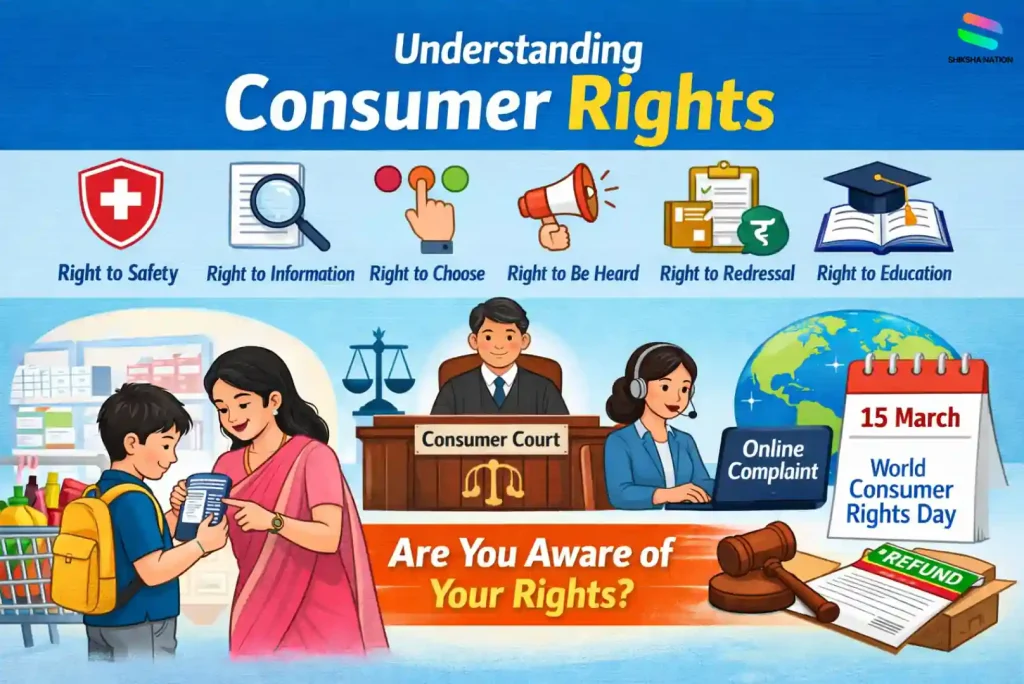
Six Consumer Rights in India
To protect buyers in the marketplace, certain basic rights have been recognised for consumers. These protections ensure that people receive safe products, correct information, and fair treatment from sellers. In India, these protections are commonly known as the six consumer rights in India.
Understanding these rights helps students and parents make better decisions while purchasing goods or services. Whether buying a school bag, electronic gadget, or packaged food, these rights ensure that consumers are not treated unfairly.
1. Right to Safety
The right to safety consumer rights protects consumers from products that may harm their health or life. Manufacturers must ensure that goods meet proper safety standards before being sold in the market.
For example, electrical appliances, medicines, or packaged food should not cause harm when used correctly. This right helps families and students avoid dangerous or defective products.
2. Right to Information
Consumers have the right to receive complete and correct details about a product or service before buying it. This information helps buyers make informed choices.
Important product details include:
- Price of the product
- Manufacturing and expiry date
- Ingredients or materials used
- Instructions for safe use
For students and parents, reading labels carefully helps them understand what they are purchasing.
3. Right to Choose
The right to choose ensures that consumers have access to a variety of products and brands in the market. Sellers should not force customers to buy a particular product.
This right allows consumers to:
- Compare quality and prices
- Select products according to their needs
- Avoid unfair pressure from sellers
For example, while buying a mobile phone or school supplies, buyers can freely choose the option that suits them best.
4. Right to Be Heard
Consumers also have the right to express their complaints or concerns if they face problems with products or services.
This right ensures that:
- Consumer complaints are taken seriously
- Businesses listen to customer feedback
- Authorities consider consumer issues
For example, if a student receives a defective electronic device or a family faces poor service, they can raise the issue with the seller.
5. Right to Seek Redressal
The right to seek redressal allows consumers to get a solution when they suffer loss due to unfair trade practices or defective products.
Possible remedies include:
- Replacement of the product
- Refund of money
- Compensation for damages
This right ensures that consumers are not left helpless when companies fail to provide promised quality.
6. Right to Consumer Education
The final right focuses on awareness and knowledge. Consumer education for students and families helps people understand their rights and responsibilities in the marketplace.
Consumer education encourages people to:
- Recognise unfair practices
- Make informed buying decisions
- Know how to raise complaints when needed
When consumers are aware of their rights, they are better prepared to protect themselves while purchasing goods and services.
Importance of Consumer Rights
Understanding the importance of consumer rights helps people shop confidently and avoid unfair treatment in the market. These rights protect buyers and ensure that businesses follow honest practices while selling products or services.
For students and parents, knowing these rights is useful in everyday situations such as buying school supplies, electronic devices, or packaged food. When consumers understand their rights, they are better prepared to identify problems and take the correct action.
Protection from Unfair Trade Practices
Consumer rights protect people from dishonest or misleading business practices. Sometimes companies may sell low-quality products, give false advertisements, or hide important product details.
These protections help ensure that:
- Products meet proper quality and safety standards
- Buyers receive correct information before purchasing
- Consumers can question unfair behaviour from sellers
Such protections make the marketplace safer and more trustworthy for everyone.
Role of Consumer Awareness
Consumer awareness plays an important role in protecting buyers. When people know their rights, they can make smarter decisions and avoid being misled by false promises or poor-quality goods.
For example, students and parents who check product labels, prices, and expiry dates are less likely to face problems after purchase. Awareness also encourages responsible buying habits and helps consumers recognise when their rights are not being respected.
Consumer Rights Examples from Everyday Life
Understanding consumer rights examples helps students and parents see how these rights work in daily life. Many common situations while buying products or services can involve consumer protection.
These consumer rights examples for students show that consumer protection is not only a legal concept but also something people experience during everyday purchases.
Example 1: Defective Electronics Product
Imagine a student buys headphones or a mobile accessory that stops working within a few days even though it was used properly. In such a case, the buyer has the right to ask for repair, replacement, or refund.
Keeping the purchase bill or receipt helps the consumer prove the purchase and request a solution from the seller.
Example 2: Expired Packaged Food
Sometimes packaged food items in shops may be sold after the expiry date. If a parent or student notices this, they have the right to complain because selling expired food can affect health.
Consumers should always check the manufacturing and expiry date before purchasing packaged products.
Example 3: Online Shopping Complaint
Online shopping has become common for many families. If a customer receives a damaged product or a completely different item than what was ordered, they can file a complaint with the company.
Most online platforms allow consumers to request replacement, refund, or return, which helps protect buyers in digital marketplaces.
How to File a Consumer Complaint in India
If a consumer receives a defective product, poor service, or misleading information, they can follow a simple consumer complaint process to seek a solution. India has a structured consumer protection system that helps buyers resolve disputes in a fair manner.
Students and parents should remember that keeping proper purchase details and explaining the problem clearly makes the complaint process easier.
Step 1: Contact the Seller or Service Provider
The first step is to contact the shop, company, or service provider from where the product was purchased. Many problems can be solved directly by requesting a repair, replacement, or refund.
Consumers should explain the issue clearly and provide proof such as bills, warranty cards, or order details.
Step 2: File Complaint in Consumer Court
If the seller does not resolve the issue, the consumer can approach a consumer court in India. These courts are specially created to handle complaints related to defective products, poor services, or unfair trade practices.
The consumer can submit documents explaining the problem and request compensation or replacement.
Step 3: Use Online Consumer Complaint Portals
Consumers can also use government portals to register complaints online. These platforms allow people to submit complaints without visiting offices.
Online complaint systems make the consumer complaint process easier and help strengthen the overall consumer protection system in India.
Consumer Responsibilities
Along with rights, consumers also have certain duties. Understanding consumer responsibilities helps buyers make careful decisions and avoid unnecessary problems while purchasing goods or services.
Responsible consumers pay attention to product details and keep proper records of their purchases.
Reading Product Labels Carefully
Consumers should always read product labels before buying any item. Labels usually provide important information such as price, ingredients, manufacturing date, and expiry date.
For students and parents, checking labels helps ensure that the product is safe and suitable for use.
Keeping Bills and Purchase Receipts
Bills and receipts are important proof of purchase. If a product is defective or service is unsatisfactory, these documents help consumers file complaints or request replacement.
Keeping receipts also makes it easier to use warranties or approach sellers for support when needed.
World Consumer Rights Day
World Consumer Rights Day is observed to promote awareness about consumer protection and fair business practices. The day reminds people about the importance of consumer rights and encourages governments, organisations, and businesses to protect buyers.
For students and parents, this day helps build understanding about safe purchasing, responsible selling, and the role of consumer awareness in everyday life.
When Is World Consumer Rights Day Celebrated?
Many students often ask when is World Consumer Rights Day celebrated. The day is observed every year on 15 March across many countries.
Schools, consumer organisations, and government bodies organise awareness programs, discussions, and educational activities to inform people about consumer rights and responsibilities.
History of World Consumer Rights Day
People often wonder when was first World Consumer Rights Day observed. The idea began after a speech by US President John F. Kennedy in 1962, where he recognised important consumer rights.
Later, consumer organisations started observing World Consumer Rights Day in 1983 to promote consumer protection and awareness worldwide.
World Consumer Rights Day 2026 Theme
Each year, a specific World Consumer Rights Day theme highlights a major consumer issue. The World Consumer Rights Day 2026 theme focuses on strengthening consumer awareness and encouraging fair practices in modern markets, including digital shopping.
Such campaigns help students and families understand how consumer rights apply to real-life purchasing decisions.
Consumer Rights Class 10 – Exam Relevance
The topic consumer rights class 10 is an important part of school economics and civics learning. In the consumer rights chapter class 10, students understand how consumer protection works and why it is important in everyday life.
This topic is often included in short-answer questions, explanations, and case-based questions in school exams. Learning consumer rights explained for students helps them connect classroom concepts with real-life buying situations.
Important Points from Consumer Rights Chapter Class 10
Students should remember some key ideas from the chapter while preparing for exams:
- Meaning and purpose of consumer rights
- The six basic consumer rights
- Role of consumer courts and protection laws
- Importance of consumer awareness in society
Understanding these points helps students answer exam questions clearly and apply the concepts in real-world situations.
Consumer Rights Short Notes for Quick Revision
For quick revision before exams, students can remember a few simple consumer rights short notes:
- Consumers have six basic rights for protection in the market
- Laws and courts help resolve consumer complaints
- Awareness helps people avoid unfair trade practices
- Responsible buying is also an important part of consumer behaviour
These short notes help students revise the topic quickly before tests or board examinations.
Conclusion
Understanding consumer rights helps people make safer and smarter buying decisions. These rights protect buyers from unfair practices and ensure that products and services meet basic quality and safety standards.
For students and parents, learning about consumer protection builds strong consumer awareness. When people read product details, keep purchase records, and question misleading claims, they become responsible consumers.
Awareness also encourages responsible buying habits in everyday life. By understanding their rights and duties, consumers can confidently participate in the marketplace and help promote fair and honest trade practices.
FAQs on Consumer Rights
Q. What are consumer rights in simple words?
Consumer rights are basic protections given to people when they buy goods or services. These rights ensure that customers receive safe products, correct information, and fair treatment from sellers. For students and parents, consumer rights help make everyday purchases safer and more transparent.
Q. What are the six consumer rights in India?
In India, consumers are protected by six basic rights that help ensure fairness in the market. These rights guide how businesses should treat buyers.
The six rights include:
- Right to Safety
- Right to Information
- Right to Choose
- Right to Be Heard
- Right to Seek Redressal
- Right to Consumer Education
These rights help consumers deal with problems related to defective products or poor services.
Q. Which law protects consumer rights in India?
Consumer rights in India are mainly protected by the Consumer Protection Act 2019. This law was introduced to improve consumer protection and address modern issues such as online shopping and misleading advertisements. It also provides a legal system where consumers can raise complaints and seek solutions when they face unfair practices.
Q. Why are consumer rights important?
Consumer rights are important because they protect buyers from unsafe products, false information, and unfair business practices. They ensure that companies follow ethical standards while selling goods or services. For families and students, these rights help create a safer and more reliable marketplace.
Q. When is World Consumer Rights Day celebrated?
World Consumer Rights Day is celebrated every year on 15 March. The day is observed in many countries to promote awareness about consumer protection and responsible business practices. Educational programs and awareness campaigns are often organised to help people understand their rights.
Q. What is the role of consumer courts?
Consumer courts are special forums created to resolve disputes between consumers and sellers. These courts help people seek justice when they receive defective products or poor services. Consumers can approach these courts to request refunds, replacements, or compensation.
Q. How can consumers file a complaint in India?
Consumers can file complaints by first contacting the seller or service provider and explaining the problem. If the issue is not resolved, they can approach consumer courts or use official online complaint portals. Keeping purchase bills, receipts, and product details makes the complaint process easier and more effective.