

Many parents start worrying when they see their child struggling in science, especially when school feedback is unclear or marks begin to drop. Science is not only about scoring well in exams. It is about understanding ideas that connect from one chapter to another. When this understanding is weak, students often feel lost in class.
From a student’s side, science can feel confusing when lessons move fast or when basics are not explained in a simple way. Many students try to memorise answers just to pass tests, but they do not feel confident explaining concepts. This gap between marks and real understanding slowly increases stress.
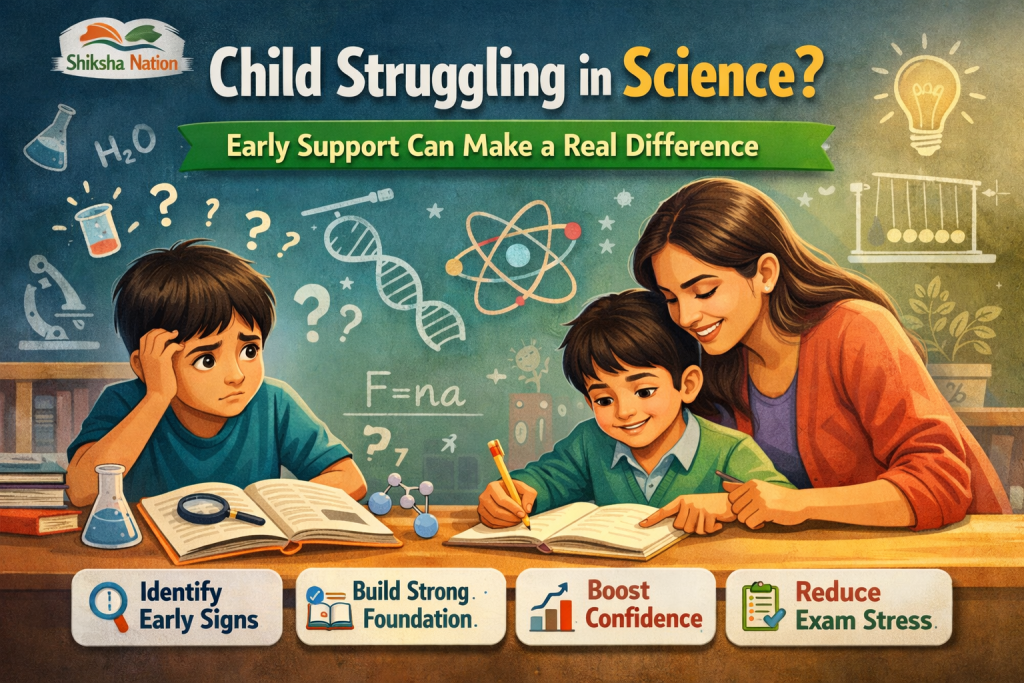
Parents also feel unsure about what to do. Some wait for exams, while others add extra tuition without knowing the real problem. In most cases, what helps is early learning support that focuses on concepts, not pressure. Small doubts cleared at the right time prevent bigger learning gaps later.
A guidance-first approach helps students rebuild confidence step by step. When science is taught with clarity and patience, students feel more comfortable asking questions. This creates steady progress and reduces fear, making science a subject they can understand, not avoid.
How to Know If Your Child Is Struggling in Science
Many parents notice marks going up and down, but that alone does not show the full picture. A child struggling in science often shows signs much before exams. These signs are easy to miss because the child may still complete homework or pass class tests. Understanding these early signals helps parents take the right step at the right time.
Science learning problems in children usually appear when concepts are not clear at the base level. The child may study regularly but still feel confused during explanations in class. This confusion slowly turns into stress and low confidence if not addressed early.
Academic Signs Parents Often Miss
Some children learn answers by heart without knowing the reason behind them. They can write definitions but cannot explain them in simple words. This shows rote learning without real understanding.
Another common sign is difficulty applying concepts. The child understands examples done in class but struggles when the question is slightly changed. This indicates weak concept clarity, not lack of effort.
Emotional & Behavioural Signs
Fear of science tests is a strong signal. The child may feel nervous days before an exam or say science is “too hard” without trying.
Avoiding science homework is also common. Students delay the subject, make excuses, or rush through work. This behaviour often comes from confusion, not laziness, and needs calm guidance.
Common Reasons Children Fall Behind in Science
Many parents feel confused when they see their child studying regularly but still not performing well. A child falling behind in science is usually not careless or weak. In most cases, the problem starts at the concept level and slowly grows with time. Understanding the real reasons helps parents support their child in a better way.
Science learning builds step by step. When one part is not clear, the next topic becomes harder. Over time, the science foundation weak feeling increases, and the child starts losing interest and confidence.
Weak Conceptual Base
Science subjects like Physics, Chemistry, and Biology are closely connected. If basic ideas are not clear, new chapters feel confusing. Many students remember formulas or lines but do not know how or why they work. This makes learning stressful and slow.
Fast Classroom Pace
School classrooms move at the same speed for everyone. Some students need more time to understand concepts. When lessons move too fast, doubts remain unclear. The child hesitates to ask questions and slowly falls behind, even with regular attendance.
Exam Pressure Over Understanding
Parents and schools often focus on marks and ranks. This creates pressure to finish the syllabus quickly. Students start studying only for exams, not for understanding. Over time, science feels heavy and confusing, instead of interesting and logical.
Why Early Support Matters More Than Last-Minute Tuition
Many parents wait until exams are close before arranging extra help. By that time, the child is already stressed and confused. Early learning support works differently. It focuses on clearing doubts slowly, before problems become too big. This approach is calmer for both students and parents.
When learning happens early and regularly, children get time to understand concepts properly. This builds a strong foundation learning in science, which helps them follow school classes with more confidence. Instead of rushing before exams, students feel prepared throughout the year.
Prevents Conceptual Gaps
Early support helps identify small doubts at the right time. These doubts are cleared before moving to new topics. This prevents gaps in understanding and makes future chapters easier to learn.
Builds Confidence in Science
When concepts are clear, students feel less afraid of science. They start answering questions without hesitation. Confidence grows when a child knows the “why” behind answers, not just the final result.
Reduces Exam Stress Over Time
Regular support reduces last-minute pressure. Students revise calmly and feel in control during exams. Parents also feel relieved, knowing their child is learning steadily instead of struggling under sudden pressure.
What Parents Can Do Without Increasing Pressure
Parents want to help, but extra pressure often creates more stress for the child. The role of parent support in studies is not to push for marks, but to create a calm learning space at home. Small changes in daily habits can make a big difference in how a child feels about science.
Children learn better when they feel safe to make mistakes. When parents focus on effort and understanding, students feel less afraid of being wrong. This helps them move from science understanding vs memorisation, which is key for long-term learning.
Focus on “Why”, Not Just Answers
Instead of checking only final answers, ask simple questions like “Why does this happen?” or “How did you reach this step?” This helps children think clearly and connect ideas.
Encourage Questions at Home
Many students hesitate to ask doubts in class. Parents can make home a safe place for questions. Listening patiently and discussing doubts builds confidence and curiosity.
Choose Structured Academic Guidance
Sometimes, parents may not be able to explain every concept clearly. In such cases, structured academic guidance helps. Learning systems that focus on step-by-step explanation and concept clarity, like those followed at Shiksha Nation, support students without adding pressure.
Role of NCERT Clarity in Strong Science Learning
Many parents think NCERT is difficult or confusing, but the real issue is how it is studied. NCERT is designed to build understanding, not just provide answers. When students focus on NCERT concept clarity, science becomes easier to follow and less stressful.
Most conceptual gaps in science happen when students read lines without understanding their meaning. NCERT chapters are short but concept-heavy. If these ideas are not explained properly, students may remember words but fail to apply them in questions.
NCERT as a Concept Book
NCERT is not meant for rote learning. It explains ideas step by step using examples and simple language. When students understand diagrams, definitions, and examples clearly, their base becomes strong.
Why Explanation Matters More Than Reading
Reading alone is not enough for many students. They need someone to explain ideas in simple words. Proper explanation helps students connect topics and clear doubts early, making science learning more logical and confident.
When Should Parents Seek Extra Academic Help?
Parents often wait too long, hoping the problem will fix itself. If a child is weak in science subjects for many weeks, it is a sign that extra support may be needed. Early help is not about labelling a child; it is about preventing bigger learning gaps.
Extra academic help should be considered when regular study is not improving understanding. If a child studies daily but still feels confused, the issue is usually concept-related. Timely support can make learning smoother and reduce stress for both students and parents.
Clear Warning Stages
Repeated confusion is a strong warning sign. The child may ask the same doubts again and again or forget concepts soon after studying.
Falling confidence is another clear signal. The child may say science is “too hard” or avoid answering questions. At this stage, calm guidance helps rebuild confidence and interest in the subject.
Child struggling in science (FAQs)
Q. Is it normal for a child to struggle in science?
Yes, it is quite common. Every child learns at a different pace. Many students face science learning problems in children when concepts are taught quickly or without enough explanation. With the right guidance and patience, most children can improve steadily.
Q. Can early help really improve science performance?
Yes. Early learning support helps clear small doubts before they turn into bigger problems. When concepts are understood early, students feel more confident in class and exams. This approach works better than waiting until marks drop sharply.
Q. Should parents focus on marks or concepts?
Concepts should come first. Marks improve automatically when understanding is strong. Focusing only on results increases pressure, while clear explanation supports science understanding vs memorisation. This builds long-term confidence and better performance.
Q. At what class should science support start?
Support can start as soon as confusion appears. There is no fixed class. If a child feels lost in basic topics, early foundation learning in science helps prevent future struggles in higher classes.
Q. How much daily science study is enough?
Quality matters more than hours. Thirty to forty minutes of focused study with clear goals is often enough. Regular revision and calm parent support in studies help students stay confident without feeling overloaded.