What Are the Chess Pieces?
Chess is a two-player board game where each player starts with 16 pieces placed on the board. Many beginners and parents often ask, what are the 16 pieces in chess called, especially when children are learning the game for the first time.
Each player gets the same chess set pieces names, but every piece has a different role. Some pieces are used to attack, some to defend, and some help in planning the game slowly.
For students, knowing these pieces clearly is the first step before learning how they move. For parents, this basic understanding makes it easier to explain the game at home. Once the pieces are familiar, learning moves and rules becomes much easier and less confusing.
All Chess Pieces Names with Pictures
This section helps beginners quickly recognise and remember all chess pieces names using clear visuals. Pictures make learning easier, especially for students who are just starting and may get confused between similar pieces. Parents can also use this section to explain the game in a simple way at home.
By learning chess pieces names with pictures, students can connect the name of each piece with its shape and role on the board. This visual understanding builds a strong base before moving to rules and gameplay.
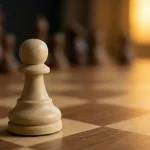
Pawn

- The pawn is the smallest and most common piece on the chess board. Each player starts the game with eight pawns placed in the front row.
- Pawns move step by step and slowly open the game for other pieces. Because of this, they help students understand planning from the very beginning.
- For beginners, pawns are important because they teach patience and basic thinking. Parents can use pawns to explain how a game starts and builds slowly.
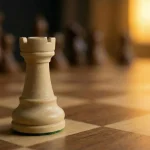
Rook
- The rook is a strong piece that moves in straight lines across the board. It can move forward, backward, and sideways in one direction at a time.
- Rooks are usually placed in the corners and become more useful as the game moves ahead.
- For students, rooks are easy to remember because their movement is simple and clear. Parents can explain rooks using straight lines, like rows and columns in a notebook.
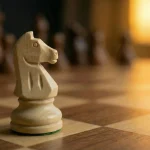
Knight
- The knight is a special piece because it moves in a unique way that no other piece does. It moves in an “L” shape, making it stand out from the rest.
- This piece can reach places that others cannot easily access, which makes it interesting for young learners.
- For beginners, the knight helps develop imagination and thinking skills. Parents can guide children by showing its movement on the board step by step.
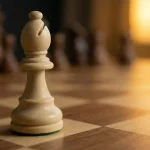
Bishop
- The bishop moves only in diagonal lines on the chess board. It cannot move straight, which makes its movement easy to identify.
- Each player has two bishops, and each one stays on the same colour square throughout the game.
- For students, bishops help in understanding diagonal directions clearly. Parents can explain this by drawing slant lines, just like crossing lines in a notebook.
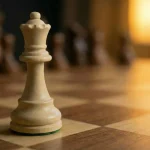
Queen
- The queen is the most powerful piece in the game because it can move in many directions. It can go straight as well as diagonal in a single move.
- This flexibility allows the queen to control many squares on the board.
- For beginners, the queen shows how one piece can handle multiple roles. Parents should guide students to use the queen carefully, not too early.
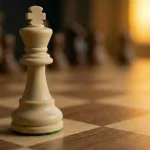
King
- The king is the most important piece in chess. The main aim of the game is to keep your king safe at all times.
- If the king is trapped and cannot escape, the game ends.
- For students, the king teaches the value of protection and planning. Parents can explain that winning is not about attacking only, but also about saving the king.
Chess Pieces Names in English and Hindi
Many Indian students learn chess at school, but at home the names of pieces are often spoken in Hindi. Because of this, knowing chess pieces names in English and Hindi together becomes very helpful. It allows students to understand teachers’ instructions in class and also follow parents’ guidance at home.
For parents, this bilingual understanding makes it easier to explain the game without confusion. Students can quickly match what they hear at home with what they read in books or see in school activities. Learning chess pieces names in Hindi also helps younger children feel more comfortable and confident while playing.
Below is a simple table that shows the commonly used names of chess pieces in both languages. These names are widely used in Indian homes and schools.
| English Name |
Hindi Name |
| Pawn |
प्यादा |
| Rook |
हाथी |
| Knight |
घोड़ा |
| Bishop |
ऊँट |
| Queen |
वज़ीर |
| King |
राजा |
Understanding both names helps students learn faster and communicate better while playing chess.
Chess Board Pieces Names and Their Count
On a standard chess board, each player starts the game with 16 pieces. Learning the chess board pieces names along with their count helps students understand the setup before the game begins. This clarity is useful during school practice and friendly matches.
Each player has:
- 8 Pawns
- 2 Rooks
- 2 Knights
- 2 Bishops
- 1 Queen
- 1 King
The pieces are placed in two rows. Pawns stand in the front row, while the other pieces are placed in the back row in a fixed order. Parents can help children remember this setup by arranging the board together slowly.
When students clearly know the count and placement, they feel more confident and ready to learn the next steps of the game.
Why Learning Chess Pieces Names Is Important for Students
Learning the names of chess pieces is an important step for students who are starting to play the game. When children can identify each piece easily, they spend less time feeling confused and more time focusing on the board. This naturally helps in improving concentration during play.
In many schools, chess is part of indoor games or club activities. Students who know the pieces clearly can follow instructions better and participate with confidence. Parents often notice that children enjoy the game more when they understand what each piece is called.
Knowing the pieces also supports early logical thinking. Students begin to recognise patterns, plan simple steps, and understand cause and effect. This learning is educational in nature and supports mental development without pressure or competition.
FAQs on Chess pieces
Q. How many chess pieces are there in one game?
A complete chess game uses 32 pieces in total. Each player gets 16 pieces placed on the board at the start. This equal setup helps students understand fairness and balance in the game from the beginning.
Q. Which chess piece is the most powerful?
The queen is considered the most powerful piece because it can move in many directions. For students, this shows how one piece can handle multiple roles. Parents should remind children that power must be used carefully.
Q. Are chess pieces names same in all countries?
The English names of chess pieces are mostly the same worldwide. However, local languages may use different names. In India, many families use Hindi or regional names while playing at home.
Q. Do students need to memorise chess pieces names?
Yes, learning the names helps students follow instructions and understand lessons easily. Memorising comes naturally with practice, and parents can support this by regular, stress-free play at home.
Q. Can beginners learn chess without knowing piece names?
Beginners can start playing, but learning becomes easier when piece names are known. It helps students communicate better, understand guidance, and enjoy the game without confusion.