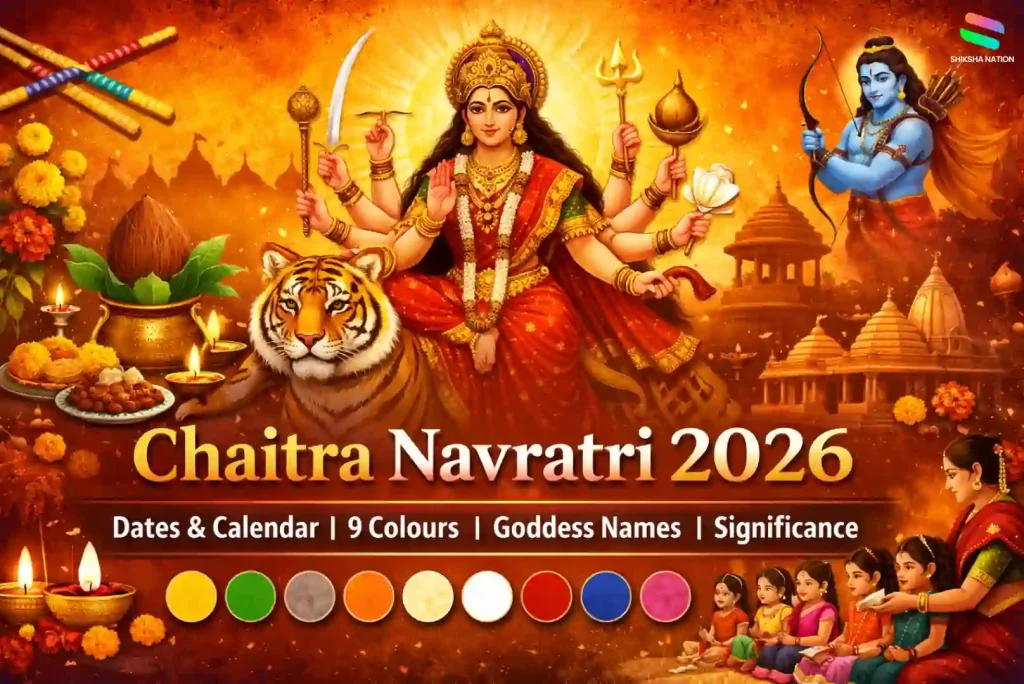
Day-Wise Navratri 2026 Calendar
| Day |
Date (2026) |
Goddess |
Colour |
| Day 1 |
19 March |
Maa Shailputri |
Yellow |
| Day 2 |
20 March |
Maa Brahmacharini |
Green |
| Day 3 |
21 March |
Maa Chandraghanta |
Grey |
| Day 4 |
22 March |
Maa Kushmanda |
Orange |
| Day 5 |
23 March |
Maa Skandamata |
White |
| Day 6 |
24 March |
Maa Katyayani |
Red |
| Day 7 |
25 March |
Maa Kalaratri |
Royal Blue |
| Day 8 |
26 March |
Maa Mahagauri |
Pink |
| Day 9 |
27 March |
Maa Siddhidatri |
Purple |
Do Check – Chaitra Navratri Wishes 2026
Points from the Navratri Calendar
- The festival begins with the worship of Maa Shailputri on the first day.
- Each day represents a different form of Goddess Durga and a symbolic colour.
- The ninth day is also celebrated as Ram Navami, an important festival for many Hindu families.
This simple day-wise calendar helps readers quickly understand the structure of the nine days of Chaitra Navratri.
Navratri 2026: 9 Colours and Goddess Names
During the nine days of Navratri, each day is dedicated to a different form of Maa Durga and is linked with a specific colour. Many devotees follow these colours in their clothing or decorations during prayers.
This Navratri 2026 9 colours list helps families and students understand the meaning behind each day and the Navratri 2026 goddess names worshipped during the festival.
Day 1 to Day 3 Colours and Goddess
The first three days focus on strength, discipline, and protection.
Day 1 – Maa Shailputri (Yellow)
- Yellow represents positivity and fresh beginnings.
- Maa Shailputri symbolises stability and inner strength.
Day 2 – Maa Brahmacharini (Green)
- Green stands for growth and peace.
- The goddess represents devotion, patience, and spiritual learning.
Day 3 – Maa Chandraghanta (Grey)
- Grey reflects balance and calmness.
- Maa Chandraghanta is worshipped for courage and protection from fear.
Day 4 to Day 6 Colours and Goddess
These days highlight creativity, nurturing energy, and determination.
Day 4 – Maa Kushmanda (Orange)
- Orange symbolises energy and creativity.
- She is believed to have created the universe with her divine power.
Day 5 – Maa Skandamata (White)
- White represents purity and peace.
- She is known as the caring mother of Lord Kartikeya.
Day 6 – Maa Katyayani (Red)
- Red stands for strength and determination.
- Devotees worship her for protection and courage.
Day 7 to Day 9 Colours and Goddess
The last three days represent wisdom, compassion, and spiritual growth.
Day 7 – Maa Kalaratri (Royal Blue)
- Royal blue reflects power and deep wisdom.
- She is believed to remove darkness and negativity.
Day 8 – Maa Mahagauri (Pink)
- Pink symbolises love and kindness.
- Devotees pray for peace and purity of mind.
Day 9 – Maa Siddhidatri (Purple)
- Purple represents spiritual knowledge and fulfilment.
- On this day, many families also celebrate Ram Navami.
Understanding the chaitra navratri 2026 color tradition helps students and families connect with the deeper cultural meaning of this festival.
Ashtami and Ram Navami Dates in Chaitra Navratri 2026
During the nine days of Navratri, Ashtami and Ram Navami are considered the most important days for prayers and family rituals. Many people search for the chaitra navratri 2026 ashtami date and Ram Navami date to plan fasting and special pujas at home.
Ashtami in Chaitra Navratri 2026
The ashtami chaitra navratri 2026 will be observed on 26 March 2026. This day is dedicated to Maa Mahagauri, one of the powerful forms of Goddess Durga.
Key practices followed on Ashtami include:
- Special prayers for peace and protection
- Kanya Pujan, where young girls are worshipped as a form of Maa Durga
- Offering prasad such as halwa, puri, and chana
Many families involve children in these rituals to help them learn about Indian traditions and respect for feminine energy.
Ram Navami in Chaitra Navratri 2026
The chaitra navratri 2026 ram navami date is 27 March 2026, which is also the final day of the festival.
On this day, devotees celebrate the birth of Lord Rama and conclude Navratri prayers with gratitude and devotion.
Significance of Chaitra Navratri
Chaitra Navratri is an important Hindu festival that celebrates the power of Maa Durga and divine feminine energy (Shakti). It marks the beginning of the Hindu lunar month of Chaitra, which is considered a time of renewal and fresh beginnings. Many families across India observe prayers, fasting, and spiritual practices during chaitra maas navratri 2026.
For students and parents, this festival is also a chance to understand Indian traditions and cultural values.
Why Navratri is Celebrated
Navratri symbolises the victory of good over evil. According to Hindu beliefs, Maa Durga defeated the demon Mahishasura, representing the triumph of truth and courage.
Many people celebrate Navratri to:
- Pray for strength and protection
- Start positive habits and new goals
- Express gratitude and devotion
Cultural Meaning of Navratri
Navratri is not only a religious festival but also an important part of Indian culture.
Common cultural traditions include:
- Visiting temples with family
- Wearing the colour of the day during prayers
- Participating in community celebrations like Garba and Dandiya
These activities bring families and communities together.
Spiritual Importance
Navratri encourages self-discipline and inner focus. During these nine days, many people practise:
- Fasting and simple eating habits
- Daily prayers and mantra chanting
- Meditation and positive thinking
For students, Navratri can also be a reminder to develop discipline, patience, and respect for traditions while balancing studies and daily life.
Why Navratri Is Important in Indian Culture
Navratri is more than a religious festival. It is an important part of Indian cultural learning, where families celebrate traditions, values, and community bonding. For many students, festivals like Navratri become a way to understand the history and cultural diversity of India.
Parents often use this time to teach children about respect, discipline, and gratitude through simple rituals and family gatherings.
Festivals as Cultural Education
Indian festivals help students learn beyond textbooks. Navratri teaches important cultural ideas such as:
- Respect for traditions and elders
- Understanding stories from Indian mythology
- Participating in family rituals and celebrations
These experiences help children connect with their cultural roots.
Learning Through Traditions
Navratri celebrations also encourage learning through participation.
Students can learn by:
- Observing daily prayers at home
- Understanding the meaning of different traditions
- Taking part in cultural dances like Garba and Dandiya
Such experiences help students appreciate India’s rich heritage while developing curiosity about their culture.
FAQs About Chaitra Navratri 2026
Q. What is the date of Chaitra Navratri 2026?
Chaitra Navratri 2026 will start on 19 March 2026 (Thursday) and end on 27 March 2026 (Friday). The festival lasts for nine days and is dedicated to the worship of the nine forms of Maa Durga.
Q. Chaitra Navratri 2026 kab hai?
Chaitra Navratri 2026 19 March 2026 se shuru hokar 27 March 2026 tak chalega. Is dauran bhakt Maa Durga ke nau roopon ki pooja karte hain.
Q. Chaitra Navratri 2026 kab se shuru hai?
Chaitra Navratri 19 March 2026 se shuru hoga. Is din ko Hindu calendar mein Chaitra Shukla Pratipada kaha jata hai aur isi din Navratri ka aarambh hota hai.
Q. What is the start date of Chaitra Navratri 2026?
The start date of Chaitra Navratri 2026 is 19 March 2026. On this day, devotees perform Ghatasthapana (Kalash Sthapana) and begin the nine-day worship of Maa Durga.
Q. What are the Navratri colours in 2026?
The Navratri colours for 2026 include Yellow, Green, Grey, Orange, White, Red, Royal Blue, Pink, and Purple. Each colour is associated with a specific form of Goddess Durga worshipped during the nine days.
Q. When is Ashtami in Chaitra Navratri 2026?
Ashtami will be observed on 26 March 2026. On this day, many families perform Kanya Pujan, where young girls are worshipped as a symbol of Maa Durga.
Q. When is Ram Navami in Chaitra Navratri 2026?
Ram Navami will be celebrated on 27 March 2026. This day marks the birth of Lord Rama and also concludes the nine days of Chaitra Navratri.
Q. Why do people fast during Navratri?
Many devotees observe fasting during Navratri as a way to practise self-discipline and devotion. Eating simple foods and focusing on prayers helps people stay spiritually focused during the festival.
Q. What do students and families learn from Navratri?
Navratri teaches values like discipline, respect for traditions, and positivity. For students, it is also a chance to learn about Indian culture, mythology, and family traditions.