
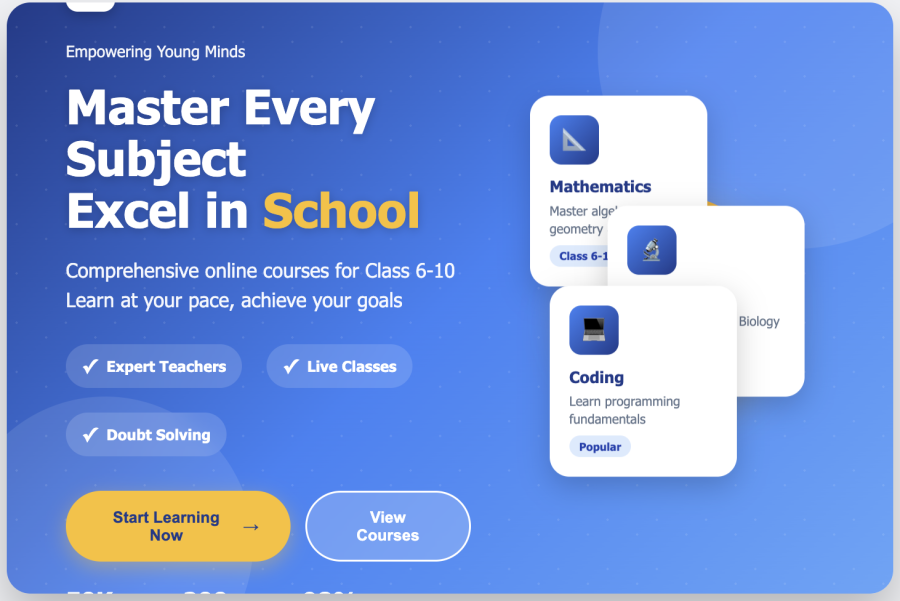

The Future of Learning for Middle School Students
The transition from primary to secondary education marks a critical phase in every student’s academic journey. For students in Class 6-10, these formative years lay the groundwork for competitive exams, board examinations, and future career paths. In today’s digital age, online courses have emerged as a powerful complement and sometimes alternative to traditional tuition classes.
However, not all online learning is created equal. Parents across India are asking important questions: Are these courses actually effective? Will my child stay disciplined? How is online learning different from random YouTube videos?
This comprehensive guide addresses these concerns and more, helping you make an informed decision about your child’s education.

Online Learning: What Parents Really Need to Know
Are Online Courses Actually Good for Students Aged 11-16?
The short answer is yes when done right. Research shows that structured online learning can be highly effective for middle school students, provided three critical elements are in place:
1. Age-Appropriate Content Design Online courses designed specifically for Class 6-10 students account for their cognitive development, attention spans, and learning patterns. Unlike one-size-fits-all content, age-appropriate courses use:
- Visual aids and interactive elements suitable for young adolescents
- Lesson durations aligned with attention span (typically 20-30 minutes)
- Progressive difficulty levels that build confidence
- Real-world examples relevant to their daily experiences
2. Structured Learning Paths Effective online courses follow a systematic curriculum that:
- Aligns with CBSE, ICSE, or state board syllabi
- Covers concepts in logical sequence
- Includes regular assessments and feedback
- Provides clear learning objectives for each session
3. Supervised Engagement The key differentiator between effective online learning and random internet browsing is supervision. Quality platforms provide:
- Live or interactive sessions with real teachers
- Doubt-clearing mechanisms
- Progress tracking visible to parents
- Structured schedules that create routine
Can Online Learning Replace Tuition Classes?
For many families, online courses can effectively replace traditional tuition centers. Here’s how they compare:
| Aspect | Traditional Tuition | Quality Online Courses |
|---|---|---|
| Travel Time | 30-60 minutes daily | Zero commute |
| Schedule Flexibility | Fixed timings | Learn anytime (recorded) + Live sessions |
| Individual Attention | Limited in group settings | Personalized learning paths |
| Resource Access | Limited to class materials | Unlimited access to recorded content |
| Parent Visibility | Minimal | Complete progress tracking |
| Cost-Effectiveness | Higher per subject | More economical for multiple subjects |
However, the replacement effectiveness depends on:
- Student’s learning style: Self-motivated students thrive online
- Home environment: Requires a dedicated study space with minimal distractions
- Parental involvement: Initial monitoring helps establish good habits
- Course quality: Not all online platforms offer equivalent value to tuition
Will My Child Stay Disciplined Online?
Discipline in online learning is a common concern, but it’s entirely manageable with the right framework:
Built-in Accountability Systems:
- Scheduled live classes: Create routine and commitment
- Assignment deadlines: Maintain regular study habits
- Progress reports: Keep students aware of their performance
- Gamification elements: Badges, streaks, and achievements motivate consistent learning
Parental Support Strategies:
- Establish a dedicated study area: Physical space signals “learning mode”
- Set consistent study times: Routine builds discipline over weeks
- Monitor initial sessions: Gradual independence after habit formation
- Celebrate milestones: Positive reinforcement encourages continuation
Platform Features That Support Discipline: Quality online courses include engagement tracking, alerting parents when students miss sessions or fall behind schedule.
Is Online Learning Safe and Structured?
Safety and structure are non-negotiable for young learners. Here’s what distinguishes professional online education from random internet content:
Safety Measures:
- Vetted teachers: Background-checked, qualified educators
- Moderated interactions: Safe communication channels
- Age-appropriate content: No exposure to unsuitable material
- Secure platforms: Protected student data and privacy
- Monitored sessions: All interactions are supervised
Structural Components:
- Comprehensive curriculum: Complete syllabus coverage, not fragmented topics
- Logical progression: Each lesson builds on previous knowledge
- Regular assessments: Tests and quizzes ensure understanding
- Feedback loops: Teachers provide personalized guidance
- Defined learning outcomes: Clear goals for each module
How It Works Day-to-Day: A typical day with quality online courses includes:
- Morning: Student reviews upcoming live class schedule
- Afternoon: Attends interactive live session (30-45 minutes)
- Evening: Completes assigned practice problems
- Night: Parent reviews daily progress report
- Weekly: Comprehensive assessment tests understanding
This structured approach ensures that online learning is purposeful, organized, and effective not random or unguided.
Don’t Miss to check this: Best NEET Crash Course 2026 Guide
Subject-Specific Excellence: Beyond Generic Learning
Why Generic “All Subjects Covered” Messaging Fails
Many parents have encountered platforms claiming to teach “everything” but delivering mediocre results. The truth is that effective education requires subject-specific expertise and pedagogy. Here’s why:
Mathematics Requires Specialized Teaching:
- Conceptual clarity: Moving beyond formula memorization to deep understanding
- Progressive problem-solving: From basic to advanced complexity
- Multiple solution approaches: Developing mathematical thinking
- Error pattern analysis: Identifying and correcting specific misconceptions
- Regular practice architecture: Spaced repetition for mastery
Science Demands Unique Approaches:
- Visualization: Complex concepts need animations and simulations
- Experimental understanding: Virtual labs and demonstrations
- Cross-topic integration: Physics, Chemistry, Biology connections
- Application-based learning: Real-world problem solving
- Conceptual vs. procedural knowledge: Balance between theory and application
Which Platform Is Best for Maths Improvement?
When evaluating platforms for mathematics excellence, look for these critical features:
1. Dedicated Math Specialists Teachers who specialize exclusively in mathematics bring:
- Deep subject matter expertise
- Multiple explanation techniques for the same concept
- Awareness of common student difficulties
- Proven track records in improving scores
2. Comprehensive Practice Systems Mathematics mastery requires volume and variety:
- 5,000+ practice problems across difficulty levels
- Chapter-wise problem banks aligned with curriculum
- Previous years’ board exam questions
- Olympiad-level challenges for advanced learners
3. Doubt Resolution Infrastructure Mathematics learning frequently hits roadblocks. Effective platforms provide:
- Same-day doubt clearing: Questions answered within 4-6 hours
- Step-by-step solutions: Not just answers, but methodology
- Video explanations: Visual breakdown of complex problems
- 1-on-1 doubt sessions: Personal interaction when needed
4. Adaptive Learning Technology Modern platforms use AI to:
- Identify weak areas through assessment analysis
- Recommend personalized practice sets
- Adjust difficulty based on performance
- Track improvement over time
How Can My Child Understand Science Concepts Better?
Science education effectiveness depends on making abstract concepts tangible:
Visualization and Animation:
- 3D molecular structures: Chemistry becomes visual, not abstract
- Physics simulations: See forces, motion, and energy in action
- Biological processes: Animated cell functions and body systems
- Interactive diagrams: Students explore, not just observe
Practical Application Connection: Quality science courses answer the perpetual student question: “Why do I need to know this?”
- Real-world examples in every lesson
- Current scientific developments and discoveries
- Technology applications of theoretical concepts
- Environmental and health connections
Structured Conceptual Building: Science concepts build upon each other:
- Pre-requisite knowledge assessment
- Logical topic sequencing
- Regular concept revision
- Integration across physics, chemistry, and biology
Are There Separate Teachers for Each Subject?
The answer should be yes and here’s why it matters:
Subject Specialization Benefits:
- Depth of knowledge: Subject experts answer advanced questions confidently
- Current curriculum expertise: Stay updated with latest board changes
- Proven pedagogical methods: Subject-specific teaching techniques
- Passion and enthusiasm: Specialists genuinely love their subject
At Shiksha Nation:
- Every subject has dedicated teachers
- Teachers have 5+ years of teaching experience in their subject
- Regular training on latest teaching methodologies
- Performance tracked through student outcomes
Will Doubts Be Solved Instantly?
Doubt resolution speed directly impacts learning momentum. Here’s what “instant” really means:
During Live Classes:
- Real-time question-answer sessions
- Teacher addresses doubts as they arise
- Peer learning from other students’ questions
- On-screen problem solving
Post-Class Support:
- Upload your doubt: Photo or text description
- 4-6 hour response time: Detailed solution with explanation
- Video responses: Complex problems get video walkthroughs
- Follow-up questions: Continue asking until fully understood
Dedicated Doubt-Clearing Sessions:
- Weekly sessions focused entirely on student questions
- Small group doubt classes for personalized attention
- Topic-wise doubt compilation and resolution
- Recorded doubt sessions available for review
Important Note: While the goal is speed, the real measure is quality. A thorough explanation that takes 4 hours is infinitely better than a rushed, incomplete answer in 10 minutes.
Building Strong Foundations: The Right Academic Approach
Is Foundation Preparation Needed from Class 6?
The answer depends on your child’s goals, but foundation building offers significant advantages:
Benefits of Early Foundation Work:
1. Stress-Free Learning Curve
- Concepts learned early don’t feel rushed later
- Multiple exposure to important topics builds mastery
- Reduces pressure in Class 9-10 board years
- Creates cushion time for advanced preparation
2. Competitive Exam Readiness
- JEE/NEET preparation actually begins in middle school
- Foundation courses introduce problem-solving approaches
- Builds analytical thinking from young age
- Creates significant advantage over late starters
3. Academic Confidence
- Early success builds positive association with learning
- Students become “good at” subjects rather than fearing them
- Confidence enables participation and question-asking
- Strong foundation makes advanced topics accessible
4. Skill Development Timeline Critical thinking, logical reasoning, and problem-solving skills develop over years, not months. Starting in Class 6:
- Allows gradual, natural development
- Embeds thinking patterns early
- Creates compound learning effect
- Develops genuine interest in subjects
Will This Help in IIT-NEET Later?
Absolutely but the connection isn’t always obvious to parents. Here’s how foundation courses from Class 6-10 impact competitive exam success:
Conceptual Depth vs. Exam Patterns: The biggest challenge in JEE/NEET isn’t unfamiliar topics—it’s the depth and application level. Foundation courses:
- Teach concepts, not just formulae
- Develop “why” thinking alongside “how” methods
- Create mental models that support advanced learning
- Build problem-solving approaches systematically
The 7-Year Preparation Reality: Top JEE/NEET performers typically have:
- Strong Class 6-8 fundamentals (3 years)
- Solid Class 9-10 board preparation (2 years)
- Focused Class 11-12 competitive prep (2 years)
Students starting preparation only in Class 11 often struggle because they lack the foundation layer.
Skills That Can’t Be Rushed:
- Mathematical intuition: Develops through thousands of problems over years
- Scientific thinking: Pattern recognition across concepts takes time
- Speed and accuracy: Comes from mastery, not cramming
- Stress management: Experience with regular assessments builds resilience
Foundation Course Specific Benefits:
- Advanced concepts introduction: Gentle exposure to future topics
- Olympiad-level problems: Develops higher-order thinking
- Application-based questions: Beyond textbook problems
- Time management skills: Regular practice tests from early age
Is This Too Early or Too Much Pressure?
This concern reflects responsible parenting. The key distinction is between healthy challenge and unhealthy pressure:
Signs of Appropriate Challenge:
- Student shows curiosity about subjects
- Questions are age-appropriate in complexity
- Learning feels engaging, not overwhelming
- Progress is steady, not forced
- Child has time for hobbies and play
- Sleep and health remain normal
- Student asks questions willingly
Signs of Excessive Pressure:
- Constant anxiety about performance
- Loss of interest in other activities
- Sleep disturbances or health issues
- Fear of failure dominates motivation
- No time for age-appropriate social activities
- Learning becomes purely grade-focused
The Balanced Approach: Quality foundation programs understand child psychology and:
- Design age-appropriate challenges
- Include fun, gamified elements
- Celebrate effort, not just outcomes
- Provide manageable homework loads (30-45 minutes daily)
- Encourage questions without judgment
- Build confidence alongside knowledge
Parent’s Role in Balance:
- Monitor stress levels, not just grades
- Celebrate understanding, not scores
- Ensure adequate play and rest time
- Keep perspective on long-term goals
- Create pressure-free learning environment at home
How Is Foundation Different from Tuition?
Foundation courses and regular tuition serve different purposes:
| Aspect | Regular Tuition | Foundation Courses |
|---|---|---|
| Primary Goal | Current syllabus completion | Deep conceptual understanding |
| Time Horizon | This year’s exams | Next 5-7 years’ success |
| Depth | Textbook level | Beyond textbook |
| Problem Difficulty | Board exam standard | Competitive exam level |
| Teaching Method | Formulae and shortcuts | Concept-based derivation |
| Assessment | School exam patterns | Analytical thinking tests |
| Pace | Rushed to finish syllabus | Paced for mastery |
| Focus | Passing/scoring well | Understanding deeply |
Can Students Do Both? Yes, and many do successfully. The key is:
- Choosing non-overlapping time slots
- Ensuring foundation course complements, not repeats, tuition
- Monitoring total study load
- Maintaining balance with breaks
Which Should You Choose?
- Immediate school support needed: Regular tuition
- Long-term competitive exam goals: Foundation courses
- Both academic and future goals: Combination approach
- Self-motivated learner: Foundation courses often sufficient
What Makes Shiksha Nation Different
Which Is the Best Platform for Class 6-10 Overall?
Choosing the right online learning platform requires looking beyond marketing claims to concrete differentiators. Here’s what truly matters:
Teacher Credentials and Credibility: The single most important factor is who teaches your child. At Shiksha Nation:
- Qualified educators: B.Ed/M.Ed degrees with subject specialization
- Teaching experience: Minimum 5 years of classroom or online teaching
- Board expertise: Deep familiarity with CBSE/ICSE/State board patterns
- Student success records: Proven track record of score improvement
- Regular training: Ongoing professional development in pedagogy
Transparency in Teaching Methodology: Parents deserve to know exactly how their child will be taught:
- Sample classes available: Try before committing
- Clear curriculum breakdown: Topic-wise coverage timeline
- Visible teacher profiles: Know who’s teaching each subject
- Methodology documentation: Understanding the teaching approach
- Assessment structure: How progress is measured
Live vs. Recorded Content Balance: The optimal platform combines both:
- Live interactive classes: Real-time engagement, doubt clearing
- Recorded lectures: Revision, missed class coverage, repetition
- At Shiksha Nation: 60% live sessions, 40% recorded content for flexibility
How Is This Different from Other Platforms?
While we won’t name competitors, here are the questions that reveal important differences:
Teaching Staff Questions to Ask:
- “Who exactly will teach my child?” (Names, qualifications)
- “Can I see teacher profiles and credentials?”
- “What’s the teacher-to-student ratio in live classes?”
- “How often do teachers change?”
- “What training do teachers receive?”
Content and Curriculum Questions:
- “Is content created by subject experts or general content writers?”
- “How frequently is content updated with board changes?”
- “Are practice problems original or sourced externally?”
- “What’s your content quality review process?”
Support and Infrastructure Questions:
- “What’s the average doubt resolution time?”
- “Can I reach someone if there’s a technical issue?”
- “What happens if my child misses a live class?”
- “How do you handle individual student difficulties?”
The Shiksha Nation Difference:
- Subject specialists: Not general tutors
- Small class sizes: Maximum 30 students in live sessions
- Dedicated support: Response within 4 hours
- Original content: Created by 50+ subject experts
- Regular updates: Quarterly content review and enhancement
Do Classes Happen Live or Recorded?
The answer is both and the combination matters more than you might think:
Live Interactive Sessions (60%):Benefits:
- Real-time doubt clearing
- Peer learning from other students’ questions
- Engagement through polls, quizzes
- Teacher can assess understanding immediately
- Creates routine and discipline
- Social learning aspect
Structure:
- 3-4 live classes weekly per subject
- 45-minute optimal duration
- Interactive whiteboard and screen sharing
- Breakout rooms for group activities
- Recorded automatically for later review
Recorded On-Demand Content (40%):Benefits:
- Learn at your own pace
- Pause and replay difficult concepts
- Access anytime, anywhere
- Perfect for revision
- Miss no content if absent
- Multiple viewings for mastery
Content Types:
- Concept explanation videos
- Solved example demonstrations
- Formula derivation step-by-step
- Previous year question walkthroughs
- Quick revision capsules
The Optimal Blend:
- New concepts: Introduced in live classes
- Practice and application: Reinforced through recorded content
- Doubt clearing: Live sessions and asynchronous support
- Revision: Recorded quick-review videos
- Assessment: Live tests with immediate feedback
How Good Are the Teachers Really?
Teacher quality is measurable through specific indicators:
Qualification Benchmarks: Every Shiksha Nation teacher has:
- Educational credentials: Minimum Master’s degree in subject
- Teaching certification: B.Ed or equivalent
- Experience threshold: 5+ years teaching Class 6-10
- Subject specialization: Teaches only their expertise area
- Communication skills: Clear explanation ability
Performance Metrics: Teachers are evaluated on:
- Student score improvement: Average 15-20% increase
- Doubt resolution quality: Student satisfaction ratings
- Engagement levels: Class participation rates
- Parent feedback: Quarterly review scores
- Concept clarity: Assessment pass rates
Continuous Quality Improvement:
- Monthly teaching methodology workshops
- Peer review sessions among teachers
- Student feedback integration
- Board exam pattern training
- Technology integration training
How to Verify Quality:
- Attend demo classes: Experience teaching firsthand
- Check student reviews: Look for specific praise (not generic)
- Ask for success stories: Quantifiable improvements
- Request teacher credentials: Should be readily available
- Trial period: Use initial weeks to assess fit
Red Flags to Watch:
- Reluctance to share teacher information
- Frequent teacher changes
- Generic, scripted teaching
- No student-teacher interaction
- Inability to answer parent questions
Pricing & Value: Investment in Your Child’s Future
Are There Good Free Courses Available?
Free educational content exists abundantly online, but “free” comes with important considerations:
What Free Platforms Offer:
- Basic concept videos: General explanations
- Some practice problems: Limited quantity
- Study materials: Often generic PDFs
- Community forums: Peer-to-peer doubt solving
What Free Platforms Lack:
- Structured curriculum: Content is fragmented
- Personalized attention: No teacher interaction
- Progress tracking: You monitor manually
- Assessment and feedback: Limited or no testing
- Doubt resolution: Delayed or absent
- Accountability: No system to ensure completion
- Quality consistency: Varies greatly
When Free Makes Sense:
- Supplementary learning: Additional practice
- Topic-specific help: Understanding one concept
- Financial constraints: No alternative available
- Exploratory phase: Trying online learning format
- Revision purposes: Re-watching explained concepts
When Paid Investment Is Justified:
- Serious academic improvement goals: Need structured approach
- Competitive exam preparation: Requires guided expertise
- Accountability needed: Student needs external structure
- Time efficiency: Can’t afford trial-and-error
- Comprehensive preparation: Multiple subjects, full syllabus
The Free-to-Paid Transition: Many students start with free content but transition to paid courses when they need:
- Systematic syllabus completion
- Regular assessments
- Teacher guidance
- Guaranteed doubt resolution
- Parental progress visibility
How Much Do Online Courses Cost Yearly?
Pricing varies significantly, but transparency should be standard. Here’s what to expect:
Market Price Ranges (Annual):
- Basic packages: ₹8,000-₹15,000 per subject
- Comprehensive packages: ₹25,000-₹45,000 for multiple subjects
- Premium programs: ₹50,000-₹90,000 with additional features
- Foundation courses: ₹35,000-₹70,000 for competitive prep focus
What’s Included at Each Level:
Basic Package Typically Includes:
- Recorded lecture access
- Limited live classes (10-15 per month)
- Standard doubt resolution (24-48 hours)
- Basic assessments (monthly tests)
- Study materials (PDF notes)
Comprehensive Package Typically Includes:
- Full recorded content library
- Regular live classes (3-4 weekly per subject)
- Priority doubt resolution (4-6 hours)
- Weekly assessments + progress reports
- Comprehensive study materials
- Parent-teacher interaction
- Previous year papers with solutions
Premium Package Typically Includes: All comprehensive features plus:
- 1-on-1 doubt clearing sessions
- Personalized learning paths
- Advanced problem sets
- Olympiad preparation content
- Dedicated mentor assignment
- Quarterly parent consultations
- Additional test series
Cost Comparison: Online vs. Traditional Tuition
| Cost Factor | Traditional Tuition (per subject) | Online Courses (per subject) |
|---|---|---|
| Base Fees | ₹3,000-₹5,000/month | ₹1,000-₹2,500/month |
| Transportation | ₹500-₹1,500/month | ₹0 |
| Time Cost | 1-2 hours daily (travel) | 0 hours (no travel) |
| Books/Materials | ₹2,000-₹5,000/year | Often included |
| Flexibility | Fixed schedule | Learn anytime |
| Annual Total | ₹40,000-₹80,000 | ₹12,000-₹30,000 |
Is Paid Really Better Than Free?
The value question goes beyond price to return on investment:
Measurable Advantages of Paid Courses:
1. Time Efficiency
- Structured pathway: No searching for next topic
- Curated content: Quality-checked materials
- Sequential learning: Logical progression saves time
- Time saved: 40-50% faster syllabus completion vs. self-study
2. Learning Effectiveness
- Teacher guidance: Correct understanding first time
- Immediate doubt resolution: No stalled learning
- Regular assessment: Identifies gaps early
- Performance improvement: Average 15-25% score increase
3. Accountability Systems
- Scheduled classes: Creates discipline
- Progress tracking: Parents and students see advancement
- Regular testing: Maintains momentum
- Teacher follow-up: Encourages consistent effort
4. Comprehensive Coverage
- Complete syllabus: Nothing missed
- Difficulty progression: Appropriate challenge levels
- Multiple resources: Videos, notes, practice problems
- Exam preparation: Board exam focus built-in
When Free Is Sufficient:
- Student is highly self-motivated
- Basic concept revision needed
- Supplementary to school/tuition
- Exploratory learning phase
- Family budget constraints
When Paid Justifies Cost:
- Structured preparation essential
- Time-bound academic goals
- Need for teacher expertise
- Parental peace of mind important
- Measurable improvement expected
Can I Try Before Paying?
Reputable platforms should always offer trial options. Here’s what to expect:
Standard Trial Offerings:
- Free demo class: 1-2 classes per subject
- Trial period: 7-15 days with partial access
- Money-back guarantee: 30-day satisfaction guarantee
- Sample content: Access to select recorded lectures
What to Evaluate During Trial:
Teaching Quality Assessment:
- Are concepts explained clearly?
- Does teacher engage students effectively?
- Are doubts addressed satisfactorily?
- Is pace appropriate for the grade level?
- Does content match curriculum?
Platform Usability Check:
- Easy navigation for students?
- Reliable video streaming?
- Accessible on multiple devices?
- Responsive customer support?
- Simple doubt submission process?
Content Depth Evaluation:
- Comprehensive syllabus coverage?
- Appropriate problem difficulty?
- Quality of study materials?
- Variety of assessment types?
- Sufficient practice problems?
Student Engagement Observation:
- Does your child stay focused?
- Shows interest in continuing?
- Asks questions willingly?
- Completes assigned work?
- Expresses positive feedback?
Shiksha Nation Trial Offer:
- 3 live classes free: One per subject of choice
- Full content access: 7 days of complete platform use
- Doubt resolution: Submit questions during trial
- Progress report: See tracking system
- No credit card: Required only after satisfaction
- 30-day guarantee: Full refund if not satisfied
Questions to Ask Before Committing:
- “What’s included in the trial period?”
- “Can I interact with actual teachers during trial?”
- “Is there a cancellation fee if I don’t continue?”
- “Can I switch packages after starting?”
- “What’s your refund policy?”
Real Results: Measurable Academic Improvement
Will Marks Actually Improve?
The honest answer is: improvement is highly probable with consistent engagement, but it’s not automatic. Here’s what determines success:
Factors That Guarantee Improvement:
1. Course Quality (Platform Responsibility)
- Comprehensive curriculum coverage
- Expert teacher instruction
- Sufficient practice problems
- Regular assessments
- Effective doubt resolution
2. Student Engagement (Student Responsibility)
- Attending 80%+ live classes
- Completing assigned homework
- Asking questions when confused
- Taking assessments seriously
- Reviewing mistakes
3. Parental Support (Parent Responsibility)
- Monitoring progress regularly
- Creating study-conducive environment
- Maintaining consistent schedule
- Encouraging without pressuring
- Communicating with teachers
Realistic Improvement Timelines:
- First Month: Conceptual clarity improves, fewer doubts
- Second Month: Practice problems become easier
- Third Month: Visible score improvement (10-15%)
- Six Months: Significant improvement (20-25%)
- One Year: Substantial transformation (30-40%)
Data-Backed Performance: At Shiksha Nation, students who attend 75%+ classes show:
- Average 23% improvement in school exam scores
- 88% students report better conceptual understanding
- 92% students complete syllabus ahead of school
- 76% students score above 85% in board exams
Does This Work for Average/Weak Students?
Absolutely and often shows the most dramatic results. Here’s why:
Why Average Students Benefit Significantly:
1. Foundational Gap Identification Most average performance stems from specific knowledge gaps:
- Previous grade concepts not mastered
- Particular topics creating confusion
- Study technique inefficiencies
- Lack of regular practice
Quality online courses identify and address these gaps:
- Diagnostic assessments pinpoint weaknesses
- Remedial content strengthens foundations
- Personalized practice focuses on weak areas
- Progress tracking shows improvement
2. Personalized Learning Pace Average students often struggle because:
- Classroom pace is too fast
- Unable to ask questions comfortably
- Need multiple explanations of same concept
- Require more practice than provided
Online learning advantages:
- Pause and replay difficult concepts
- Watch explanations multiple times
- Practice unlimited problems
- Ask doubts without peer pressure
3. Confidence Building Through Small Wins Average students need regular positive reinforcement:
- Achievable challenges: Problems matched to current level
- Progress visibility: See improvement graphically
- Immediate feedback: Know what’s correct instantly
- Celebration of growth: Recognition beyond top scores
Success Stories (Anonymized):
- Class 8 student: Math score 45% → 78% in 6 months
- Class 9 student: Science score 52% → 82% in one year
- Class 10 student: Overall percentage 58% → 76% for boards
What Makes It Work:
- Individual attention despite group learning
- Freedom to learn without judgment
- Adequate time to grasp concepts
- Regular practice with increasing difficulty
- Supportive teacher interaction
Important Note for Parents: “Average” students aren’t less capable—they often need:
- Different teaching approaches
- More time with concepts
- Confidence building
- Appropriate challenge levels
Quality online courses provide all these elements systematically.
How Do You Track Progress?
Progress tracking is essential for both motivation and course correction. Comprehensive systems should include:
Real-Time Performance Dashboards:
For Students:
- Daily activity log: Classes attended, homework completed
- Concept-wise mastery: Green/yellow/red indicators
- Test scores: Trending over time
- Doubt history: Questions asked and resolved
- Streak tracker: Consecutive study days
- Achievement badges: Milestones reached
For Parents:
- Weekly summary reports: Emailed every Sunday
- Attendance tracking: Live class participation
- Assessment scores: All test results with analysis
- Time spent learning: Daily/weekly usage
- Teacher feedback: Monthly progress comments
- Comparison graphs: Progress vs. grade averages
Assessment Architecture:
1. Diagnostic Tests (Beginning)
- Identify current knowledge level
- Pinpoint specific weak areas
- Establish baseline scores
- Create personalized learning path
2. Chapter-wise Tests (During Learning)
- After each chapter completion
- Verify understanding before moving forward
- Immediate feedback and correction
- Retry until mastery (80%+ score)
3. Unit Tests (After Multiple Chapters)
- Test integration of concepts
- Longer, comprehensive assessments
- Identify retention issues
- Practice time management
4. Mock Tests (Pre-Exam)
- Full syllabus board exam simulations
- Actual exam duration and format
- Detailed performance analysis
- Score prediction for boards
Progress Metrics Tracked:
| Metric | Measurement | Healthy Range |
|---|---|---|
| Class Attendance | Percentage of live classes attended | 80-90% |
| Homework Completion | Assignments submitted on time | 85-95% |
| Test Performance | Average assessment scores | 70-85% |
| Doubt Resolution | Questions asked per week | 2-5 |
| Concept Mastery | Topics marked complete | Progressive increase |
| Time Investment | Study hours per week | 8-12 hours |
Before-After Score Comparison:
The most compelling progress indicator is direct score comparison:
At Course Start:
- School exam baseline scores recorded
- Weak subjects/topics identified
- Target scores established
- Timeline for improvement set
Quarterly Reviews:
- School exam scores compared to baseline
- Improvement percentage calculated
- Updated weak area focus
- Revised targets if needed
Visual Progress Representation:
- Line graphs showing score trends
- Subject-wise improvement bars
- Peer comparison (anonymous, optional)
- Predicted board exam scores
Are There Real Success Stories?
Every educational platform shares success stories, but authenticity matters. Here’s how to distinguish genuine results:
Indicators of Authentic Success Stories:
- Specific details: Names (with permission), locations, scores
- Before-after data: Actual score improvements
- Realistic timelines: Improvement over months, not weeks
- Attributed content: Video testimonials from real students/parents
- Verifiable claims: Can be fact-checked
Shiksha Nation Success Metrics:
- 15,000+ students taught since inception
- Average 23% score improvement across all students
- 88% student satisfaction rate
- 76% board exam students score above 85%
- 94% parents would recommend to friends
Anonymized Student Journey Examples:
Case Study 1: Overcoming Math Anxiety
- Student: Class 9, Bangalore
- Challenge: Math score 48%, feared the subject
- Intervention: Daily math practice, patient doubt resolution, confidence building
- Timeline: 8 months
- Result: Math score 81%, now helps peers with concepts
- Key Factor: Teacher never made student feel inadequate for asking questions
Case Study 2: Weak Foundation Strengthening
- Student: Class 8, Delhi
- Challenge: Struggling in Science due to Class 6-7 concept gaps
- Intervention: Remedial Class 6-7 content review, then current syllabus
- Timeline: 10 months
- Result: Science score 55% → 76%
- Key Factor: Identifying root cause (foundation gaps) not just current symptoms
Case Study 3: Average to Excellent Transformation
- Student: Class 10, Mumbai
- Challenge: Consistently scoring 60-65%, wanted 85%+ for boards
- Intervention: Structured preparation, regular mock tests, focused weak area practice
- Timeline: Full academic year
- Result: Board exam score 89%
- Key Factor: Consistent effort + systematic approach + mock test practice
Parent Testimonial Themes: Common feedback from satisfied parents:
- “Finally a platform where teachers actually care”
- “My child now voluntarily studies”
- “Doubt resolution is genuinely fast and helpful”
- “Progress reports help me stay informed”
- “Best decision for online learning”
Student Feedback Patterns: What students appreciate most:
- Teachers explain in simple language
- Can ask “stupid questions” without embarrassment
- Classes aren’t boring
- Homework is reasonable
- Seeing own progress is motivating
Requesting Success Stories: When evaluating any platform, ask:
- “Can I speak with current parents?”
- “Do you have video testimonials?”
- “What’s your average score improvement?”
- “How many students completed the course last year?”
- “Can you share WhatsApp community feedback?”
Frequently Asked Questions
Q. What if my child falls behind in the course?
No problem. All content is accessible on-demand, so students can catch up at their own pace. Additionally, teachers track individual progress and reach out proactively if a student is falling behind. We also offer catch-up sessions for students who miss significant content.
Q. Can we switch between different subjects or packages mid-year?
Yes, packages are flexible. You can add subjects, upgrade to comprehensive packages, or adjust based on your child’s needs. Pro-rated pricing applies for mid-year changes.
Q. What technology is required at home?
Basic requirements:
- Laptop/tablet/smartphone with internet connection
- Minimum 2 Mbps internet speed
- Headphones (recommended for focus)
- Quiet study space
- Updated web browser (Chrome/Firefox/Safari)
Q. How much parental involvement is needed?
Minimal daily, moderate weekly:
- Daily: Ensure child attends scheduled class (10 minutes)
- Weekly: Review progress report (15 minutes)
- Monthly: Check with teacher if needed (20 minutes)
- Quarterly: Comprehensive review discussion (1 hour)
Q. What if we’re not satisfied after starting?
Shiksha Nation offers:
- 7-day trial period (full access)
- 30-day money-back guarantee (no questions asked)
- Mid-course package adjustments
- Transparent refund process (48-hour processing)
Q. Are classes available in regional languages?
Currently, classes are conducted in English and Hindi. We’re expanding to additional regional languages based on demand. Study materials are available in multiple languages.
Q. How do you handle different state boards (CBSE, ICSE, State)?
Content is created board-specifically:
- Separate course tracks for CBSE/ICSE/State
- Board-specific question patterns
- Syllabus aligned with respective boards
- Previous year papers from each board
Q. What happens during exam season?
Enhanced support:
- Additional doubt clearing sessions
- Rapid-fire revision classes
- Daily mock tests (for boards)
- Extended teacher availability
- Last-minute query resolution
- Exam strategy guidance
Q. Can siblings share one account?
Each student needs individual account for:
- Personalized learning paths
- Accurate progress tracking
- Age-appropriate content
- Individual doubt resolution However, sibling discounts are available (15-20% off).
Q. How is this different from YouTube learning?
Critical differences:
- Structured curriculum vs. random videos
- Doubt resolution vs. one-way content
- Progress tracking vs. no accountability
- Assessments vs. passive watching
- Personalization vs. generic content
- Teacher interaction vs. isolation
Getting Started: Your Next Steps
Making the Right Decision for Your Child
Choosing an online learning platform is an important educational decision. Here’s a systematic approach:
Step 1: Identify Your Child’s Needs (30 minutes)
- Current academic performance and goals
- Specific subject weaknesses
- Learning style (visual/auditory/kinesthetic)
- Motivation level (self-driven vs. needs structure)
- Time availability
- Long-term academic aspirations
Step 2: Evaluate Platform Options (1-2 weeks)
- Attend demo classes from 2-3 platforms
- Compare teacher quality and teaching style
- Review curriculum alignment with needs
- Check student reviews and testimonials
- Assess customer support responsiveness
- Compare pricing and value
Step 3: Involve Your Child (Essential)
- Discuss the online learning concept
- Watch demo classes together
- Get their honest feedback
- Address their concerns
- Ensure they’re willing participants
- Set expectations together
Step 4: Start with Trial Period (1-2 weeks)
- Commit to full engagement during trial
- Attend all scheduled classes
- Submit doubts to test resolution speed
- Use all platform features
- Monitor your child’s response
- Review progress tracking systems
Step 5: Make Informed Commitment (After Trial)
- Evaluate trial experience
- Discuss with your child
- Check progress indicators
- Confirm satisfaction with teaching
- Commit to consistent engagement
- Set clear academic goals
Why Choose Shiksha Nation
Our Core Commitments:
1. Teaching Excellence
- Subject specialist teachers only
- Minimum 5 years teaching experience
- Continuous professional development
- Proven track record of student improvement
- Passionate educators, not content deliverers
2. Student-Centric Approach
- Learning at individual pace supported
- Small live class sizes (max 30 students)
- Non-judgmental doubt resolution
- Confidence building alongside knowledge
- Recognition of effort, not just scores
3. Parental Partnership
- Complete transparency in progress
- Regular communication channels
- Monthly teacher consultation availability
- Responsive customer support
- Educational guidance for parents
4. Measurable Results
- 23% average score improvement
- 88% student satisfaction rate
- 94% parent recommendation rate
- Comprehensive progress tracking
- Before-after performance documentation
5. Flexibility and Support
- Learn anytime with recorded content
- Make-up sessions for missed classes
- Personalized learning paths
- Technology support available
- Package customization options
Start Your Free Trial Today
What You Get in 7-Day Trial:
- 3 live classes (one per subject of choice)
- Full platform access
- Submit unlimited doubts
- All study materials
- Progress tracking experience
- Parent dashboard access
- No credit card required
- Zero commitment
How to Enroll:
- Visit www.shikshanation.com/
- Select your child’s class (6-10)
- Choose 3 subjects to experience
- Pick convenient class timings
- Create student + parent accounts
- Attend orientation session
- Begin learning journey
Limited Time Offer:
- First 100 enrollments: 25% off annual packages
- Sibling discount: 20% off second child
- Refer-a-friend: Both get 1 month free
- Early bird registration: Lock current prices for 3 years
Contact Us:
- Phone: +919821115117 (toll-free)
- Email: support@shikshanation.com
- WhatsApp: +91 98211 15117
- Live chat: Available 9 AM – 9 PM
Investing in Educational Excellence
The middle school years form the academic foundation for everything that follows board exams, competitive tests, college admissions, and career success. Quality education during Class 6-10 isn’t an expense; it’s an investment with compounding returns.
Online learning, when done right with structured courses, expert teachers, and comprehensive support, offers advantages traditional tuition often cannot: flexibility, personalized attention, progress visibility, and cost-effectiveness.
Shiksha Nation exists to make excellent education accessible. We understand parental concerns about online learning discipline, effectiveness, safety, value and we’ve built our platform to address each one systematically.
Your child deserves:
- Teachers who care about understanding, not just coverage
- Learning that builds confidence alongside knowledge
- Education that prepares for both immediate exams and long-term success
- A platform that respects their pace while maintaining momentum
- Parents who are informed partners in the learning journey
We invite you to experience the Shiksha Nation difference. Try our platform for 7 days, attend live classes, submit doubts, see our teaching quality firsthand, and make an informed decision about your child’s education.
Because when it comes to your child’s future, you shouldn’t have to compromise between quality and accessibility.
Start your free trial today no credit card required, no hidden commitments, just exceptional education waiting to transform your child’s academic journey.