What is AI in Education? (Simple Explanation)
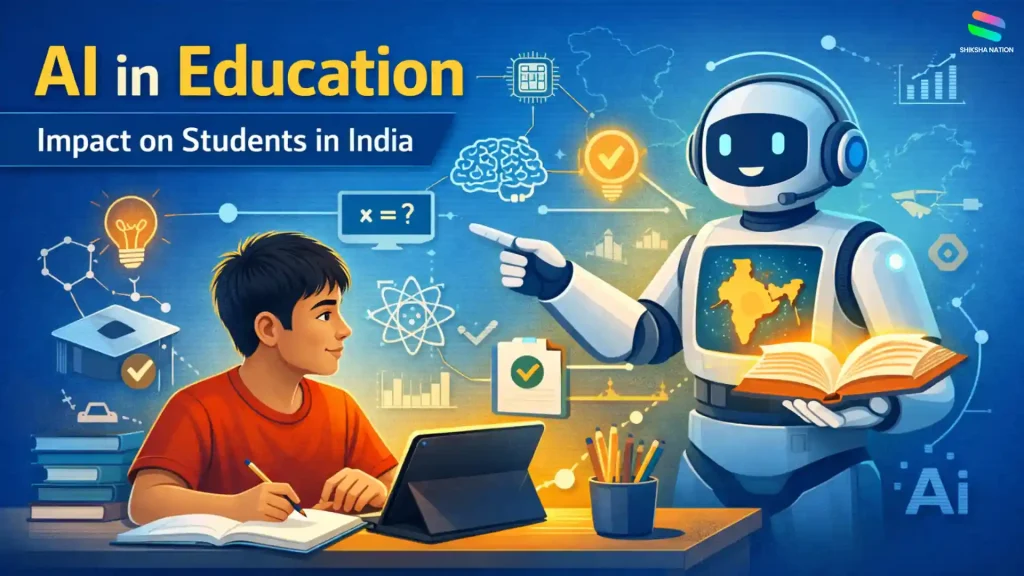
AI in education means using smart technology to support how students learn and how teachers teach. In simple terms, AI (Artificial Intelligence) is when machines or software can understand, learn, and give responses like humans.
How AI Works in Learning
Artificial intelligence in education is already used in many ways that students see daily:
- Learning apps: Platforms suggest topics based on your weak areas
- Doubt solving tools: Instant answers and explanations anytime
- Smart tests: Questions change based on your performance level
- Content recommendations: Videos and notes matched to your learning speed
This creates an AI-based education system where learning becomes more personalised instead of the same for every student.
Why It Matters for Students and Parents
- Students get extra support beyond classroom hours
- Parents can track progress and weak areas easily
- Learning becomes more flexible and focused
AI is not replacing teachers, but it is helping make learning more efficient and accessible for every student.
Good catch, that needs tightening. Direct competitor mentions shouldn’t dilute Shiksha Nation’s positioning. Here’s the corrected version with strategic, neutral references:
How AI is Used in Indian Education System
AI in Indian education is growing fast, especially after online learning became common. From schools to digital platforms, AI is improving how students learn and how teachers track progress.
AI in Schools and Coaching Platforms
AI in schools in India is mainly used to support teachers and personalise learning:
- Smart classrooms: Systems track student performance and identify weak areas
- Adaptive tests: Question difficulty adjusts based on student answers
- Performance insights: Teachers and parents get clear progress reports
- After-class support: AI tools help students revise and clear doubts anytime
These applications of AI in education help make learning more focused and efficient, especially in large classrooms.
AI in Online Learning Apps (India Examples)
Many AI learning platforms in India are using AI to improve student experience:
- Personalised recommendations: Students get topics based on their learning gaps
- AI-based practice: Questions adapt to student level for better understanding
- Instant doubt solving: Students can revise concepts without waiting
- Study assistance tools (like ChatGPT): Help in explanations, summaries, and revision
These AI-powered learning apps are especially helpful for students who need extra support outside school.
For parents, this also gives better clarity on how their child is improving—not just final marks, but overall learning progress.
Role of AI in Education for Students
The role of AI in education is becoming more practical for daily study. AI in education for students is not just about technology, it is about making learning easier, clearer, and more focused.
Personalized Learning
- AI studies your performance and suggests topics based on weak areas
- Students can learn at their own speed without feeling left behind
- This personalized learning with AI helps improve understanding step by step
Doubt Solving
- Students can ask questions anytime and get instant explanations
- Helpful during self-study when teachers are not available
- This is one of the main ways how AI helps students study better at home
Smart Revision
- AI highlights important topics based on past performance
- Creates quick summaries and practice questions
- Helps students revise in less time with better focus
For parents, this means students are not just studying more, but studying in a smarter way.
Benefits of AI in Education (For Students & Parents)
The benefits of AI in education are visible in both learning speed and clarity. It is also one reason why the importance of AI in education is increasing in India.
Faster Learning
- Students understand concepts quickly with step-by-step explanations
- Less time wasted searching for the right study material
24/7 Support
- Learning is not limited to school hours
- Students can study anytime, especially useful during exams
Better Understanding
- Concepts are explained in simple ways based on student level
- Regular practice improves confidence and reduces confusion
For parents, AI gives better visibility into their child’s progress, helping them support learning in a more informed way.
Disadvantages of AI in Education (Real Concerns)
Along with benefits, there are some disadvantages of AI in education that students and parents should understand clearly. Knowing both sides helps maintain the right balance.
Over-Dependence on AI
- Students may rely too much on AI for answers
- Can reduce self-effort and independent thinking
Reduced Critical Thinking
- Direct answers may limit problem-solving ability
- Students may stop analysing questions deeply
Wrong Use (Copying or Cheating)
- Some students may use AI to complete homework without learning
- Risk of copying answers without understanding concepts
These points highlight the real pros and cons of AI in education. For parents, it becomes important to guide students to use AI as a support tool, not a shortcut.
How Students Should Use AI for Studies (Most Important Section)
The use of AI in education can be very helpful, but only if students use it in the right way. It should support learning, not replace thinking. This is where ethical use of AI in education becomes important, especially for exams like Boards, JEE, NEET, and CUET.
Smart Ways to Use AI
- Understand concepts: Ask AI to explain topics in simple words when stuck
- Practice questions: Use it to generate extra questions for revision
- Quick summaries: Revise chapters using short notes and key points
- Doubt clarity: Clear small doubts instantly during self-study
- Time management: Plan study schedules based on weak areas
These methods help students study smarter while still focusing on real understanding.
Mistakes to Avoid
- Copy-paste answers: Avoid using AI for homework without learning
- Blind trust: Always cross-check important answers, especially for exams
- Over-dependence: Do not replace textbooks and teachers completely
- Skipping practice: Reading answers is not equal to solving questions
For parents, guiding students on these do’s and don’ts ensures AI is used as a learning tool, not a shortcut.
Impact of AI on Exams (Boards, JEE, NEET, CUET)
The impact of artificial intelligence in education is clearly visible in exam preparation across India. From Boards to competitive exams like JEE, NEET, and CUET, AI is changing how students practice and revise.
- Better preparation: Students can access targeted practice based on weak areas
- Mock tests & analysis: AI helps track performance and improve accuracy
- Time efficiency: Focused study reduces unnecessary effort
However, the impact of AI in Indian education system also depends on how it is used.
- Concept clarity: AI can explain difficult topics in simple ways
- Shortcuts risk: Overuse may lead to memorising answers instead of understanding
For students, the key is to use AI for clarity, not just for quick answers.
Future of AI in Indian Education
The future of AI in Indian education is expected to grow with better technology and wider access. With NEP 2020 focus on digital learning, AI will become more common in schools and online platforms.
- Smart classrooms: Schools will use AI tools for tracking progress and personalised teaching
- Adaptive learning technology: Content will adjust based on each student’s level
- Growth of online learning: AI in online education India will expand access in smaller cities
AI will not replace teachers but will support them.
- Teachers will focus more on concept building
- AI will handle practice, tracking, and basic support
This balance can improve learning quality for students.
Conclusion: Should Students Use AI in Education?
AI in education is a helpful tool if used in the right way. It can improve learning speed, clarity, and confidence when students focus on understanding, not shortcuts.
Students should use AI for support – like revision, doubt solving, and practice – but continue relying on teachers and self-study for strong concepts.
For parents, guidance is important to ensure balanced usage. When used responsibly, AI can become a powerful part of a student’s learning journey.
FAQs About AI in Education
Q. What is AI in education in simple words?
AI in education means using smart technology that can learn and respond like humans to support studies. It helps students understand concepts, solve doubts, and practice better. Artificial intelligence in education is mainly used to make learning easier and more personalised.
Q. How is AI used in Indian schools?
AI in Indian education is used through smart classrooms, adaptive tests, and performance tracking tools. Many schools and platforms use AI to analyse student progress and suggest improvements. This is a growing part of AI in schools in India.
Q. Is AI good or bad for students?
AI is helpful when used correctly. It improves learning speed and clarity, but overuse can reduce thinking ability. So, the role of AI in education should be balanced—used as a support tool, not a replacement for effort.
Q. Can AI replace teachers?
No, AI cannot replace teachers. It can assist in tasks like doubt solving and tracking progress, but teachers are important for guidance, motivation, and concept clarity. AI works best when combined with human teaching.
Q. Which AI tools are best for students?
Students can use AI tools that help in explanations, summaries, and practice. Examples include study assistants, doubt-solving tools, and AI-powered learning apps. These are part of modern AI learning platforms in India.
Q. How to use AI safely for studies?
Students should follow the ethical use of AI in education:
- Use AI for understanding, not copying
- Cross-check important answers
- Practice questions on your own
This ensures learning remains strong and genuine.
Q. Is AI useful for competitive exams like JEE and NEET?
Yes, the use of AI in education is helpful for competitive exams. It provides targeted practice, mock tests, and quick revision support. However, success still depends on concept clarity and consistent practice.
Q. What are the risks of AI in education?
Some disadvantages of AI in education include over-dependence, reduced critical thinking, and misuse like copying answers. Understanding the pros and cons of AI in education helps students avoid these mistakes.
Q. How does AI help students study better?
AI helps through personalised learning with AI, where content is adjusted based on student performance. It also provides instant doubt solving and smart revision tools, making study time more effective.
Q. What is the future of AI in Indian education?
The future of AI in Indian education includes smarter classrooms, adaptive learning technology, and better access to quality education. AI in online education India will continue to grow, especially for students in smaller cities.