
The Death of Traditional SEO? How Search Is Changing in the AI Era
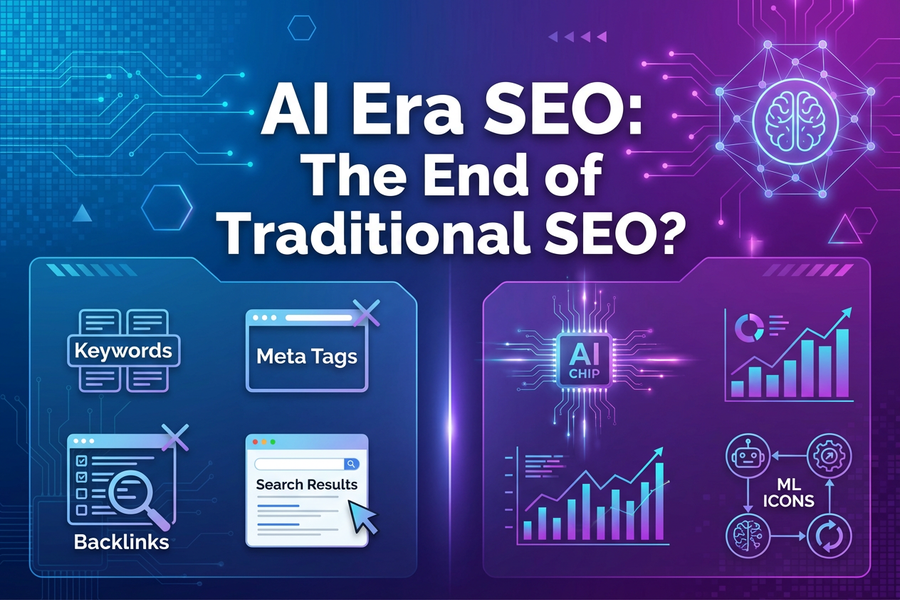
Search is transforming faster than ever before. For many years, SEO followed a predictable formula: find keywords, write content around them, build backlinks, and hope to rank. But the world of search has shifted dramatically. Artificial intelligence now sits at the centre of online discovery. People no longer search the way they used to. They want answers, insights, and personalised guidance. This shift has raised a major question: Is traditional SEO dying in the new AI era SEO landscape?
The rise of tools like ChatGPT, Gemini, Perplexity, Bing AI, and Google’s AI Overviews is changing the habits of millions of users. Instead of browsing multiple websites, people now ask AI for instant solutions. They want complete information in one place, without scrolling through endless pages. As AI evolves, businesses and creators must evolve too. Understanding how search works today is the only way to stay visible tomorrow.
How AI Era SEO Is Transforming Search
The biggest shift in search is simple: users now talk to AI instead of typing keywords. Search is becoming conversational. People ask AI questions the way they speak in real life. They expect clear, direct, and personalised answers. This means the old model of keyword-based SEO is losing relevance. AI does not depend on exact-match keywords. Instead, it understands intent, behaviour, and context.
The AI era of SEO focuses on supplying content that is helpful, well-structured, trustworthy, and easy for AI systems to understand. Websites that do not adapt will slowly disappear from visibility, even if they have backlinks or high domain authority.
Search Is Becoming Conversational, Not Technical
In the past, users typed short phrases like:
“Best marketing strategy 2025.”
Now people say:
“Give me a complete marketing strategy for a small business in 2025.”
AI understands tone, purpose, and detail. Users expect natural conversation. AI delivers it instantly. As a result, websites must write content in a more human, friendly, and conversational voice. Long, robotic, keyword-stuffed paragraphs no longer work. Content must feel like a helpful guide, not a textbook.
According to Google’s documentation, AI-driven search experiences are reshaping how users seek answers online.
Zero-Click Search Is Increasing Rapidly
One of the biggest threats to traditional SEO is zero-click search. This happens when users get answers directly from AI-generated results without visiting any website. Google’s AI Overviews, People Also Ask boxes, and featured snippets already take attention away from organic search results.
AI tools amplify this trend. When an AI model generates the answer, the user may never see your page. This makes it essential to structure content in a way that AI can understand, summarise, and highlight. Clear formatting, readable paragraphs, bullet points, and strong explanations help your content appear in AI responses.
Zero-click search is no longer the future—it is happening right now.
Personalisation Is Replacing Traditional Ranking
Traditional SEO ranked pages based on keywords and backlinks. But AI ranks content based on personalisation. Two people searching the same query may receive different answers. AI considers:
• browsing history
• user behaviour
• location
• past conversations
• preferences
• interests
This means no single keyword strategy can guarantee ranking anymore. A website must build relevance, authority, and trust. The AI era of SEO rewards quality, not tricks.
Quality and Depth Matter More Than Keywords
AI evaluates content based on:
• clarity
• accuracy
• usefulness
• structure
• trustworthiness
• author expertise
Keyword frequency is no longer a strong ranking factor. AI understands meaning, relationships, and user intent. Thin articles will fail. Original, helpful, deeply researched content will be prioritised.
Creators must focus on:
• step-by-step explanations
• real examples
• simple language
• expert insights
• problem-solving content
Good content is becoming the primary ranking driver.
E-E-A-T Has Become Essential
Google now emphasises experience, expertise, authoritativeness, and trust. AI uses these principles to evaluate what content to show users. Anonymous blogs are losing visibility. AI prefers content from real people with real experience.
To succeed, creators must:
• show author profiles
• demonstrate experience
• cite trustworthy sources
• build authority in a niche
SEO now rewards credibility more than keyword tricks.
Search Is Becoming Multimedia
AI tools analyse not just text but also images, videos, graphs, and voice searches. Younger audiences want fast, visual answers. Search is evolving into a multi-format environment.
Brands must use:
• short videos
• infographics
• visual explainers
• meaningful images
• carousels
• audio snippets
Relying solely on text will limit visibility.
Websites Must Be Structured for AI Consumption
AI needs to understand information quickly. This means websites should follow a clean structure with:
• short paragraphs
• clear headings
• bullet lists
• schema markup
• descriptive alt text
• internal links
• fast loading pages
The easier your content is to read, the easier it is for AI to use.
SEO Is Shifting Toward Multi-Platform Visibility
People no longer rely only on Google. They search across:
• AI assistants
• TikTok
• YouTube
• WhatsApp Channels
• Instagram
• Perplexity
• Reddit
• Voice assistants
SEO is becoming “findability”, not just Google ranking. Brands must be visible everywhere users search.
Brand Authority Now Matters More Than Keyword Ranking
In the AI era, trust is the ultimate ranking factor. AI tools recommend brands they consider safe and reliable. This means you must build a brand, not just a website.
Brand authority grows through:
• consistent content
• expertise
• positive reviews
• social proof
• recognisable identity
Ranking is no longer about who has more backlinks. It’s about who users trust the most.
Conclusion: SEO Is Not Dying—It Is Evolving
Traditional SEO is fading, but SEO itself is not dying. It is evolving into a smarter, deeper, and more experience-driven system. AI is changing how users search, how content gets ranked, and how businesses appear online. To win today, you must focus on clarity, expertise, helpfulness, and authentic value.
The future belongs to those who adapt early. The AI era of SEO is not a threat—it is a massive opportunity.
Also Read : SEO in 2025: What Actually Works Now for Real Results